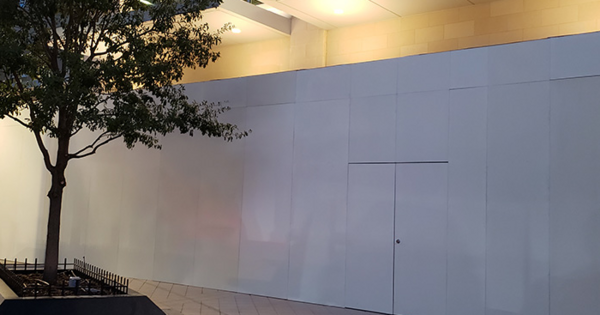
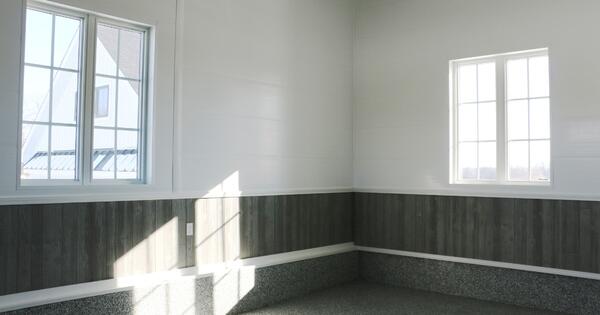
Businesses, contractors, and property managers rely on temporary partition walls to quickly adapt interior spaces, manage renovations, or create private areas without permanent construction. Temporary wall systems, including modular partition walls, offer flexibility, speed, and sustainability that traditional drywall or plywood cannot match.
Whether separating construction zones, redesigning office layouts, or creating temporary retail spaces, these solutions save time, reduce waste, and maintain clean, professional environments. PVC-based panels, in particular, make installation fast and maintenance simple, giving businesses a practical, reusable option for modern workspaces.


What Are Temporary Partition Walls?
Temporary partition walls are removable interior wall systems used to divide space for construction, commercial, or residential needs, designed for fast installation, reconfiguration, and reuse.
Key characteristics include:
- Types of walls: Freestanding, modular panel systems, reusable/removable walls, PVC partition walls.
- Durability and stability: Modern PVC panels withstand repeated assembly, heavy traffic, and even wet or messy environments.
- Temporary vs permanent: Unlike permanent walls, these systems require no structural modifications and can be removed cleanly, avoiding landfill waste and long teardown processes.
Temporary construction walls are especially valuable for dust control, safety, and zoning within ongoing projects, allowing work to continue without interruption.
Use Cases: Where Temporary Walls Make the Biggest Impact
Temporary partition walls allow spaces to be adapted quickly, safely, and without permanent construction. These walls create flexibility and protect environments from dust, moisture, or contamination, while maintaining hygiene and workflow efficiency.
Here are the key applications where temporary walls make the biggest difference:
- Commercial Renovations: Separate active work areas from operational zones. Temporary walls can protect employees and customers from dust, noise, and debris during remodeling, without shutting down entire facilities. Unlike drywall, PVC panels install in a single day and can be reused for multiple projects.
- Cleanrooms and Food-Grade Environments: Many facilities in food processing, pharmaceuticals, and healthcare need non-porous, washable surfaces. PVC-based partition walls like Wall&CeilingBoard provide sanitary surfaces that meet hygiene regulations and resist microbial growth, making them ideal for temporary enclosures that still comply with strict standards.
- Warehousing and Distribution Centers: Temporary partitions help create storage zones, isolate hazardous areas, or manage climate-controlled sections. Reusable PVC walls allow businesses to reconfigure layouts as inventory and workflow change, saving both labor and material costs.
- Agricultural or Livestock Facilities: Environments with high moisture or wash-down requirements demand walls that resist water and chemicals. PVC partitions are ideal here because they are fully washable, do not absorb water, and are impact resistant, surviving repeated use in harsh conditions.
- Retail Buildouts and Pop-Ups: Seasonal displays, temporary shops, or leased spaces often require flexible layouts. Temporary wall systems allow fast assembly, clean removal, and easy reuse, while providing smooth surfaces that accept vinyl graphics or branding without extra preparation.
- Event Spaces and Exhibitions: Temporary partitions create defined spaces for booths, ticketing, or VIP sections. Freestanding systems like NorLock allow rapid assembly and reconfiguration between events, making them highly cost-effective for venues with changing layouts.
- Office Environments: Businesses looking to optimize open floor plans can use temporary walls to create private meeting rooms, collaborative spaces, or quiet zones. PVC partition walls provide sound dampening, smooth finishes, and bright surfaces that maintain a professional appearance.
Across all these applications, temporary walls deliver speed, durability, hygiene, and reusability — often outperforming traditional drywall or plywood.
Modular Temporary Construction Hoarding Walls
When creating a temporary construction wall for safety, dust control, or private areas, modular wall systems are essential. They can protect operational spaces during renovations, advertise vacant tenant spaces in shopping centers, or create private zones like dressing rooms in retail facilities and suites in sports arenas.
Traditional interior partition and construction hoarding walls are typically made from drywall or plywood, and these materials have significant drawbacks in addition to not being modular:
- Drywall: Environmentally damaging when used as a temporary barricade. Once the wall is no longer needed, it’s torn down and sent to a landfill, where it decomposes to produce hydrogen sulfide gas and leaches sulfates into groundwater. Drywall installation is time-consuming, involving multi-day steps like mudding, taping, sanding, and painting. Vinyl wrapping requires additional preparation—priming, cleaning, and smoothing—to ensure graphics adhere properly. Even with preparation, drywall’s texture can cause vinyl graphics to peel or look uneven.
- Plywood: Single-use, difficult to wrap, and requires sanding, coating, and curing before vinyl graphics can be applied, adding at least 24 hours to the project timeline. Both materials contribute to waste and limit reusability, making them less practical for temporary or modular applications.
Drywall Barricade Waste Estimates
| Barricade Size | Dimensions | Square Footage | Average Landfill Waste |
|---|---|---|---|
| Small | 25’ x 12’ | 300 | 900 lbs |
| Medium | 40’ x 12’ | 480 | 1,400 lbs |
| Large | 65’ x 12’ | 780 | 2,340 lbs |
PVC partition walls, such as Trusscore products, provide a sustainable solution:
- Single-day installation: Avoids multi-day mudding, taping, sanding, and painting.
- Reusability: Panels can be disassembled and reused dozens of times.
- Professional finish for vinyl: Smooth, non-porous surfaces ensure graphics adhere properly.
This combination of speed, cleanability, and environmental responsibility makes PVC partitions a modern alternative to traditional materials.
Did you know?
While 75% of drywall ends up in landfills, where it releases harmful hydrogen sulfide gas and sulfates, PVC products like Trusscore can be recycled six to seven times to create new building materials.
Trusscore Wall&CeilingBoard: The Ideal Material for Temporary Partition Walls
When you’re aiming for a modern alternative to drywall or plywood, Wall&CeilingBoard offers a combination of durability, sanitation, and ease of installation that’s hard to match.
The panels are lightweight yet impact-resistant, so they stand up to busy work environments without the surface dents and crumbling edges that come with gypsum-based products.
Because they’re made from rigid PVC, they’re fully washable, mold- and mildew-resistant, and suitable for wet or harsh spaces where traditional materials fail.
One of the biggest advantages is that the panels are reusable. Drywall typically involves multi-day finishing, sanding, and cleanup, only to be demolished later and generate more than 2,300 pounds of waste on a standard job. In contrast, Wall&CeilingBoard installs quickly and removes just as easily, giving teams a clean, stable surface they can reassemble again and again without degrading performance. The smooth, bright finish also reflects light, helping improve visibility in work zones or task-oriented areas.
It’s also strong enough for repeated assembly because the panel construction is designed to handle mechanical fastening, disassembly, and reinstallation without breaking down.
For teams using modular partition walls or temporary wall systems, the panels integrate well as cladding material or as part of PVC partition walls built from interlocking components.
NorLock by Trusscore for Freestanding Partition Walls
NorLock panels are another solution from Trusscore for anyone looking for freestanding, self-supporting partition walls. Features include:
- Tongue-and-groove PVC design: Interlocking panels create tight, seamless walls.
- Reconfigurable: Panels can be relocated or reused as layouts change.
- Self-supporting stability: Freestanding walls require minimal or no framing.
- Hygienic surfaces: Easy to clean, perfect for offices, agriculture, food processing, and warehouses.
NorLock is particularly useful when freestanding walls are needed for rapid layout changes, temporary enclosures, or spaces where installing framing isn’t practical. Panels come in a variety of lengths with a tight-fitting interlocking system, letting you create a seamless branded barricade of any size with no external support. As needs change, NorLock can be disassembled and reinstalled without damage.


Comparing Different Types of Temporary Partition Walls
Temporary walls vary widely in material, durability, installation requirements, and cost. Understanding the differences helps teams choose the best solution for their environment.
- PVC Partition Walls: These panels are strong, lightweight, non-porous, and fully reusable. They outperform drywall and plywood in wet, high-traffic, or hygiene-sensitive spaces. PVC walls also install in hours instead of days, reducing labor costs and downtime.
- Modular Panel Systems: These walls use pre-fabricated panels with connectors or frames to create quickly configurable layouts. They are excellent for offices, warehouses, and retail environments where frequent reconfiguration is needed. Installation often requires light framing, but modular systems integrate well with PVC panels for enhanced hygiene or durability.
- Freestanding Temporary Walls: Systems like NorLock are self-supporting and can be deployed without ceiling or floor modifications. They are ideal for spaces where permanent framing is not possible, such as event venues, open-floor offices, or temporary agricultural enclosures.
- Temporary Construction Walls: These walls focus on dust containment and safety during renovations. They can be made from drywall, plywood, or PVC. PVC construction walls provide the same containment benefits with less waste and faster setup, and they can be reused across projects.
- Reusable vs Single-Use Walls: Drywall and plywood are single-use solutions that generate significant landfill waste and require time-intensive installation and demolition. Reusable PVC walls can be disassembled and reassembled dozens of times, reducing both environmental impact and long-term costs.
Temporary Partition Wall Comparison Chart
| Wall Type | Material & Features | Installation Time | Durability & Reusability | Best Use Cases |
|---|---|---|---|---|
| PVC Partition Walls | Non-porous, lightweight, washable, reusable | Hours | High | Wet, high-traffic, hygiene-sensitive spaces |
| Modular Panel Systems | Pre-fabricated panels with connectors or frames | Hours to 1 day | High | Offices, warehouses, retail needing frequent reconfiguration |
| Freestanding Walls (NorLock) | Self-supporting PVC panels, minimal framing | Hours | High | Event venues, pop-ups, offices with flexible layouts |
| Temporary Construction Walls | Drywall, plywood, or PVC; focus on dust containment | Days (drywall) | Low (drywall/plywood) | Renovations, construction zones |
| Reusable vs Single-Use | PVC reusable vs drywall/plywood single-use | Faster for PVC | High for PVC | Long-term cost savings and waste reduction |
Cost Considerations: Temporary Partition Wall Pricing
While PVC partition walls may have higher upfront costs than drywall or plywood, their reusability, durability, and rapid installation make them highly cost-effective over time. Businesses, contractors, and property managers often find that the long-term savings in labor, waste management, and flexibility outweigh initial material expenses.
Material Costs:
- Drywall: Lowest upfront cost, but designed for single-use. Each temporary installation generates significant landfill waste, creating indirect costs in disposal and environmental impact.
- Plywood: Moderately priced, but requires additional preparation such as sanding, coating, or priming before vinyl graphics or branding can be applied. Plywood walls are also single-use and prone to damage during demolition, adding hidden replacement costs.
- PVC Partition Walls: Higher initial material cost, but panels are long-lasting, impact-resistant, and fully reusable. Over multiple projects, PVC panels dramatically reduce per-use material costs, providing greater lifetime value.
Labor Savings:
- PVC panels can be installed in a single day, avoiding the multi-day processes associated with drywall, such as mudding, taping, sanding, painting, and surface preparation for vinyl graphics.
- The fast installation also reduces downtime for facilities, allowing operations to continue during renovations or temporary reconfigurations.
- Modular and freestanding PVC systems like Wall&CeilingBoard and NorLock reduce labor intensity further by minimizing the need for framing or structural modifications.
Reusability Advantage:
- PVC panels can be disassembled and reused dozens of times across different projects, reducing both labor and material costs on a per-use basis.
- In contrast, drywall and plywood are single-use, generating repeated waste disposal costs and requiring new materials for each installation.
Waste Management and Environmental Costs:
- Each standard 65’ x 12’ drywall barricade can produce over 2,300 lbs of landfill waste, contributing to disposal fees and environmental compliance considerations.
- Using reusable PVC panels minimizes landfill contributions, reduces hauling costs, and aligns with sustainability goals, which can translate to lower long-term operational expenses.
Lifetime Value:
- PVC partition walls provide a high return on investment because their durability, hygiene compliance, and flexibility extend usability for years.
- The ability to combine Wall&CeilingBoard with NorLock freestanding panels allows businesses to optimize both stable, high-use areas and flexible, reconfigurable zones, maximizing overall value per project.
Installation Cost Factors:
- While material choice affects upfront expenses, installation costs are often more influenced by wall complexity, site conditions, and required customization. For example:
- High ceilings or long-span partitions may require additional support or trimming.
- Integration with existing walls, electrical, or plumbing may add labor.
- Specialized applications such as cleanrooms or food-grade areas may require additional connectors or hygiene-focused installation techniques.
Cost Comparison: Drywall vs Plywood vs PVC Partition Walls
| Feature / Factor | Drywall | Plywood | PVC Partition Walls (Wall&CeilingBoard / NorLock) |
|---|---|---|---|
| Upfront Material Cost | Lowest | Moderate | Higher, but long-lasting |
| Installation Time | Multi-day (mudding, taping, sanding, painting) | 1–2 days (sanding, coating, prepping for vinyl) | Single-day installation for panels; minimal framing |
| Labor Intensity | High – multiple trades and steps | Moderate – prep & finishing required | Low – panels assemble quickly, freestanding or modular |
| Reusability | Single-use | Single-use | Reusable dozens of times across multiple projects |
| Waste / Environmental Impact | Very high – ~2,300 lbs per 65’ x 12’ barricade | High – single-use, disposal required | Minimal – reusable panels reduce landfill contribution |
| Surface Finish for Graphics / Branding | Requires prep; texture may cause peeling | Requires sanding/coating; uneven surfaces | Smooth, non-porous, ideal for vinyl and signage |
| Durability / Long-Term Value | Low – prone to damage and demolition | Moderate – can withstand light use, but single-use | High – impact-resistant, washable, maintains performance over years |
| Best Use Cases | One-time temporary walls, low budget | Short-term partitions requiring some strength | Offices, commercial renovations, warehouses, events, food-grade environments, pop-ups |
| Lifetime Cost Advantage | Low – repeated installations increase cost | Low to moderate – replacement needed each project | High – initial cost amortized over multiple uses, lower labor and disposal costs |
Temporary Partition Wall Maintenance & Durability
Trusscore PVC panels are engineered for repeated use and long-term durability, providing a clean and stable surface for commercial, residential, and industrial applications.
- Cleaning: Non-porous surfaces can be wiped down with standard cleaners, including mild detergents, disinfectants, or sanitizers. This is critical for food processing, healthcare, or cleanroom environments.
- Resistance to Damage: Panels withstand mechanical impact, moisture, and chemicals without cracking, warping, or staining.
- Reconfiguration: PVC panels hold up through repeated assembly and disassembly, maintaining structural integrity.
- Indoor vs Outdoor Use: Best suited for indoor environments or areas protected from direct UV exposure. Panels resist water but should not be submerged.
Even after years of use, PVC partition walls retain their color, smooth finish, and mechanical strength, making them far more durable than single-use drywall or plywood.


Temporary Partition Wall Sustainability & Reusability
Trusscore PVC panels are not just functional — they are a sustainable choice that addresses the environmental shortcomings of traditional construction materials like drywall and plywood.
- Reusability: Unlike drywall or plywood, which are single-use and often generate thousands of pounds of waste per project, PVC panels can be assembled, disassembled, and reused dozens of times without compromising performance. A standard 65’ x 12’ barricade made from drywall produces over 2,300 lbs of landfill waste; the same wall built from PVC panels can be reused repeatedly, drastically reducing disposal needs.
- Reduced carbon footprint: Fast, single-day installation reduces labor time and energy consumption compared to multi-day drywall projects. Fewer vehicle trips to deliver, remove, or dispose of materials also lower the environmental impact.
- Recyclable materials: At the end of their usable life, PVC panels can be recycled into new products, extending the material’s lifecycle and keeping it out of landfills.
- Waste reduction in practice: Consider a retail chain that rotates temporary walls seasonally for merchandising or pop-ups. Using drywall would require tearing down, discarding, and rebuilding partitions multiple times per year — generating both labor costs and significant material waste. Using PVC partitions instead allows the same panels to be reused for years, dramatically reducing both cost and environmental footprint.
- Hygiene and maintenance: Non-porous PVC surfaces can be cleaned and sanitized without degrading the panel, so the same wall can be used in food processing, healthcare, or agricultural facilities while maintaining compliance with hygiene regulations.
Reusable PVC partition walls don’t just save money and installation time — they actively reduce landfill waste, labor emissions, and raw material consumption, making them a genuinely eco-conscious choice for businesses, contractors, and property managers.
Choosing the Right Temporary Partition Wall System
Selecting the best temporary partition wall system requires more than choosing a material — it’s about matching the wall type to the project’s functional, environmental, and operational requirements.
Wall&CeilingBoard is the ideal solution when:
- You need durable, hygienic surfaces that can withstand moisture, cleaning, and frequent use.
- Projects involve high-traffic or work-intensive environments, such as commercial kitchens, warehouses, or offices.
- A smooth, bright surface is needed for visibility, lighting reflection, or vinyl graphics/branding.
- Reusability is a priority, minimizing waste and long-term cost.
NorLock is optimal when:
- Walls need to be freestanding or relocated frequently, such as in offices, event spaces, or pop-up retail.
- Rapid deployment is required with minimal framing or structural support.
- Temporary partitions must be reconfigured multiple times without damaging panels.
- Hygienic surfaces are important but structural attachment is limited, such as food processing areas or agricultural setups.
Temporary Partition Wall FAQs
Do temporary partition walls require permits?
Often no, but it depends on local building codes and the type of wall. Freestanding or non-structural temporary partitions typically don’t require a permit because they don’t alter the building’s structure. However, anything anchored to ceilings, involves electrical work, or affects fire safety may require approval. Always check with your local building department to be safe.
How do temporary partition walls compare to drywall in cost?
Temporary partition walls vary in cost depending on the material. Traditional drywall construction (framed, taped, mudded, painted) is usually cheaper in raw materials but more expensive in labor, and it requires repairs or demolition to remove. Temporary drywall-based systems are designed for clean installation and removal, often using modular framing. These cost more than standard drywall but save time and avoid damage. Other temporary wall materials (PVC, modular panels, freestanding systems) generally cost more per linear foot but are reusable and much faster to install.
What's the difference between modular and freestanding partition walls?
Modular walls are systems made of panels that connect together, often anchored lightly for stability. They offer a more built-in look and are great for semi-permanent layouts.
Freestanding walls rely on their own base or support structure and don’t require attachment to the building. They’re faster to install, easier to move, and ideal for spaces where drilling isn’t allowed.
Can temporary partition walls provide sound insulation?
Yes. Some temporary wall materials perform much like standard drywall. For example, Trusscore Wall&CeilingBoard has similar sound absorption and sound-blocking ratings to ½" and 5/8" drywall when installed on studs or joists. It absorbs about 15% of sound in a room (NRC 0.15) and blocks roughly 30–35 decibels of sound (STC 30–35). So while basic temporary panels won’t offer much privacy, higher-quality systems can match the acoustic performance of conventional walls.
How many times can PVC partition panels be reused?
PVC panels are highly durable and can typically be reused many times—often dozens—if handled properly. Their resistance to moisture and impact makes them a long-lasting option for spaces that need frequent reconfiguration.
Trusscore temporary partition walls combine speed, durability, hygiene, and sustainability. Lightweight yet impact-resistant, fully washable, and reusable, they are perfect for offices, commercial renovations, warehouses, agricultural facilities, retail spaces, and event venues.
Whether you need modular partitions, freestanding walls, or construction hoarding, Wall&CeilingBoard and NorLock panels provide long-lasting, adaptable, and eco-friendly solutions that outperform drywall and plywood in every way.