This post was originally published in December 2025. Last updated: August 2026.
PVC wall panels are rigid, interlocking wall and ceiling coverings made from polyvinyl chloride, built to resist moisture, impact, and everyday wear better than drywall in demanding spaces. They’ve become a common alternative for bathrooms, basements, garages, and commercial kitchens, anywhere a wall gets wet or takes a beating regularly.
Not every PVC panel is built the same way. Systems vary by thickness, internal construction, width, finish, and trim options, and those differences affect how a panel performs once installed. This guide covers what PVC wall panels are, how they compare with drywall and fiberglass reinforced plastic (FRP), where they work best, what they cost in 2026, and what to look for before you buy.
If you’re already comparing specific systems, Trusscore Wall&CeilingBoard is one of the higher-performing options in the category, built with an internal truss structure, a tongue-and-groove install, and a lifetime extended warranty for buyers who register their purchase. See the Trusscore Wall&CeilingBoard PVC wall panels product page for full specifications. The rest of this guide covers the category more broadly, so you know what to look for no matter which brand you choose.
What Are PVC Wall Panels?
PVC wall panels are wall and ceiling coverings made from polyvinyl chloride, the same durable material used in plumbing pipe, window frames, and roofing. Manufacturers form PVC into rigid panels, usually with an interlocking tongue-and-groove edge, creating a finished wall surface that installs in place of drywall, tile, or FRP.
PVC itself doesn’t absorb water the way wood-based materials do, part of why the category has a reputation for moisture resistance. That doesn’t mean every PVC panel is automatically waterproof once installed, though. Real-world performance depends on the panel’s construction, seam quality, and installation, not just the material it’s made from. A thin panel with loose seams can still let water reach the wall behind it, even though the panel face sheds water.
That distinction matters for anyone comparing PVC wall paneling options. The material gives PVC panels a head start on moisture resistance, but a specific product’s seam system and manufacturer warranty are what actually determine whether it holds up in a wet space long term.


PVC Wall Panels vs. Drywall and FRP
Most people comparing wall-paneling options are really choosing between three materials: PVC, gypsum-based drywall, and fiberglass reinforced plastic (FRP). Each has a different profile of cost, durability, and moisture resistance, and the right choice depends heavily on the room. The table below lays out the tradeoffs at a glance, and the sections after it go deeper on how PVC panels compare to each material specifically.
| Factor | PVC Wall Panels | Drywall | FRP |
|---|---|---|---|
| Moisture resistance | Doesn’t absorb water; quality varies by seam | Absorbs moisture; can mold within 24 to 48 hours if wet | Face resists water; seams can let moisture reach the substrate |
| Durability | Resists dents, scratches, impact | Prone to dents, cracks, holes | Holds up to impact but can crack at seams |
| Installation | Pre-finished; fastens to studs, no finishing | Taping, mudding, sanding, painting | Backer board and adhesive; more labor |
| Maintenance | Wipes clean; some systems pressure wash | Careful cleaning; repairs for scuffs | Washable, but seams need monitoring |
| Finish | Pre-finished, consistent factory look | Needs paint and primer | Glossy gelcoat with visible seams |
| Typical applications | Bathrooms, basements, garages, kitchens, ag facilities | Living spaces, offices, dry rooms | Commercial kitchens, food processing, healthcare |
| Relative cost | Mid-range material, lower total cost in wet spaces | Lowest material cost, higher upkeep over time | Comparable material cost, plus backer and adhesive |
PVC vs. drywall
Drywall remains the standard wall material for most living spaces, and for good reason: it’s inexpensive, widely available, and easy to repair. In dry, low-traffic rooms like bedrooms and living rooms, it’s still a reasonable choice.
The tradeoffs show up in wet or high-traffic areas. Drywall’s gypsum core absorbs moisture, and exposed drywall can begin growing mold within 24 to 48 hours of water exposure. It’s also easy to damage: a dropped tool or a bumped door can leave a dent that needs patching. PVC panels sidestep both problems, since the material doesn’t absorb water and a well-built panel resists the dents and scratches that mark up drywall.
Installation is another point of separation. Drywall requires taping, mudding, sanding, and painting before it’s finished, a multi-day process even for an experienced crew. PVC panels typically arrive pre-finished, so once fastened and trimmed, the wall is done. For a full breakdown, see Trusscore Wall&CeilingBoard vs. Drywall.
None of this makes drywall a bad material. For a dry bedroom or hallway, its low cost and easy repairability are real advantages. But in garages, basements, laundry rooms, and bathrooms, PVC panels solve problems drywall structurally can’t.
PVC vs. FRP (fiberglass reinforced panels)
Fiberglass reinforced plastic, or FRP, is a thin fiberglass-and-resin sheet that’s been standard in commercial kitchens, food processing plants, and healthcare facilities for decades. It’s the material PVC panels actually compete against in most commercial and agricultural settings, not drywall.
FRP and PVC share some strengths: both resist moisture better than gypsum-based materials, and both hold up to regular cleaning. The differences show up in installation. FRP sheets typically need to be glued to a backer board, requiring surface prep and careful handling to avoid trapped air bubbles, more labor-intensive than fastening PVC panels directly to studs and usually a multi-person job.
Seams matter too. FRP panels butt together at the seam, and an improperly sealed seam can let moisture work behind the panel and separate it from the substrate over time. Interlocking PVC panels with a tongue-and-groove edge create a tighter seal, though seam quality varies by manufacturer.
Adhesive matters for indoor air quality too. FRP glue can contain VOCs that off-gas after installation, while PVC panels installed with screws need no adhesive at all.
FRP isn’t a bad material, and it remains a reasonable, budget-friendly choice for some commercial applications. But where installation speed, seam integrity, and indoor air quality matter most, well-built PVC panels generally hold an edge, particularly where washdown and hygiene are ongoing requirements.
Benefits of PVC Wall Panels
PVC has become a popular choice for wall and ceiling systems because it solves a specific set of problems traditional materials struggle with: moisture, impact, and maintenance. The benefits below apply broadly across the category, though how well any panel delivers on them depends on its construction.
Key benefits
Across well-built PVC panel systems, a few advantages come up consistently:
- Moisture resistance: PVC doesn’t absorb water, so panels won’t swell, warp, or bubble the way wood-based materials can
- Durability: a rigid PVC surface resists dents, scratches, and everyday impact better than drywall
- Low maintenance: no repainting, and a non-porous surface won’t harbor mold under normal conditions
- Easy cleaning: most panels wipe clean with soap and water, and some systems tolerate pressure washing
- Installation efficiency: pre-finished panels skip the taping, mudding, and painting drywall requires
- Finished appearance: panels arrive with a factory finish and a consistent look, no extra work needed
These advantages are why PVC has become a go-to drywall alternative in bathrooms, basements, garages, and commercial kitchens, spaces where moisture and cleanability matter more than in a typical living room.
Where to Use PVC Wall Panels
The right wall material depends on what a space deals with day to day: moisture, temperature swings, impact, or frequent cleaning. PVC panels earn their keep in rooms where those conditions matter, though their durability makes them a reasonable option beyond wet spaces alone.
Home applications
In residential settings, PVC wall panels show up most in the parts of the house that give drywall the most trouble.
- Bathrooms: bathroom wall panels handle daily humidity and splashing without the mold risk that plagues painted drywall around showers and tubs
- Laundry rooms: steam and the occasional overflow are common, and PVC panels won’t absorb or warp from either
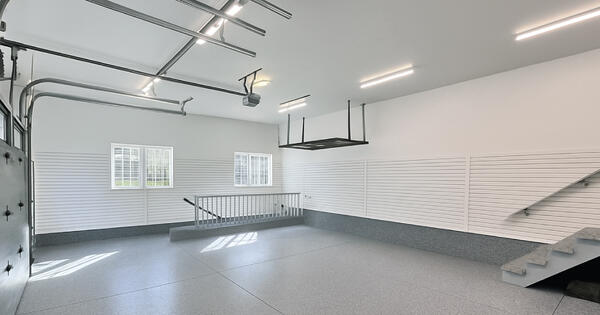
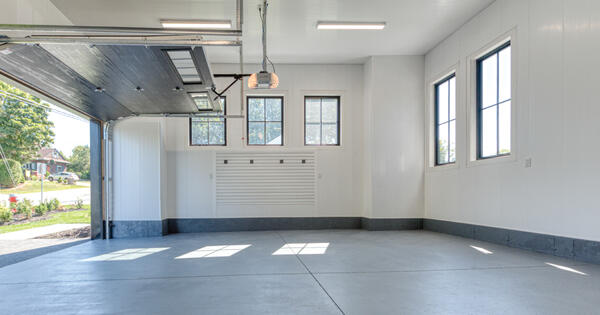
- Garages: PVC garage wall panels resist the dents and scrapes that come from stored tools and equipment
- Basements: PVC wall panels for basement installations sidestep the moisture and mold issues that make below-grade drywall a recurring headache
- Utility rooms: other spaces that need frequent wipe-downs or sit near plumbing
PVC ceiling panels follow the same logic. Bathrooms and basements especially benefit from a ceiling material that won’t stain or sag if a pipe leaks overhead.


Commercial and agricultural applications
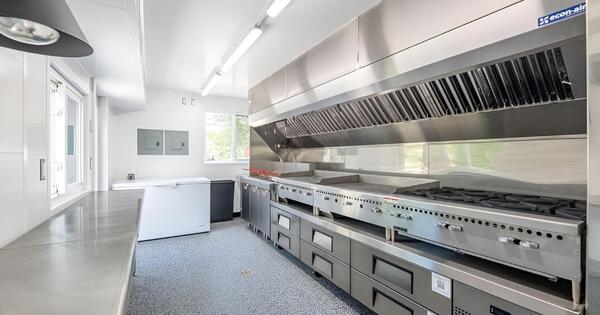
Outside the home, PVC panels are common in facilities where hygiene, moisture, and repeated cleaning are constant concerns: commercial kitchens, food processing plants, car washes, and livestock barns among them. Here, PVC competes directly with FRP rather than drywall, and the seam and installation advantages covered earlier matter even more, given how often these walls get washed down.
Regulated environments like food processing and healthcare facilities often have specific code and certification requirements. Not every PVC panel meets those standards, so confirm the exact certifications a product carries, fire rating and food-contact compliance among them, rather than assuming a panel is automatically approved for a given application.
Types of PVC Wall Panels
“PVC wall panel” describes a broad category, not a single standardized product. Panels differ in thickness, internal construction, width, and finish, and those differences affect how rigid, durable, and easy to install a panel will be. Knowing the basic construction options makes it easier to compare products that look similar in a showroom but perform very differently on a wall.
Thickness and structural design
Panel thickness is one of the first specs worth checking. Thicker panels are generally stiffer and span farther between studs without sagging, while thinner panels are lighter but may need closer stud spacing to stay rigid.
Two thicknesses dominate the residential PVC panel market: 3/8 inch and 1/2 inch. A 1/2 inch panel typically offers more stiffness and a longer usable span, while 3/8 inch panels are lighter and suit lighter-duty applications. Thicker isn’t automatically better for every job. A 3/8 inch panel can be fine in a low-traffic space, while a garage or workshop wall benefits more from the extra rigidity a 1/2 inch panel provides.
Truss vs. box design
Beyond thickness, a panel’s internal structure affects how it handles impact. Manufacturers generally use a box design, with a simple rectangular cavity, or a truss design, with a triangulated structure similar to a bridge truss.
A truss design distributes impact force across the structure rather than concentrating it at the point of contact, generally giving it better resistance to denting and cracking. Wall&CeilingBoard uses this construction for that reason. A box design is simpler and often lower-cost, adequate for lighter-duty or decorative applications where impact resistance matters less.
Neither design is inherently better outside the context of use. A decorative accent wall rarely needs more than a box-design panel. A garage, workshop, or commercial space that will actually take hits is where the added rigidity of a truss design earns its keep.
Panel dimensions and finishes
Panel width matters more than it might seem. Residential wall framing is typically spaced 16 inches on center, and panels sized to match install with less waste and fewer extra fasteners than panels sized differently. Panel length varies by manufacturer, generally 8 to 20 feet, which affects how many seams a wall needs.
Finish options are simpler: most PVC panels come in white or gray with a smooth, semi-gloss surface, though white remains the most common choice for its brightness. Trim systems and corner profiles also vary by manufacturer, and a complete trim lineup makes a real difference in how clean the finished corners look.
Cost of PVC Wall Panels in 2026
PVC panel prices vary considerably based on construction, thickness, finish, and where a product is manufactured. Panels made with recycled PVC, minimal quality control, and offshore manufacturing tend to sell for less upfront, but that lower price often comes with tradeoffs in consistency and long-term performance. Knowing what drives the price difference helps you budget accurately and avoid a panel that costs more in the long run than it saved at checkout.
Average cost per square foot
Trusscore Wall&CeilingBoard typically costs between $2.75 and $3.75 per square foot in 2026, depending on region and retailer. An 8 foot panel covers about 10.67 square feet, putting per-panel cost around $29 to $40. That’s a material-only price, not a stand-in for the entire category. Pricing on generic or imported panels can run lower, often alongside the tradeoffs described below.
Here’s a real material cost breakdown for a two-car garage (12 ft by 20 ft by 12 ft) using Trusscore Wall&CeilingBoard:
| Product | Quantity | Unit Cost | Total |
|---|---|---|---|
| Wall&CeilingBoard, 10 ft, white | 42 | $43.32 | $1,819.44 |
| Wall&CeilingBoard, 12 ft, white | 2 | $52.00 | $104.00 |
| Snap-In J Trim, 10 ft, white | 29 | $12.00 | $348.00 |
| #10 x 1-1/4 in screws | 1 box | $98.67 | $98.67 |
Total material cost: $2,370.11
That total is based on an average unit cost of $3.25 per square foot and covers materials only. Hired installation typically adds around $1.60 per square foot, though pre-finished panels install fast enough that many people handle the job themselves.
Why prices vary so widely
A handful of factors explain the spread in PVC panel pricing:
- Construction: truss-style internal structures cost more to manufacture than simpler box designs
- Thickness: 1/2 inch panels typically cost more than 3/8 inch panels
- Finish: specialty colors or UV-stable formulations add to the price
- Manufacturing location: North American panels under tighter quality control tend to cost more than offshore imports
- Distribution: panels sold through established distributors are handled more carefully in transit, affecting landed cost and damage rates
- Installation method: DIY avoids labor cost entirely, while professional installation adds to total project cost
Cheaper panels aren’t automatically a bad choice, especially for lower-stakes applications. But a panel priced well below average often reflects a tradeoff: recycled or filler-heavy PVC, looser thickness tolerances, or minimal quality oversight. Those tradeoffs tend to surface over years, which is why it’s worth weighing upfront cost against expected lifespan rather than price alone.
How to Choose the Right PVC Wall Panel
The cheapest PVC panel on the shelf isn’t necessarily the best value once you factor in how long it needs to last and what the space will put it through. Matching a panel’s construction to the demands of your room saves more money over time than chasing the lowest sticker price.


Key qualities to look for
Before buying, check any PVC wall panel product against this list:
- Moisture resistance: confirm whether the panel is rated for wet applications or just described as moisture-tolerant, since these aren’t the same thing
- Panel thickness: 1/2 inch panels generally offer more rigidity for higher-traffic rooms or wider stud spans
- Internal structure: a truss design generally holds up better to impact than a box design
- Width and stud compatibility: a 16 inch width matches standard framing and reduces labor
- Trim system: confirm a full lineup exists for corners, edges, and transitions
- Fastener compatibility: check whether the panel needs specialty screws or standard hardware
- Certifications: for commercial or food-service work, confirm fire rating and food-contact compliance
- Warranty: check the length and what’s actually covered, not just the number
Running through this list before purchasing helps separate genuinely well-built panels from products that only look similar on a shelf.
Warranty expectations
Warranty terms vary significantly across manufacturers, and a longer stated period doesn’t always mean broader coverage. Read the specifics: what’s covered, what voids the warranty, and whether registration is required.
Trusscore Wall&CeilingBoard, for example, carries a 20 year standard warranty and a lifetime extended warranty for buyers who register within 90 days of purchase. Not every PVC panel offers coverage at that level, and some warranties cover material defects only, excluding installation issues or normal wear. Confirm exactly what a warranty protects against before you buy.
Maintenance and Cleaning
How a panel holds up to years of cleaning matters as much as how it looks on day one, particularly in garages, basements, bathrooms, and commercial spaces washed down regularly. PVC’s non-porous surface generally makes for easy maintenance, though chemical resistance and pressure-washing tolerance vary by manufacturer, so check a product’s care guidelines rather than assuming every PVC panel handles the same cleaning methods.
For everyday cleaning, most PVC panels wipe clean with a damp cloth and mild soap, with tougher grime coming off with a household degreaser or mild detergent. Trusscore Wall&CeilingBoard, for instance, can also be pressure washed under 3,000 psi with a wide-angle nozzle held 4 to 6 feet from the wall, practical for garages and wash bays.
Not every PVC panel is rated for pressure washing or harsh chemical cleaners, so check manufacturer guidelines first. Acetone-based cleaners can damage some PVC surfaces, so test any new product on an offcut before using it on a full wall.
Because PVC panels don’t absorb moisture, they’re far less prone to the mold and mildew that develops on drywall or grout over time, cutting down on the deep cleaning and repairs those materials eventually require.
Why Trusscore Wall&CeilingBoard Stands Out
Working through the criteria in this guide, Trusscore Wall&CeilingBoard checks nearly every box, and not just as a brand claim. A few specific features explain why it’s positioned as one of the stronger PVC panel systems on the market:
- Internal truss structure: distributes impact force across the panel rather than concentrating it, giving better dent and crack resistance than typical box-design panels
- Tongue-and-groove seal: creates a tighter seam than butted or loosely interlocking panels, directly addressing the seam-quality gap that separates well-built PVC from generic PVC
- 20 year standard warranty with lifetime extended coverage: for buyers who register within 90 days, broader than many PVC warranties on the market
- Installs over bare studs or existing drywall: cuts demolition and labor compared with systems that require a bare substrate
- Pressure-washable up to 3,000 psi: a cleaning durability level not every PVC panel is rated for
- Class A fire rating and low-VOC materials: relevant for code compliance and indoor air quality comparisons
None of this means every application calls for Wall&CeilingBoard specifically. But for buyers who’ve worked through the criteria in this guide and want a system already built to meet them, it’s a strong place to start. See the PVC wall and ceiling panel specifications to compare against whatever else you’re considering.
FAQ
The following questions cover the purchase and installation considerations that come up most often when people start comparing PVC wall panels.
Are PVC wall panels better than drywall?
For wet or high-traffic spaces, generally yes. PVC panels resist moisture, impact, and staining in ways drywall structurally can’t, and they skip the taping, mudding, and painting drywall requires. For dry, low-traffic rooms like bedrooms, drywall remains a perfectly reasonable, lower-cost choice. The better material depends on what the specific room needs to hold up against.
Are PVC wall panels better than FRP panels?
It depends on the priority. FRP is a well-established, budget-friendly option for commercial kitchens and similar spaces, and it performs reasonably well when installed correctly. PVC panels generally install faster, avoid the adhesive FRP requires, and, in tongue-and-groove systems, offer tighter seams than FRP’s butted seams. For facilities prioritizing installation speed, indoor air quality, and seam integrity, PVC often has an edge, though FRP remains a viable choice in many commercial settings.
How much do PVC wall panels cost?
Pricing varies by manufacturer, but Trusscore Wall&CeilingBoard typically runs $2.75 to $3.75 per square foot for materials in 2026. That figure covers panels only. Trim, screws, and accessories add to the total, and installation labor, if you hire a contractor, is a separate cost on top of materials.
Can I install PVC wall panels myself?
In most cases, yes. Interlocking PVC panels with pre-punched screw flanges are designed for one person to install with basic tools: a saw, a drill, a level, and a tape measure. DIY suitability depends on your substrate (bare studs are simplest; drywall or masonry may need different fasteners), how much cutting and trim work the room requires, and your comfort with basic carpentry. A straightforward rectangular room is the easiest starting point for a first project.
Choosing the right wall material comes down to matching a panel’s durability, moisture resistance, and construction to what the space will put it through. PVC wall panels hold up better than drywall in wet or high-impact rooms, and well-built systems can outperform FRP on installation speed and seam integrity in commercial settings. Cost, thickness, internal structure, and warranty terms all factor into which product makes sense for your project.
Trusscore Wall&CeilingBoard is built for exactly these demands: a truss-reinforced, tongue-and-groove PVC panel system engineered for bathrooms, basements, garages, and commercial spaces where moisture and impact are ongoing concerns. Get an estimate to see what a project would cost for your space, or find a retailer near you to see the panels in person.