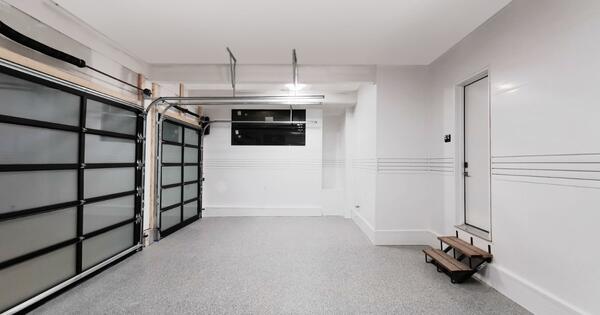
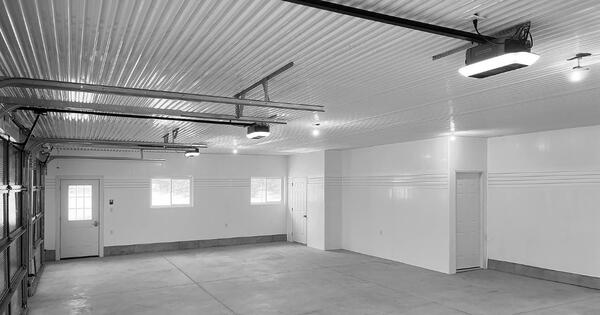
A heated, insulated garage can still get damp, because heat and insulation don’t remove moisture. They change where it ends up. Warm air holds more water vapor than cold air, so when that air touches a cold slab, garage door, or exterior wall, the vapor turns to liquid. Add snow melting off your vehicles and a tight building envelope with nowhere for humid air to go, and you get condensation in the garage, damp surfaces, and eventually mold.
This guide explains why garage humidity builds up, when it becomes a mold risk, and how to control it. It also covers where wall and ceiling surfaces fit in. They help, but they’re only one layer of the solution.
Why Heated Garages Get Humid
Heating raises the air temperature, but it doesn’t take any water out of the air. In most heated garages, three things work together to add humidity: water arrives with your vehicles, warm air meets cold surfaces, and your garage acts as an envelope that holds humid air in.
Snow and meltwater from vehicles
Every winter drive adds water to the garage. Snow, slush, and ice packed into wheel wells and undercarriages melt onto the slab, then evaporate into the air as the space warms. Wet boots, coats, and gear add to the load, and it arrives again after every storm.
Warm air meeting cold surfaces
Relative humidity (RH) describes how much water vapor the air holds compared to the most it could hold at that temperature. Cool the same air and its RH rises. At a cold enough surface, the air reaches 100 percent RH and water condenses. That temperature is the dew point.
Here’s what that looks like. Air at 60°F (16°C) and 50 percent RH has a dew point of about 41°F (5°C), so any surface colder than that collects condensation. Even a 50°F (10°C) surface pushes the air against it above 70 percent RH, a level mold growth can occur. Slabs, garage doors, windows, and exterior walls often run that cold while the thermostat reads comfortable. That’s why condensation in a garage tends to show up on the door, along the slab edge, or around windows first.
Insulation without ventilation
Insulating and air sealing a garage is worth doing. It keeps heat in and drafts out. But a tighter garage also holds onto the moisture you bring in, because less air leaks out to carry it away. Unvented fuel-burning heaters add to the problem, since burning gas produces water vapor along with combustion pollutants. Insulation warms wall surfaces, but the slab and garage door often stay cold, so insulation alone doesn’t solve condensation.
Planning an upgrade? Our guide to insulating a garage covers materials and R-values, and our rundown of ways to heat a garage helps you pick a safer heater.
When Garage Humidity Turns into Mold
Humidity alone doesn’t create a moldy garage. Mold needs moisture that sticks around, plus something to feed on. The EPA puts it simply: the key to mold control is moisture control.
What humidity should a garage be?
The EPA recommends keeping indoor humidity below 60 percent, ideally between 30 and 50 percent. In cold weather, aim for the lower end. The colder your surfaces are, the lower room RH needs to be to stay ahead of the dew point.
Room RH and surface condensation aren’t the same measurement. A hygrometer reading 45 percent mid-room says little about the air against a 35°F (2°C) garage door. Check cold spots by hand, and dry any wet area within 24 to 48 hours, which usually keeps mold from growing.
Why certain materials show problems first
Mold feeds on organic material. Paper facing on drywall, wood fibers in oriented strand board (OSB), and untreated lumber supply plenty. They also absorb moisture from humid air and condensation, then dry slowly. That’s why mold on a garage ceiling or wall often appears first on drywall, OSB, and untreated wood, particularly at cold edges and corners where condensation collects.
Is mold in a garage dangerous?
It can be, depending on who’s exposed. Health Canada links indoor mold exposure to asthma-related symptoms such as chronic wheezing, while the U.S. Center for Disease Control lists nasal stuffiness, throat irritation, coughing, wheezing, and eye irritation. It adds that people with mold allergies may react more severely, and people with chronic lung illness or weakened immune systems can develop serious lung infections. The CDC also says you don’t need to identify the type of mold, because whatever it is, you should remove it. Treat it as a moisture problem to fix. Our guide to identifying, removing, and preventing mold in your garage covers safe cleanup.
How to Control Humidity in a Heated Garage
Good moisture control works in three steps: keep water out, stop humid air from reaching cold surfaces, and remove what’s left. No single device does all three, so here’s what each option does and where it falls short.
Ventilation and exhaust fans
Ventilation swaps humid garage air for outdoor air. In winter, cold outdoor air holds very little moisture, so even modest airflow can dry a garage, though it carries heat out with it. It only works when outdoor air is drier than the air inside. Judge by dew point, not by how the day feels, and put the fan on a timer. A fan left running can start pulling in air more humid than what it exhausts.
Dehumidifiers vs. HRVs
These systems solve different problems, so don’t treat them as substitutes. Our dehumidifier guide covers sizing and types. Here’s how the three options compare:
- Dehumidifier: Removes moisture whatever the weather, so it suits humid summers and damp slabs, though ENERGY STAR advises a model designed for lower temperatures below 65°F (18°C)
- Heat recovery ventilator (HRV): Swaps stale indoor air for fresh outdoor air while recovering heat, which suits tight, finished garages that people use often, but it doesn’t dehumidify and brings moisture in during humid weather
- Exhaust fan: The simplest and cheapest option, though it recovers no heat and depends on drier outdoor air
So which costs more to run? That’s where a dehumidifier and an HRV really split. A dehumidifier draws steady power, so running a typical one about 8 hours a day costs you roughly $28 a month. An HRV costs far less, because you’re mostly paying for the fan, and a typical unit can run around the clock for about $6 a month. Its bigger expense isn’t the fan. It’s the heat that leaves with the exhaust air. A good HRV holds onto about three-quarters of that heat in ordinary cold, and still over half of it in a deep freeze. Treat these dollar figures as rough examples, since your real cost depends on your electricity rate, your equipment, and how long the unit runs.
Air sealing and vapor control
Warm, humid air that leaks into a wall or ceiling cavity can reach a cold surface inside the assembly and condense where you can’t see it. Sealing gaps at penetrations, top plates, and around the garage door reduces that risk. Vapor control layers slow moisture diffusion, but whether you need one, and where it goes, depends on your climate zone and the wall assembly. Get it wrong and you can trap moisture instead of blocking it. Follow local building code, and bring in a building professional before you finalize the assembly.
Everyday habits
Daily habits cut the moisture load before any equipment has to deal with it. Try these:
- Brush off vehicles outside: Knock off snow and ice before you pull in, when it’s safe to do so
- Move meltwater out: Squeegee puddles toward a floor drain or out the door
- Dry gear elsewhere: Hang wet coats and boots in a mudroom, not the garage
- Skip unvented heaters: They release water vapor and combustion pollutants into the space
- Fix leaks: Check roof flashing, gutters, and window seals so rain isn’t adding to the load
Choosing Wall and Ceiling Surfaces for a Moisture-Prone Garage
Once you’ve addressed the moisture, the surface on your walls and ceiling decides how they handle a damp day. Think of surfaces as one part of a broader moisture strategy. They don’t replace fixing the source.
Porous vs. nonporous finishes
Porous surfaces such as drywall and OSB absorb moisture, so condensation soaks in and they stay damp longer. Nonporous surfaces don’t absorb it, so water stays on the surface, where it can be wiped away or evaporate. In a garage where humidity and condensation are concerns, that difference matters. Our look at how OSB compares to wall and ceiling board in a garage and our guide to drywall alternatives for garage walls go deeper on how the materials stack up.
Where Trusscore Wall&CeilingBoard fits
Trusscore Wall&CeilingBoard is a prefinished, interlocking wall and ceiling board made from rigid PVC. Its surface is mold resistant and does not absorb moisture, and it has none of the paper facing or wood fibers that mold feeds on. It wipes clean with soap and water, and it has been evaluated to ISO 846:2019 for fungal resistance. It installs directly to bare studs, so it suits a garage you’re finishing or refinishing. A mold-resistant surface still needs care, so wipe it down as part of your seasonal cleanup.
Important limitations
Trusscore Wall&CeilingBoard doesn’t control humidity, prevent condensation, improve ventilation, correct air leaks, or stop water intrusion. It isn’t a vapor barrier or a thermal barrier, either. It goes over a wall assembly that already meets local building code for structure, insulation, and fire separation. Don’t install it over existing mold or a wet wall. Fix the water source, remove the mold, and let the structure dry first. A mold-resistant surface over an active leak just hides the problem.


FAQs About Heated Garage Humidity
Here are quick answers to common questions about moisture in a heated garage.
Can a heated garage still develop mold?
Yes. Cold spots such as corners, door edges, and the slab perimeter can stay damp even when the room feels warm. Mold needs sustained moisture and something to feed on, so drywall, OSB, and untreated wood are the likeliest places.
Why does my garage ceiling get condensation?
Warm, humid air rises. If the ceiling or roof deck above it is cold or poorly insulated, the surface drops below the dew point and moisture collects. Seal air leaks into the ceiling, insulate properly, and keep humidity in range. If it keeps dripping, or you spot mold on a garage ceiling, have a professional check the roof assembly.
Does condensation in a garage mean I have mold?
Not by itself. Condensation means a surface is colder than the dew point of the air touching it. Mold needs moisture that lingers, so dry wet spots within 24 to 48 hours and watch for musty odors or discoloration.
How do I reduce humidity in my garage without a dehumidifier?
Cut the sources first, then run an exhaust fan on a timer when outdoor air is drier than indoor air. Check the dew point before you open the doors.
Does insulating a garage stop condensation?
Not on its own. Insulation warms wall surfaces, but the slab and garage door can stay cold, and a tighter garage traps more moisture. Combine insulation with air sealing, humidity control, and a ventilation plan.
In a heated garage, moisture control comes first. Know where the water comes from, keep humidity in range, and watch the cold spots where condensation starts. Then choose wall and ceiling surfaces that can handle a damp day. Ready to plan your space? Explore our garage and workshop applications, estimate your materials with the Cost & Materials Estimator, or find a Trusted Installer near you.