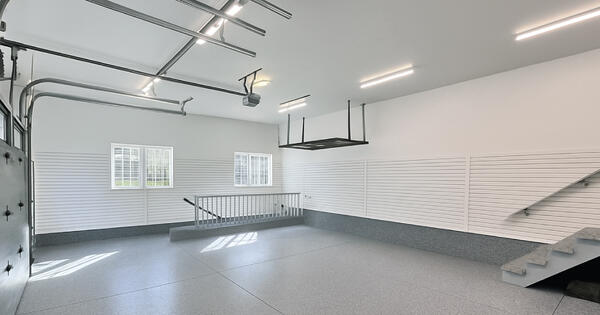
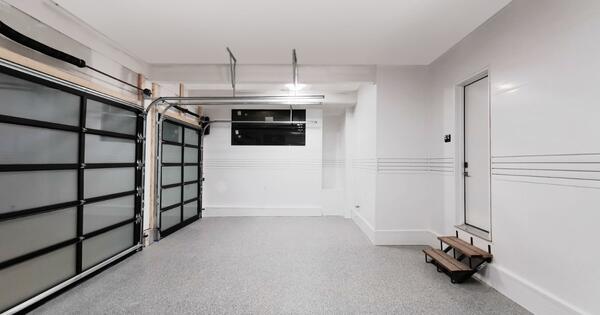
If your garage is freezing in winter and sweltering in summer, the solution is straightforward: proper garage insulation. Whether you're converting your garage into a workshop, home gym, or living space, or simply want to stop your attached garage from dragging down your home's energy efficiency, insulating the walls, ceiling, and door makes a meaningful difference. This guide covers everything you need to know, from choosing the right materials and hitting the right R-values to finishing the job with a wall covering that holds up long term.


Why Insulate Your Garage?
Garage insulation isn't just for people turning their garage into livable space. Even a standard attached garage benefits significantly from thermal protection. Here's why it matters.
Energy Savings and Temperature Control
An uninsulated garage acts as a giant heat sink. In winter, cold air from the garage seeps through shared walls into your living space, forcing your furnace to work harder. In summer, heat builds up and radiates inward. Insulating garage walls and the ceiling between your garage and living area can reduce heating and cooling costs noticeably. If you're planning on insulating a garage for living space, proper thermal protection becomes essential rather than optional.
Noise Reduction and Comfort
Insulation in wall cavities helps absorb sound, especially fibrous materials like mineral wool, which performs better acoustically than standard fiberglass. That said, air gaps are the main culprit when sound travels between a garage and the living space—gaps around doors, top plates, and electrical penetrations let more noise through than bare walls. For the best results, combine insulation with careful air sealing around every opening.
Protecting Stored Items and Vehicles
Temperature swings and humidity fluctuations are hard on everything stored in a garage, from tools and paint cans to vehicles and seasonal equipment. A well-insulated garage maintains more stable conditions, reducing the risk of condensation, rust, and material degradation over time.
Understanding R-Values for Garage Insulation
Before choosing insulation materials, you need to understand what R-value means and what targets to aim for based on where you live.
What is an R-Value?
R-value measures an insulation material's resistance to heat flow. The higher the R-value, the better the material resists heat transfer. R-value is additive, so layering insulation increases your total thermal resistance. R-value per inch varies by material, which matters when you're working within the shallow stud cavities typical of garage walls.
Recommended R-Values by Climate Zone
The U.S. Department of Energy divides the continental United States into eight climate zones. (Canadian homeowners should check their provincial building code for local insulation requirements, as Canada uses a different climate classification system.)
| Assembly | Mild Climate (Zones 1-3) | Mixed Climate (Zones 4-5) | Cold Climate (Zones 6-8) |
|---|---|---|---|
| Garage walls | R-11 to R-13 | R-13 to R-15 | R-19 to R-21 |
| Garage ceiling (conditioned above) | R-30 | R-38 | R-49 to R-60 |
| Garage ceiling (unconditioned above) | R-19 to R-25 | R-30 to R-38 | R-49 |
| Garage door | R-6 to R-9 | R-9 to R-13 | R-13 to R-18 |
* These R-values are general recommendations, not legal minimums—your local building code may differ. Also note that R-19 to R-21 for cold-climate walls requires either 2x6 framing or adding rigid foam board on top of standard 2x4 insulation. If your garage walls are framed with standard 2x4 studs, the maximum you can fit in the stud cavity alone is around R-15.
Walls vs. Ceiling vs. Garage Door Insulation Requirements
Each part of your garage has different insulation requirements. Walls typically use 2x4 stud framing, which limits you to about 3.5 inches of batt insulation. The ceiling, especially if it separates conditioned from unconditioned space, usually requires higher R-values and can accommodate thicker insulation between joists. The garage door is often the weakest thermal link in the assembly and deserves its own attention.
Types of Garage Insulation Materials
There are several insulation options available, each with different performance characteristics, costs, and installation requirements. Here's an overview of the most common materials used for garage wall insulation and ceiling insulation.
Batt and Roll Insulation (Fiberglass and Mineral Wool)
Batt insulation is the most widely used type for DIY garage insulation projects. It's available in pre-cut batts or rolls sized to fit standard 16-inch or 24-inch on-center stud bays.
- Fiberglass batts: The most affordable option, available in R-11, R-13, R-15, and R-19 values. Works well in standard 2x4 and 2x6 stud walls. Requires careful installation to avoid gaps that reduce effective R-value.
- Mineral wool (rock wool) batts: More dense than fiberglass, with better sound absorption and improved fire resistance. Slightly more expensive but easier to cut and fit tightly. Moisture-resistant and naturally mold-resistant.
Rigid Foam Board Insulation
Rigid foam board delivers higher R-values per inch than fibrous batts and is a popular choice for insulating garage doors, walls without stud cavities, and basement-adjacent garage walls.
- XPS (extruded polystyrene): Blue or pink boards offering around R-5 per inch. Moisture-resistant and suitable for below-grade or high-humidity applications.
- EPS (expanded polystyrene): White beaded foam, around R-3.8 to R-4 per inch. Lower cost but slightly less moisture-resistant than XPS.
- Polyiso (polyisocyanurate): Polyiso offers around R-6 to R-6.5 per inch under warm conditions, but its performance drops noticeably in cold weather—which is exactly when you need insulation most. In a cold-climate garage, the actual R-value you get in winter may be significantly lower than what's printed on the label. For cold climates, XPS or EPS are more reliable choices for rigid foam applications.
Spray Foam Insulation
Spray foam creates an air-sealing and insulating layer in one application. It's especially useful for sealing gaps around electrical boxes, pipes, and irregular framing before or in place of batt insulation.
- Open-cell spray foam: Softer and more flexible, around R-3.5 per inch. Effective for sound attenuation and air sealing but not a vapor barrier on its own.
- Closed-cell spray foam: Acts as both insulation and a vapor retarder, but only when applied at least 1.5 to 2 inches thick. A thin bead used for air sealing around gaps doesn't provide the same moisture protection—you need a full application across the wall surface to get that benefit.
Blown-In Insulation
Blown-in insulation is best suited for attic-style garage ceilings where loose-fill material can be distributed across the joist bays. It's typically installed using rented or contractor-supplied blowing equipment and offers good coverage in irregular spaces.
- Cellulose: Made from recycled paper, R-3.5 to R-3.8 per inch. Effective and eco-friendly, though it can settle over time.
- Fiberglass loose-fill: Lighter than cellulose with similar R-values. Less prone to settling but can shift if not contained properly.
The Role of Vapor Barriers and Wall Coverings
Insulation alone isn't a finished wall. Once insulation is installed, it must be protected with a covering that meets building code requirements and stands up to the conditions of a garage environment. A vapor barrier may also be required depending on your wall assembly design and local building codes.
The finished wall covering serves multiple purposes: it protects insulation from physical damage, provides a code-compliant thermal barrier (especially when foam insulation is involved), and creates a clean, functional interior surface. Drywall is the most common choice, but PVC wall panels have become a popular alternative in garage applications because of their superior moisture resistance and long-term durability.
How to Insulate Garage Walls Step by Step
Insulating garage walls is a manageable DIY project for most homeowners with basic tools and a weekend to spare. The process involves measuring, cutting, installing insulation, and then covering everything with a suitable wall finish.
What You'll Need
Before you start, gather these materials and tools.
- Insulation: Fiberglass or mineral wool batts sized to your stud spacing
- Utility knife or insulation saw: For cutting batts to length
- Tape measure: Essential for accurate cuts
- Staple gun: For facing-type batts with kraft paper or foil facing
- Vapor barrier (if required): 6-mil polyethylene sheeting
- Safety gear: Gloves, safety glasses, and a dust mask when handling fiberglass
- Wall covering material: Drywall, OSB, or PVC wall panels
Measuring and Cutting Insulation
Measure the height of each stud bay from the top plate to the bottom plate. Batts should be cut about an inch longer than the measurement to ensure a snug fit with no gaps at the top or bottom. Use a straightedge and utility knife to make clean cuts. For irregular spaces around electrical boxes or pipes, make notched cuts rather than compressing the insulation, which reduces its effective R-value.
Installing Insulation Between Studs
Follow these steps for proper batt installation:
- Press batts firmly into each stud bay, ensuring full contact with the framing members on both sides.
- For kraft-faced batts, staple the facing tabs to the face of the studs at 12-inch intervals. Do not compress the batt when stapling.
- Fill any gaps around electrical boxes, pipes, or irregular framing with small pieces of cut batt or spray foam sealant.
- Whether you need a vapor barrier—and where to put it—depends on where you live. In cold climates (roughly the northern U.S.), a plastic vapor barrier installed on the inside face of the insulation (between the insulation and the wall covering) is standard practice. In warm or humid climates, interior plastic barriers can actually trap moisture in the wall and cause mold problems. If you're unsure what your climate requires, check with your local building department before installing one.
Covering Insulation After Installation
Once insulation is in place, you'll need to install a wall covering. This is where many garage insulation projects fall short. Choosing the right finishing material affects how your garage looks, how easy it is to maintain, and how well it holds up to moisture over time. Here's a comparison of the three most common options.
| Material | Moisture Resistance | Durability | Installation | Maintenance |
|---|---|---|---|---|
| Drywall | Low—susceptible to water damage and mold in garages | Moderate—dents and cracks under impact | Moderate—requires taping, mudding, and finishing | High—requires repainting; damaged sections must be replaced |
| OSB | Low—swells and delaminates when wet | Moderate—better impact resistance than drywall | Easy—screw directly to studs | Moderate—requires sealing or painting; hard to clean |
| PVC wall panels | Excellent—fully waterproof and mold-resistant | High—impact-resistant and won't rot or corrode | Fast—tongue-and-groove design, no finishing required | Very low—wipe clean with basic household cleaner |
How to Insulate a Garage Ceiling
Garage ceiling insulation requirements depend on what's above the ceiling and how you intend to use the space. The approach differs significantly between attached and detached garages.
Attached vs. Detached Garage Considerations
If a living space sits directly above your garage—say a bedroom or family room—focus on insulating that floor assembly between the garage and the room above. For most climates, R-19 to R-30 is the target range for that floor. If you're insulating a ceiling that's also the floor of a full attic space above, the higher targets of R-38 to R-60 apply at the attic level instead.
Installing Insulation Between Ceiling Joists
For open joist bays, follow a process similar to wall installation. For higher R-value targets, you may need to layer batts or combine batts with rigid foam boards. Here's the general process:
- Measure joist bays carefully—ceiling joists may not always be 16 or 24 inches on center throughout.
- Cut batts to length with a slight compression fit so they stay in place during installation.
- For higher R-values, layer a second batt perpendicular to the first, or install rigid foam boards flush with the bottom of the joists before adding the ceiling finish.
- Install blocking or wire supports to prevent insulation from falling before the ceiling covering is installed.
Choosing the Best Ceiling Finishing Material
The same considerations that apply to wall coverings apply to ceilings. Drywall is commonly used but requires skilled finishing, especially on ceilings. PVC ceiling panels install faster, don't require taping or painting, and won't sag or show water stains if moisture reaches the ceiling from above. For garage ceiling insulation in spaces where condensation or moisture is possible, a water-resistant panel system is a practical long-term choice.
How to Insulate a Garage Door
The garage door is often the biggest source of heat loss in an uninsulated garage, yet it's frequently overlooked. Fortunately, there are several practical ways to improve door insulation without replacing it entirely:
- Foam insulation kits: Purpose-built kits designed for standard single or double garage doors. They include pre-cut foam panels, tape, and fasteners. Most homeowners can install a kit in a couple of hours and achieve R-values of R-8 or higher depending on the kit.
- Rigid foam inserts: Cut rigid foam board to fit into the recessed panels of a raised-panel garage door. XPS or polyiso boards work well and can deliver R-5 or higher per inch of thickness without significant added weight.
- Reflective insulation: Reflective insulation products—like foil-faced bubble wrap—can be tempting because they're thin, light, and easy to cut to size. However, their R-value ratings are based on a specific installation condition: there needs to be an air gap between the foil surface and the next layer. When installed flat against a garage door panel with no air gap, real-world performance is typically much lower than the label suggests. For reliable garage door insulation, purpose-built foam kits or rigid foam inserts are a better choice.
- Weather stripping: Don't overlook the perimeter seals. Worn or missing weather stripping on the sides and top of the door lets cold air infiltrate regardless of the door's R-value. Replacing weather stripping is inexpensive and delivers immediate results.
- Replacing the door with an insulated model: If your garage door is old or non-insulated, the best long-term solution is replacement with an insulated door. Modern insulated doors start around R-6 and go up to R-18 or higher for steel sandwich doors with polyurethane foam cores. This option pays off in energy savings and noise reduction over time. Keep in mind that R-18 represents a top-of-the-line door—most standard insulated garage doors fall in the R-9 to R-13 range.
Using PVC Panels as the Ideal Wall Finish After Insulation
Insulation in a garage wall or ceiling isn't code-compliant on its own. It must be covered with a finished surface that provides a thermal barrier, protects the insulation from damage, and in most cases meets fire safety requirements. Choosing the right finishing material is just as important as choosing the right insulation.
Why Drywall Is Commonly Used
Drywall is the default choice for most residential wall coverings because it's inexpensive, widely available, and familiar to contractors and DIYers alike. In a typical living space, drywall is entirely appropriate. In a garage, however, it has some meaningful limitations.
Problems Drywall Has in Garages
Garages are tougher environments than living spaces. Here's where drywall tends to fall short:
- Moisture sensitivity: Garages are exposed to rain tracked in on vehicles, humidity from washing, and seasonal condensation. Standard drywall absorbs moisture and can develop mold within the paper facing, even with moisture-resistant versions.
- Impact damage: Parking vehicles, moving equipment, and storing tools means garage walls take more hits than interior walls. Drywall dents and cracks readily.
- Finishing requirements: Drywall requires taping, mudding, sanding, and painting before it looks acceptable. That adds time, cost, and skill requirements to what should be a practical work space.
- Ongoing maintenance: Paint scuffs, stains, and water marks require periodic repainting. In a garage where grime accumulates, this is a real ongoing burden.
Advantages of PVC Wall Panels in Garages
Trusscore Wall&CeilingBoard is a PVC-based wall and ceiling panel system designed specifically for the kinds of environments where drywall struggles. It's a practical, durable finishing option for garages, workshops, utility spaces, and any area where moisture and durability are primary concerns.


Here are the key advantages that make PVC panels a compelling alternative to drywall for garage finishing work.
- Moisture resistance: Trusscore Wall&CeilingBoard is 100% waterproof. It won't absorb water, swell, rot, or support mold growth, making it ideal for garages in humid climates or spaces where water intrusion is possible.
- Mold resistance: Because the panels are non-porous PVC, there's no paper facing or organic material for mold to colonize. This is a significant advantage over drywall in any moisture-prone environment.
- Easy cleaning: The smooth, non-porous surface wipes clean with a basic household cleaner. Oil stains, grease, and road grime come off without damaging the surface.
- Durability: PVC panels are impact-resistant and won't dent from minor bumps the way drywall does. They maintain their appearance without needing periodic repainting.
- Faster installation: Trusscore panels use a tongue-and-groove design that goes together quickly. There's no taping, mudding, sanding, or painting required. Most garage wall projects can be completed in a single day.
- Removable panels for future repairs: Unlike drywall, individual Trusscore panels can be removed if you need to access wiring or plumbing behind the wall, then reinstalled without visible damage or patching.
Important Technical Notes
Before installing any wall covering over insulation, review the following technical requirements.
- R-value contribution: Trusscore panels do not contribute to the R-value of a wall or ceiling assembly and should not be included in insulation calculations. Your target R-value must be achieved through the insulation itself.
- Installation compatibility: Trusscore panels can be installed over most insulation types. When foam-based insulation is used, a code-compliant thermal barrier must be installed before installing the panels.
- Foam insulation requirement: When foam insulation is involved—whether that's rigid foam boards, spray foam, or an insulated garage door panel system—building codes require a protective layer between the foam and whatever finish you apply. In most cases, that means installing half-inch drywall first. PVC wall panels can then go over the drywall, but they can't replace it in this situation. If you're not sure what your local code requires, check with your building department before finishing the walls.
- Vapor barrier guidance: If a vapor barrier is required by the wall assembly design or local building code, it must be installed over the insulation before installing the panels.
- Ceiling load guidance: For ceiling installations, 16-inch joist spans can support insulation up to R80 without visible panel deflection. For wider spans such as 24 or 48 inches, panel deflection depends on insulation type and weight. Consult installation guidelines for span-specific guidance.
Frequently Asked Questions
Here are answers to the most common questions homeowners ask when planning a garage insulation project.
What is the best insulation for a garage?
The best insulation depends on your climate, budget, and goals. For most garage wall insulation projects, R-13 or R-15 fiberglass batts are a practical and affordable choice in moderate climates. In colder climates, consider mineral wool batts or adding rigid foam to increase R-value without deep stud cavities. For garage doors, purpose-built foam kits or rigid inserts offer the best balance of performance and ease. For ceiling insulation where high R-values are required, blown-in cellulose or layered batts are effective options.
Do I need a vapor barrier in my garage?
Whether you need a vapor barrier depends on your climate zone, the wall assembly design, and local building code. In cold climates, a vapor barrier is typically installed on the warm side of the insulation (between the insulation and the living space) to prevent moisture-laden interior air from migrating into the wall cavity and condensing. In mixed and hot climates, vapor barrier placement can be more nuanced. When in doubt, consult your local building department or a licensed contractor familiar with code requirements in your area.
Can I insulate a garage myself?
Yes. Insulating a garage is one of the more DIY-friendly home improvement projects. Installing batt insulation between studs and covering with wall panels requires only basic tools and a weekend or two of work. Where it gets more complex is if you're dealing with unusual framing, spray foam systems, or insulating a garage for living space where mechanical systems and permits may be involved. For spray foam and blown-in insulation, professional installation is generally recommended.
What R-value do I need for a garage wall?
The recommended R-value for garage walls varies by climate zone. In mild climates (zones 1 to 3), R-11 to R-13 is typically sufficient. In mixed climates (zones 4 to 5), aim for R-13 to R-15. In cold climates (zones 6 to 8), R-19 to R-21 is more appropriate. If you're insulating a garage for living space, apply the same standards as an exterior wall in your climate zone. Check the U.S. Department of Energy climate zone map to confirm your zone.
What should I use to cover insulation in a garage?
Insulation must be covered with a finished surface that meets building code requirements and holds up in a garage environment. Drywall is the most common option but is susceptible to moisture damage over time. OSB is more impact-resistant but also vulnerable to moisture. PVC wall panels, such as Trusscore Wall&CeilingBoard, offer superior moisture resistance, mold resistance, and durability, and they install faster than drywall without requiring taping, mudding, or painting. For garages where humidity, cleaning, and impact are real concerns, PVC panels are the more practical long-term solution.
How much does it cost to insulate a garage?
Costs vary widely depending on the size of your garage, the insulation type, and whether you hire a contractor or do the work yourself. For a typical two-car garage, DIY batt insulation costs range from roughly $300 to $800 for materials, depending on R-value and total wall area. Professional installation adds labor costs on top of that. Spray foam insulation is significantly more expensive, often ranging from $1,500 to $4,000 or more for a two-car garage depending on thickness and application. Wall covering costs depend on material: drywall runs $1 to $3 per square foot installed, while PVC panels are typically $2 to $4 per square foot depending on regional pricing and supplier. Adding garage door insulation via a DIY kit typically costs $50 to $200 per door.
A well-insulated garage is more comfortable, more energy-efficient, and more useful. Whether you're looking to cut heating bills, create a year-round workspace, or simply protect the things you store there, garage insulation delivers real and lasting value. The right combination of insulation material and finishing system depends on your climate, your budget, and how you use the space.