This post was originally published in October 2024. Last updated: August 2026.
Turning a garage into finished, usable space starts with the walls, and for most homeowners that means drywall. It’s the material most contractors default to, the one most garages already have a little of, and the one with the most predictable price tag. But predictable doesn’t mean simple. The cost to drywall a garage swings widely based on how big the space is, whether you’re insulating first, what kind of drywall you choose, and what your local labor market charges.
Below, every figure in this guide is updated for 2026 pricing, with size-by-size cost tables you can use to budget your own project and a side-by-side comparison of traditional drywall against Trusscore Wall&CeilingBoard, a pre-finished, waterproof alternative. If you’re building a garage from the ground up rather than finishing an existing one, see our guide to the cost to build a garage first.
How Much Does It Cost to Drywall a Garage?
Garage drywall installation cost depends on two things more than anything else: how much square footage you’re covering, and whether insulation is part of the project. A small, uninsulated single-car garage and a fully insulated three-car garage sit at opposite ends of the price range, and most projects land somewhere between them. The tables below give you a realistic 2026 starting point for budgeting your own project.
Cost by garage size
Here’s what garage drywall installation typically costs in 2026, broken down by garage size and whether the project includes insulation.
| Garage Size | Drywall Only | Insulated & Drywalled |
|---|---|---|
| One-car garage | $800 to $2,800 | $1,300 to $5,700 |
| Two-car garage | $1,000 to $3,900 | $1,800 to $9,000 |
| Three-car garage | $1,700 to $5,000 | $2,700 to $11,200 |
These ranges reflect national averages and account for drywall thickness, finish level, and typical labor rates. Expect the low end if you’re installing standard 1/2-inch drywall in a straightforward garage, and the high end if you’re adding moisture-resistant or fire-rated drywall, working around extra framing, or hiring in a higher-cost labor market. To calculate your exact wall area first, see our guides to measuring a two-car garage and a three-car garage.
Cost per square foot
Breaking the total cost of drywall per square foot down into its parts makes it easier to compare contractor quotes and estimate your own project.
- Materials only: $0.50 to $1.80 per square foot, depending on drywall type and thickness
- Labor and finishing: $1.00 to $2.20 per square foot, covering hanging, taping, mudding, and sanding
- Total installed cost: $1.50 to $4.00 per square foot for materials and labor combined
Labor makes up the largest share of the total in almost every case, which is why the cost of drywall per square foot varies so much more by contractor and region than it does by the drywall itself. Installing the drywall yourself typically saves 15 to 25 percent compared to hiring a contractor, though it adds significant time and requires taping and finishing skills to get a clean result.
What Factors Affect Drywall Installation Cost?
Square footage sets the baseline for your quote, but it’s only one input. A handful of project-specific variables can move your total cost up or down by hundreds or even thousands of dollars, and understanding them ahead of time helps you avoid surprises once a contractor is standing in your garage with a tape measure.
Materials and drywall thickness
Not all drywall is created equal, and the type you choose affects both material cost and how well the wall performs in a garage over time. Standard 1/2-inch drywall is the least expensive option and works fine for garages that stay dry and don’t share a wall with living space. Moisture-resistant drywall, sometimes called green board, costs more per sheet but resists humidity and occasional dampness better than standard panels, which makes it a common upgrade for garages in humid climates or used for laundry or wash-down tasks. Fire-rated Type X drywall is thicker, at 5/8 inch, and building codes commonly require it on the garage ceiling when there’s living space above, with wall requirements varying more by local amendment, since it slows the spread of fire. If your project needs it, budget for a real cost increase: Type X panels typically run several dollars more per sheet than standard 1/2-inch board. For more on how fire ratings work across wall materials, see the Trusscore fire performance and safety resource.
Finish level matters too. A garage getting a quick coat of primer costs less than one getting a smooth, paint-ready finish. For reference, here’s a full material breakdown for a typical single-car garage measuring 12 feet by 20 feet with 10-foot ceilings and an 8-foot by 7-foot garage door, using standard 1/2-inch drywall and current 2026 retail pricing.
| Product | Size | Quantity | Unit Cost (CAD) | Total Cost (CAD) | Total Cost (USD) |
|---|---|---|---|---|---|
| Drywall for walls | 4' x 10' | 15 | $22.87 | $343.05 | $246.99 |
| Drywall for ceiling | 4' x 8' | 8 | $18.29 | $146.32 | $105.35 |
| Drywall tape | 500 linear ft | 1 | $10.33 | $10.33 | $7.44 |
| Paper face cornerbead | 3/8" x 3/8" x 8' | 5 | $6.72 | $33.60 | $24.19 |
| All-purpose compound | 12 L pail | 2 | $39.67 | $79.34 | $57.12 |
| Drywall screws | 500 pieces | 2 | $14.68 | $29.36 | $21.14 |
| Paint and primer | 3.79 L can | 3 | $48.27 | $144.81 | $104.26 |
| Total material cost | $786.81 | $566.50 |
Upgrading to moisture-resistant drywall typically adds $150 to $300 to a project this size, and fire-rated Type X drywall can add $300 to $500 depending on how much of the garage requires it.
Labor rates by region
Labor is usually the single largest line item on a garage drywall quote, and it’s also the most variable. Nationally, drywall installers charge between $50 and $100 an hour, with rates on the higher end in major metro areas and lower in rural markets. Installation labor, which includes hanging, taping, mudding, and sanding, typically runs $1.00 to $2.70 per square foot. Painting adds a similar amount if it isn’t already included in your quote.
Using the same 12-foot by 20-foot single-car garage as our example, with 824 square feet of combined wall and ceiling surface, installation labor at a mid-range rate of $2.75 per square foot comes to roughly $2,266. Add painting at the same rate and labor alone runs about $4,532, more than five times the material cost for the same project. Project complexity moves this number further: vaulted ceilings, extra corners, electrical boxes, and garage doors all add cutting and finishing time that a contractor factors into the quote.
Insulation costs
If you’re planning to spend real time in your garage, whether as a workshop, gym, or extra storage, insulating before you drywall is one of the highest-value additions to the project. Insulation always goes in first: it sits inside the stud cavities, and drywall installs over top to hold it in place and protect the vapor barrier behind it. For a full walkthrough of the process, see our guide on how to insulate a garage.
Insulation cost depends on material. Fiberglass batts, the most common and budget-friendly option, run $0.80 to $2.60 per square foot installed. Blown-in insulation costs $1.00 to $2.80 per square foot. Spray foam offers the best air-sealing performance but costs more, at $1.00 to $4.50 per square foot. Rigid foam board falls in the middle, at $1.20 to $3.70 per square foot.
For a garage owner researching the cost to insulate and drywall a garage, the added insulation line item is what usually surprises people, since it’s on top of the drywall costs covered earlier. Here’s roughly what insulation alone adds to a project, by garage size, before drywall goes over top.
| Garage Size | Added Insulation Cost (Walls & Ceiling) |
|---|---|
| One-car garage | $500 to $2,900 |
| Two-car garage | $800 to $5,100 |
| Three-car garage | $1,000 to $6,200 |
The added cost is almost always worth it if you plan to heat, cool, or spend meaningful time in the space, since an uninsulated garage loses conditioned air quickly no matter how nice the finished walls look.
Trusscore vs. Drywall: Cost and Value Comparison
The lowest number on a quote doesn’t always add up to the lowest cost over the life of your garage. When homeowners compare Trusscore against drywall cost side by side, drywall usually wins on material price alone. But once labor, painting, and the maintenance drywall needs in a garage environment are added in, that gap narrows fast, and in some cases disappears entirely. Here’s how the two stack up on both upfront cost and total cost of ownership.


Upfront cost comparison
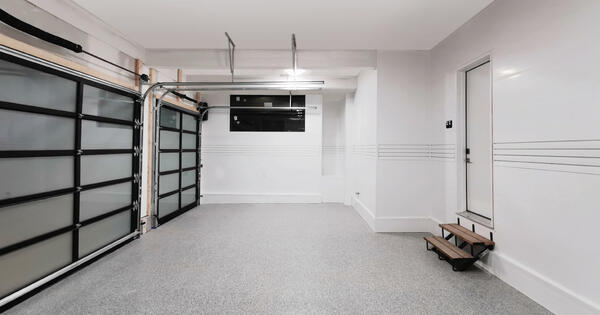
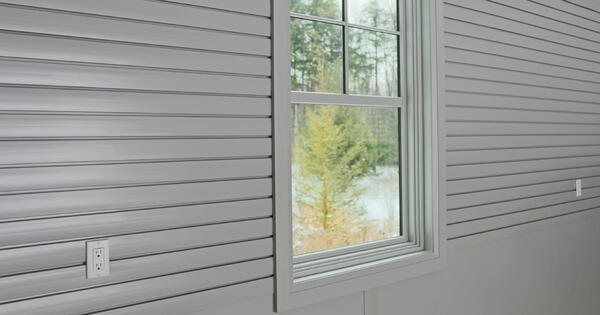
Trusscore Wall&CeilingBoard panels are pre-finished, waterproof panels made from rigid PVC, and they’re one of the most common drywall alternatives for garage walls, workshops, and other high-moisture spaces. Material cost runs higher than standard drywall: Trusscore Wall&CeilingBoard typically ranges from $2.75 to $3.75 per square foot, compared to $0.50 to $2.00 per square foot for drywall. But material cost is only half the equation. Trusscore Wall&CeilingBoard installs directly to studs with basic tools, doesn’t require a helper for most jobs, and skips mudding, taping, sanding, and painting entirely. Using the same 12-foot by 20-foot single-car garage as our drywall example, here’s how the full installed cost compares once labor and finishing are factored in.
| Drywall | Trusscore Wall&CeilingBoard | |
|---|---|---|
| Material cost | $786.81 | $2,388.09 |
| Installation labor | $2,266.00 | $1,318.40 |
| Painting or finishing | $2,266.00 | $0 (pre-finished) |
| Total installed cost | $5,318.81 | $3,706.49 |
In this example, the higher material cost of Trusscore Wall&CeilingBoard is more than offset by the labor and painting it eliminates, bringing the total installed cost below traditional drywall. Actual pricing varies by retailer and region, so use the Trusscore Cost & Materials Estimator to build a quote based on your exact garage dimensions before you commit to either material.
Long-term maintenance and durability savings
Material and labor are only part of what a garage wall costs over time. Drywall in a garage is exposed to temperature swings, humidity, road salt tracked in on tires, and the occasional bump from a car door or stored equipment. Left unprotected, drywall can begin growing mold within 24 to 48 hours of water exposure, and repairs, patching, and repainting add up over a garage’s lifetime. Most homeowners repaint garage drywall every five to ten years to keep it looking presentable, and each repaint adds material and labor cost on top of the original installation.
Trusscore Wall&CeilingBoard is built from rigid PVC that’s 100 percent water and moisture resistant, and it’s scratch and dent resistant, so it never needs repainting or refinishing. The smooth, non-porous surface also wipes clean with soap and water, and the panels back a 20-year standard warranty plus a lifetime extended warranty when registered. Factoring in installation, maintenance, and longevity, Trusscore Wall&CeilingBoard delivers 55 percent lower total cost of ownership than drywall over the life of the product. For a deeper look at the numbers, see the full Trusscore Wall&CeilingBoard vs. drywall comparison.
One caveat worth noting: Trusscore Wall&CeilingBoard isn’t a substitute for a fire-rated wall assembly. If your garage is attached to your home, local code likely requires fire-rated drywall, typically 5/8-inch Type X, on the shared wall and ceiling to slow the spread of fire between the spaces. Trusscore Wall&CeilingBoard can still be installed on top of that fire-rated assembly for a durable, low-maintenance finish. It just can’t replace that fire-rated assembly where code requires fire separation.
How to Save Money on Your Garage Wall Project
Whatever material you choose, homeowners have a few real opportunities to bring the total cost down without cutting corners on the finished result. The two biggest levers are labor, which is where most of the budget goes, and material selection, which affects both the upfront number and what you’ll spend maintaining the space for years afterward.
DIY vs. hiring a pro
Drywall installation is a two-person job in most garages. Full 4-by-10-foot and 4-by-8-foot sheets are heavy and awkward to maneuver alone, especially on ceilings, and getting a smooth, professional-looking finish on the mud and tape takes practice. DIY installation typically saves 15 to 25 percent compared to hiring a contractor, but that savings assumes you already have the tools and the time, and that a first attempt at taping and sanding won’t need a professional fix later.
Hiring a pro makes the most sense for ceiling work, garages with a lot of corners or openings, and any wall that requires fire-rated drywall for code compliance. It also makes sense if your timeline is tight: a contractor crew can finish a two-car garage in a few days, while a first-time DIYer working evenings and weekends might take several weeks.
Garage wall panels like Trusscore Wall&CeilingBoard shift this calculation. Because the panels are lightweight, pre-finished, and install with a tongue-and-groove system, many homeowners handle the entire job themselves, including work that would normally require hiring out.
Where Trusscore reduces total project cost
The biggest cost savings with Trusscore Wall&CeilingBoard come from what the project doesn’t need. There’s no mudding, taping, or sanding, since panels arrive fully finished and ready to install. There’s no painting, since the panels come in a bright white or gray finish that never needs a topcoat. And because the panels resist scratches, dents, and moisture, there’s a much smaller chance you’ll be paying for repairs or a repaint five years down the road.
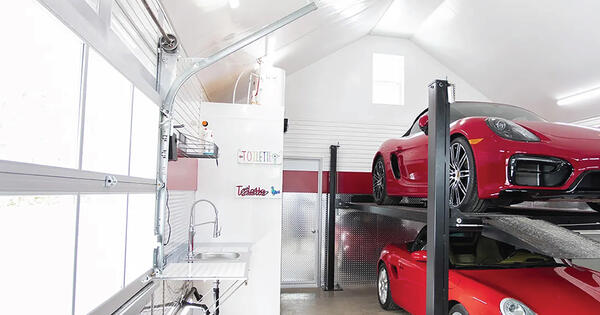
For homeowners weighing drywall against a garage wall panel system, the fastest way to see real numbers is to run your own project through the Trusscore Cost & Materials Estimator. Enter your garage dimensions and product preferences, and it generates a ballpark cost estimate along with a detailed material list you can bring to a local retailer for an exact quote. It’s a useful first step whether you’re planning to install the panels yourself or hand the project to a contractor. For more on where Trusscore fits in a garage renovation, including layout ideas and photos of finished projects, visit our garages and workshops applications page.
FAQ
How much does it cost to drywall a two-car garage?
A two-car garage typically costs $1,000 to $3,900 to drywall, or $1,800 to $9,000 if you’re insulating first. Most two-car garages have 400 to 600 square feet of combined wall and ceiling surface, and the final number depends on drywall thickness, whether you hire a contractor, and local labor rates, which typically fall between $50 and $100 an hour.
Is it cheaper to DIY garage drywall?
Yes. DIY drywall installation typically saves 15 to 25 percent compared to hiring a contractor, since labor accounts for a large share of the total cost. That said, hanging and finishing drywall is usually a two-person job that requires taping, mudding, sanding, and painting, so weigh the time and tools involved before deciding to go it alone.
Do I need insulation before drywalling a garage?
Insulation isn’t required by code in most detached garages, but it’s worth adding if you plan to heat, cool, or spend real time in the space. Insulation always goes in before drywall, since drywall covers and protects the vapor barrier and batts once they’re installed between the studs.
Is drywall a good choice for an unheated garage?
Drywall can work in an unheated garage, but temperature swings and humidity make it prone to cracking, sagging, and mold over time. Moisture-resistant drywall helps, but a waterproof alternative like Trusscore Wall&CeilingBoard holds up better in garages that see condensation, road salt, or seasonal humidity without those maintenance issues.
The cost to drywall a garage in 2026 comes down to three variables you control: how big the space is, whether you insulate before you drywall, and who does the labor. Materials alone rarely break the bank. Labor, finishing, and the ongoing maintenance drywall needs in a garage environment are what push the total higher over time. Insulating first protects your investment and keeps the space usable in every season, and it’s worth budgeting for even if it adds to the upfront number.
Before you buy a single sheet, run your dimensions through the Trusscore Cost & Materials Estimator to compare a drywall budget against a waterproof, pre-finished alternative. If low maintenance and long-term value matter as much as the number on the first quote, Trusscore Wall&CeilingBoard is worth a look before the mud and tape go up.