This post was originally published in May 2025. Last updated: April 2026.
Barndominiums have gone from niche to mainstream over the past decade, and it's easy to see why. They offer more usable space, lower per-square-foot construction costs, and a flexibility that conventional homes can't match. But building one well requires making smart decisions early—especially when it comes to interior materials.
This guide covers everything you need to know about barndominium homes in 2026: what they are, what they cost, the honest trade-offs, and how to finish the interior so it lasts.


What Is a Barndominium?
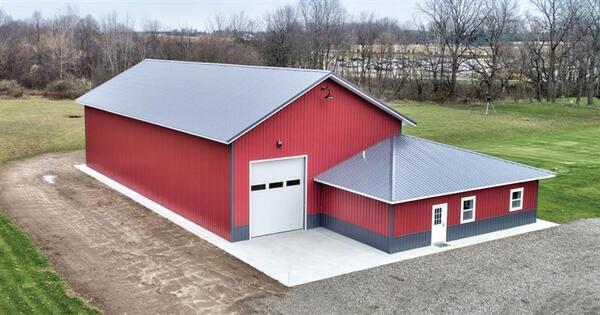
The term "barndominium" blends "barn" and "condominium," but the concept is simpler than either word suggests: it's a large, versatile building—usually metal or post-frame—that functions as both a home and a utility space. They've grown in popularity across rural and semi-rural areas because they deliver a lot of livable square footage at a lower cost than traditional construction.
Definition and Construction Types
Barndominiums are built using one of three primary structural approaches, and the method you choose affects everything from cost to interior finishing options:
- Post-frame construction: The most common barndominium structure. Large wooden posts are set directly in the ground or on concrete footings, supporting the roof and walls without traditional stud framing. Post-frame buildings are fast to erect and relatively inexpensive, making them the go-to choice for budget-conscious builders.
- Steel-frame construction: Uses a rigid steel skeleton as the structural core. Steel-frame barndominiums are extremely strong and fire-resistant, with longer spans possible between supports. They typically cost more than post-frame but offer superior longevity in harsh climates.
- Hybrid construction: Combines a metal exterior shell with conventional interior framing—standard wood studs between the shell and the living space. Hybrids make interior finishing easier because you're working with familiar framing, and they offer better insulation performance than a pure metal building.
How Barndominiums Differ from Traditional Homes
The most obvious difference is structure: barndominiums use a metal exterior shell and large open spans rather than load-bearing interior walls. That open structure is one of the biggest selling points—it lets you configure interior space exactly the way you want it, from a fully open great room to dedicated workshop bays with a living area attached.
The other major difference is construction speed. A barndominium shell can go up in days or weeks rather than months, which compresses the overall project timeline significantly. That speed translates directly into savings on construction financing and temporary housing costs during the build.
Can You Convert an Existing Barn?
Yes—and many people do. Converting an existing post-frame barn into a living space is a popular way to save on structure costs while reusing solid bones. The key considerations are foundation condition, insulation (older barns often have none), electrical and plumbing infrastructure, and interior wall finishing. The same material decisions apply whether you're converting a barn or building new: you need interior finishes that can handle the temperature swings, humidity, and rough use that come with a metal building. See our guide to pole barn interior walls and ceilings for a closer look at conversion-specific material choices.
Barndominium Pros and Cons
Before committing to a barndominium, it's worth understanding what you're getting into on both sides of the ledger. Here's an honest breakdown.
The Advantages
- Lower cost per square foot: Barndominiums typically run $70–$150 per square foot compared to $150–$250+ for traditional stick-built homes.
- Faster construction: A shell can be erected in days to weeks. The full project still takes months, but the timeline is meaningfully shorter than traditional construction.
- Open floor plan flexibility: Fewer load-bearing interior walls means you can configure space freely—and reconfigure later if your needs change.
- Durable exterior: Metal resists fire, rot, insects, and most types of storm damage that wreak havoc on wood-frame homes.
- Low exterior maintenance: Metal siding and roofing require far less upkeep than wood siding, stucco, or masonry.
- Multi-use design: You can combine a home, workshop, hobby space, and equipment storage under one roof—something a traditional home can't easily accommodate.
The Disadvantages
- Financing challenges: Some lenders treat barndominiums as non-standard properties, which can limit mortgage options and require higher down payments.
- Zoning and permitting restrictions: Not all counties allow residential use of metal or post-frame buildings. Research local regulations before purchasing land.
- Appraisal uncertainty: Comparable sales can be hard to find, which sometimes leads to conservative appraisals that don't reflect the build cost.
- Insulation demands: Metal conducts heat and cold efficiently, so a poorly insulated barndominium can be expensive to heat and cool. Spray foam is usually the most effective solution but adds to the budget.
- Interior finish complexity: Metal buildings flex with temperature changes, which can crack drywall and cause traditional finishes to fail. Material selection matters more here than in a stick-built home.
The table below summarizes the key trade-offs at a glance:
| Pros | Cons |
|---|---|
| Lower cost per square foot than traditional construction | Financing can be harder to obtain than a conventional mortgage |
| Faster build timeline—often 50% quicker than a stick-built home | Zoning and permitting restrictions vary widely by county |
| Open, flexible floor plans with minimal load-bearing walls | Resale value can be harder to appraise than traditional homes |
| Highly durable exterior—metal resists fire, rot, and pests | Interior finishes require careful material selection to avoid moisture issues |
| Low exterior maintenance over the long term | Insulation must be carefully planned—metal conducts heat and cold |
| Versatile use—home, workshop, hobby space, or all three | Utilities and HVAC can cost more to run if the envelope isn't well-sealed |
| Customizable design—build exactly what you need | Aesthetic limitations in communities with strict HOA rules |
Barndominium Costs in 2026
Cost is one of the main reasons people choose barndominiums—but the final number depends heavily on build quality, location, finish level, and how much of the work you take on yourself. Here's what to expect in 2026.
Average Cost Per Square Foot
- Basic build (functional, minimal finishes): $70–$100 per square foot. Expect a weathertight shell with basic electrical, plumbing, and economy interior finishes.
- Mid-range build (comfortable, well-finished): $100–$150 per square foot. Includes better insulation, upgraded interior materials, quality fixtures, and a finished appearance throughout.
- Premium build (custom, high-end finishes): $150–$200+ per square foot. Custom layouts, premium appliances, spray foam insulation, high-quality interior wall and ceiling systems, and architectural details throughout.
A 1,500-square-foot mid-range barndominium will typically run $150,000–$225,000 all-in. A 2,500-square-foot premium build can reach $375,000–$500,000 or more, depending on the region and site conditions.
Cost Breakdown Table
This table shows estimated costs by component for a 1,500-square-foot barndominium at basic and mid-range build levels. Use it as a planning tool—not a quote. Get accurate numbers from local contractors and suppliers.
| Material | Basic Build | Mid-Range Build |
|---|---|---|
| Site Prep & Foundation | $8,000–$18,000 | $18,000–$35,000 |
| Framing & Shell (kit or custom) | $30,000–$60,000 | $60,000–$110,000 |
| Roofing & Exterior Cladding | $12,000–$22,000 | $22,000–$45,000 |
| Windows & Doors | $8,000–$15,000 | $15,000–$30,000 |
| Insulation | $6,000–$12,000 | $12,000–$25,000 |
| Electrical & Plumbing | $15,000–$30,000 | $30,000–$60,000 |
| HVAC | $10,000–$20,000 | $20,000–$40,000 |
| Interior Finishes (walls, ceilings, flooring) | $15,000–$30,000 | $30,000–$70,000 |
| Permits & Professional Fees | $3,000–$8,000 | $8,000–$18,000 |
| Estimated Total (1,500 sq ft) | $107,000–$215,000 | $215,000–$433,000 |
Kit vs. Custom Build: Which Costs Less?
Barndominium kits—pre-engineered steel or post-frame packages you order from a manufacturer—typically cost $20,000–$60,000 for the shell components alone. That sounds appealing, but the kit is only the starting point. Site prep, foundation, mechanical systems, interior finishes, and labor on top of the kit cost often bring the total to the same range as a custom build.
The real advantage of kits is speed and design certainty: you know what you're getting before the first shovel hits the ground. Custom builds offer more flexibility in design but require more coordination and can be harder to budget accurately. Neither approach is categorically cheaper—what matters more is your location, the complexity of your layout, and the contractors you're working with.
Hidden Costs to Budget For
First-time barndominium builders consistently underestimate a few line items. Build these into your budget from the start:
- Land clearing and grading: Can add $5,000–$20,000+ depending on the site, especially if trees need to be removed or significant grading is required.
- Well and septic: Rural sites without municipal water and sewer need both. Budget $15,000–$40,000 combined, depending on soil conditions and local requirements.
- Spray foam insulation upgrade: Standard batt insulation often isn't sufficient in metal buildings. Spray foam delivers much better performance but adds $3–$7 per square foot to insulation costs.
- Interior finish materials: The gap between economy and quality interior materials is significant. Upgrading from OSB to a durable PVC panel system like Trusscore Wall&CeilingBoard costs more upfront but saves significantly on maintenance and repairs over the long term.
- Construction financing: Construction loans typically carry higher interest rates than conventional mortgages. The longer your build takes, the more you'll pay in interest.
- Permits and inspections: Permit costs vary widely by county but can run $3,000–$10,000+ for a residential project in many jurisdictions.
Barndominium Interior Design and Layout
The interior of a barndominium is where smart planning pays off. The structural freedom of a metal or post-frame building is an asset, but it also puts more decisions on your plate—especially around how you use the space and what materials you choose to finish it.


Floor Plan Flexibility and Open-Concept Options
One of the biggest advantages of barndominium construction is the absence of load-bearing interior walls. You can design a completely open great room spanning the full width of the building, carve out defined spaces with non-structural partition walls, or leave areas unfinished as workshop bays with direct access from the living space.
The most popular barndominium layouts combine an open-concept living area—kitchen, dining, and living room—with a dedicated master suite, two or three additional bedrooms, and a utility zone or shop space accessed through a large bay door. The ratio of living space to utility space is entirely up to you, which is part of what makes these buildings so appealing to people with specific use cases in mind.
Interior Styles That Work Well
Barndominium interiors can take almost any direction—from modern farmhouse to industrial, rustic to contemporary clean. The most successful designs lean into the architecture: exposed trusses or beams, high ceilings, large windows, and durable surfaces that can handle real-world use. Industrial-style finishes work especially well because they align with the building's bones rather than fighting against them.
Whatever aesthetic you choose, the practical reality of a metal building should inform your material choices. High ceilings and open spans mean more surface area to cover. Metal-frame buildings flex slightly with temperature changes. Humidity can be a factor, especially in utility areas. The materials you choose for walls and ceilings need to handle all of that—which leads to the most consequential decision in any barndominium project.
Best Interior Wall and Ceiling Materials for a Barndominium
Interior material selection matters more in a barndominium than in a typical stick-built home. Metal buildings and post-frame structures are subject to greater temperature swings, more humidity fluctuation, and more physical activity in utility areas—all of which take a toll on conventional materials like drywall.
Here's how the main options stack up:
| Material | Moisture Resistance | Durability | Maintenance | Est. Cost/Sq Ft |
|---|---|---|---|---|
| Drywall | Low | Low | High | $0.50–$1.50 |
| OSB / Plywood | Moderate | Moderate | Low | $0.50–$2.00 |
| FRP Panels | Good | Good | Low | $2.00–$3.50 |
| Trusscore Wall&CeilingBoard (PVC) | Excellent | Excellent | Very Low | $2.75–$3.75 |
Why drywall often fails in barndominiums:
Drywall is the default interior finish in traditional homes, but it's poorly suited to metal buildings. Metal frames flex slightly as temperatures change, and that movement causes drywall seams to crack over time—a frustrating and expensive problem in large open spaces. Drywall is also highly vulnerable to moisture: any humidity infiltration can lead to mold within 24–48 hours. In a working utility space or a building that's not climate-controlled year-round, drywall repairs become a recurring cost.
Why PVC panels are the better choice:
PVC wall panels solve the core problems that make drywall a poor fit for barndominiums. Trusscore Wall&CeilingBoard is 100 percent waterproof—it won't swell, crack, or grow mold regardless of what the humidity does. The interlocking tongue-and-groove panels are flexible enough to accommodate the minor movement common in metal buildings, and they won't telegraph that movement as cracking or seam failure.
Installation is faster, too. Trusscore Wall&CeilingBoard installs up to four times faster than drywall—no taping, no mudding, no sanding, no painting. The panels arrive fully finished and go up with basic carpentry tools. For large barndominium wall and ceiling runs, that speed difference translates directly into labor savings.
The panels also reflect 90 percent of light, which makes a real difference in large, high-ceilinged spaces. Pair them with Trusscore SlatWall in utility areas and you've got an integrated wall system that covers surface area and handles storage—without any of the moisture vulnerability that comes with MDF-based slatwall options.
For a closer look at how Trusscore products perform specifically in barn and workshop environments, see the Barns and Workshops application page.
If you're evaluating your options and want to understand the full case against drywall in utility-style spaces, the drywall alternatives guide covers the comparison in detail.
Barndominium Ceiling Options
Ceiling selection is one of the most underexamined decisions in barndominium planning—and one of the most important, given the scale of the surface area involved. A 2,000-square-foot barndominium has a lot of ceiling, and the material you choose will affect how the space looks, how it performs, and how much time you spend maintaining it for decades to come.
The most common ceiling options and how they compare:
| Ceiling Option | Moisture Resistance | Installation Ease | Maintenance | Typical Cost/Sq Ft |
|---|---|---|---|---|
| Drywall | Low | Difficult | High | $1.50–$3.00 |
| Drop Ceiling / Acoustic Tile | Moderate | Moderate | Moderate | $2.00–$4.00 |
| Exposed Beam / Open | N/A | N/A (no ceiling) | Low | $0 (structural) |
| Trusscore Wall&CeilingBoard (PVC) | Excellent | Easy | Very Low | $2.75–$3.75 |
Drywall Ceilings
Drywall is the most familiar option but is genuinely difficult to install on ceilings—it's heavy, requires at least two people, and needs significant finishing work (taping, mudding, sanding, and multiple coats of paint). More critically, ceiling drywall is highly susceptible to moisture damage from above. Any condensation, roof leak, or humidity issue will stain, bubble, or collapse ceiling drywall quickly. In a barndominium, where roofing and envelope performance can be variable, drywall ceiling failures are common.
Drop Ceilings / Acoustic Tile
Drop ceilings are faster to install than drywall and provide easy access to mechanical systems above—useful if you need to run or service ductwork, electrical, or plumbing. However, acoustic tiles are moisture-sensitive and look dated in most residential applications. They work acceptably in utility or office zones but aren't ideal as the primary ceiling finish in a living area.
Exposed Beams and Open Ceilings
Leaving the structural elements exposed is a popular barndominium aesthetic choice. It eliminates ceiling material costs entirely and embraces the industrial character of the building. The trade-off is reduced energy efficiency—open ceilings are harder to insulate—and more difficult cleaning of structural elements over time. This works best in utility bays and open social areas.
PVC Panel Ceilings
PVC panels like Trusscore Wall&CeilingBoard are an excellent ceiling choice in barndominiums. They're lightweight—40 percent lighter than drywall—which makes ceiling installation manageable with a single installer. They're fully waterproof, so any condensation or minor moisture infiltration from above won't cause staining, bubbling, or mold. And because they're the same panel system used on the walls, you get a consistent, unified finish throughout the space.
The same moisture resistance that makes Trusscore Wall&CeilingBoard ideal for bathrooms and basements makes it equally well-suited to barndominium ceilings, where temperature swings and occasional humidity are realities rather than edge cases. For moisture-related benefits and performance details, see Trusscore's moisture and water resistance information.
Barndominium Maintenance and Long-Term Ownership
One of the main selling points of barndominiums is that they're genuinely easier to maintain than traditional homes—particularly on the exterior. The long-term ownership picture is favorable, but it depends on the choices you make during construction.
Exterior Maintenance
Metal exteriors are significantly lower maintenance than wood siding, stucco, or masonry. Metal doesn't rot, doesn't need painting as frequently, and holds up well to most weather conditions. You'll typically need to:
- Inspect and re-caulk seams around windows, doors, and roof penetrations every few years
- Touch up scratches or chips in the metal coating to prevent rust
- Clear gutters and inspect the roof after major storms
- Check the perimeter for ground contact with the metal shell, which can accelerate corrosion
Compared to a wood-frame home with painted siding, barndominium exterior maintenance is minimal. The roof and metal panels typically carry 30–40-year warranties from quality manufacturers.
Interior Materials That Reduce Maintenance
The interior is where maintenance savings are won or lost depending on your material choices. Drywall repairs, repainting, and mold remediation are the top recurring costs in poorly finished barndominiums. Choosing the right materials from the start eliminates most of them.
Trusscore Wall&CeilingBoard doesn't need painting—ever. The pre-finished white surface maintains its appearance without refinishing or recoating. It wipes clean with soap and water, handles chemical cleaners without damage, and can be pressure-washed in utility areas. In a working shop or utility space where walls take real abuse—tool racks, equipment contact, grease, and grime—that durability is the difference between walls that stay presentable and walls that look worn out within a few years.
Trusscore SlatWall adds the same durability to your storage system. Unlike MDF-based slatwall that swells and fails when it gets wet, Trusscore SlatWall handles moisture without degrading—maintaining its full 75-pound-per-square-foot load capacity throughout its service life.
Is a Barndominium a Good Investment?
The investment case for barndominiums is genuinely favorable for the right buyer in the right market—but it's not universal. Here's the honest picture:
In rural and semi-rural markets where barndominiums are common, resale values have strengthened significantly as the category has matured. Buyers who understand the format are willing to pay for well-built, well-finished examples. The land value underneath a barndominium often appreciates independently of the structure, which provides a floor on long-term value.
The risks are real, though. In markets where barndominiums are rare or unfamiliar, finding a qualified appraiser and a willing buyer can be more difficult. HOA-governed communities rarely permit barndominiums. And financing remains more complicated than for a conventional home—which affects both your ability to build and the pool of buyers when you eventually sell.
The bottom line: if you're building on land you own or are buying, plan to stay for at least ten years, and are targeting a rural or semi-rural market, a well-built barndominium is a solid investment. If you need maximum financing flexibility and easy resale in suburban areas, a traditional home carries less risk.
FAQ
What Is a Barndominium?
A barndominium is a metal or post-frame building that combines residential living space with utility, workshop, or storage areas under one roof. The term is a blend of "barn" and "condominium." Barndominiums are popular in rural and semi-rural areas because they offer more square footage at a lower cost than traditional stick-built homes, with durable metal exteriors and highly flexible interior layouts.
How Much Does It Cost to Build a Barndominium?
In 2026, barndominium construction typically costs $70–$150 per square foot, depending on finish level and location. A basic 1,500-square-foot build runs $107,000–$215,000 all-in; a mid-range build of the same size costs $215,000–$433,000. Premium custom builds with high-end finishes can exceed $200 per square foot. Site-specific costs—well, septic, clearing, and grading—can add $20,000–$60,000 on top of the base build cost.
Are Barndominiums Cheaper Than Regular Homes?
Generally, yes—at a basic or mid-range finish level. Barndominiums save money primarily on structure and speed: the shell goes up faster and costs less per square foot than stick-frame construction. However, once you add premium finishes, spray foam insulation, custom layout details, and quality interior materials, the cost gap narrows significantly. The biggest savings are realized by buyers who prioritize space and durability over luxury finishes.
How Long Does It Take to Build a Barndominium?
From breaking ground to move-in, most barndominiums take five to twelve months, depending on project complexity, contractor availability, and permit timelines. The shell itself can be erected in days to weeks once materials are on site. Interior finishing—electrical, plumbing, insulation, wall and ceiling installation, and finish work—takes the bulk of the project time. Choosing faster-to-install interior materials like PVC panels instead of drywall can meaningfully compress the interior finish phase.
Barndominiums offer a compelling combination of value, flexibility, and durability—but getting the most out of one requires making informed decisions at every stage of the project. The structural advantages are real: lower cost per square foot, faster build timelines, and durable metal exteriors that require minimal upkeep. The trade-offs are also real: financing complexity, insulation demands, and an interior finishing challenge that rewards smart material selection.
The most consequential decision most barndominium builders underestimate is what to put on the interior walls and ceilings. Drywall is familiar but a poor fit for metal buildings—it cracks with structural movement, fails in humidity, and requires ongoing maintenance that adds up quickly over time. PVC panels solve those problems directly: they're waterproof, durable, fast to install, and maintenance-free in a way that drywall simply isn't.
If you're planning a barndominium and want to see how Trusscore products perform in large utility-style spaces, explore Trusscore Wall&CeilingBoard and Trusscore SlatWall, or use the Trusscore Cost & Materials Estimator to get a material count for your project. When you're ready to buy, the Where to Buy map will connect you with a retailer near you.