This post was originally published in August 2025. Last updated: June 2026.
If you've ever picked up a DIY project or had a contractor walk you through a renovation quote, you've probably heard "Sheetrock" and "drywall" used like they're exactly the same thing. In most conversations, they are—but the distinction is worth understanding before you buy.
Drywall is the generic name for the material. Sheetrock is a brand name for one manufacturer's version of it. The difference is real, but it's less about performance and more about vocabulary. What matters more is knowing which type of drywall to use, what it costs, and whether a different wall material might serve your project better.
This article covers all of it—the Sheetrock vs. drywall distinction, drywall types and thicknesses, real 2026 cost ranges, and when a purpose-built alternative like Trusscore Wall&CeilingBoard makes more sense than traditional gypsum board.
What Is Drywall? What Is Sheetrock?
These two terms get tangled up constantly in hardware stores, job sites, and renovation blogs. Here's what each one actually means.
Drywall—The Generic Material
Drywall is a flat panel made from a gypsum plaster core pressed between two sheets of thick paper. It was developed as a faster, more affordable alternative to traditional plaster walls, and it became the standard for residential and commercial interior construction in North America starting in the mid-twentieth century.
Today, drywall covers almost every wall and ceiling in newly built homes. It's inexpensive, widely available, easy to cut, and straightforward to finish—which is why it became the industry default and has stayed there.
Sheetrock—The USG Brand Name
Sheetrock is a registered brand name owned by the United States Gypsum Company (USG). Like Kleenex for tissue or Band-Aid for bandages, Sheetrock became so widely used that people started applying the brand name to the entire product category. A contractor who asks for "Sheetrock" is almost always just asking for drywall—they've probably used USG products for years and the name stuck.
USG's Sheetrock line does include some proprietary formulations depending on the product—added mold inhibitors, lighter-weight cores, or performance-specific variants—but at its core, Sheetrock is gypsum board, just like every other brand.
Gypsum Board, Wallboard, and Other Names You'll Hear
The construction industry isn't shy about synonyms. You'll hear "gypsum board," "wallboard," "plasterboard," and "gyproc" used to describe the same basic product. They all refer to the same underlying material—a gypsum core sandwiched between paper facings—regardless of manufacturer or specific formulation.


Types of Drywall (and Sheetrock Product Lines)
Not all drywall is interchangeable. The right panel for a bedroom ceiling is different from the right panel for a garage wall or a basement laundry room. Understanding the main drywall types—and their thickness options—helps you spec the right product for each space before you buy.
Standard Drywall
Standard drywall is the most common panel in residential construction. It comes in two main thicknesses, each suited to different applications.
1/2-inch drywall is the go-to for most interior walls and ceilings. It's light enough to handle easily, widely stocked at every home center, and appropriate for the majority of drywalled spaces in a typical home—bedrooms, living rooms, hallways, and finished basements.
5/8-inch drywall is heavier and more rigid. It's commonly used on ceilings (to resist sagging over longer spans), in garages, and in any application where a building code or structural requirement calls for added mass. It also performs better for sound attenuation and is the base thickness for most fire-rated assemblies.
Moisture-Resistant Drywall (Green Board)
Moisture-resistant drywall—often called green board for its green-tinted facing paper—uses a treated paper facing and a moisture-resistant gypsum core to slow water absorption. It's a step up from standard drywall in humid environments and is commonly specified in bathrooms, laundry rooms, and basements.
The important caveat: green board resists moisture, it doesn't block it. In areas that see direct water contact, prolonged humidity, or repeated condensation, green board will still absorb water over time and can support mold growth. It's a better choice than standard drywall in these spaces, but it's not waterproof. If you're finishing a basement or a garage that sees real moisture, moisture-resistant drywall is a partial solution at best.
Fire-Rated Drywall (Type X)
Type X drywall is engineered to slow the spread of fire. It achieves this through a denser gypsum core that contains non-combustible glass fibers—which hold the panel together longer under heat than a standard core would. Type X drywall is almost always 5/8 inch thick and is required by building codes in specific locations: garage-to-living-space walls, walls separating attached garages from homes, mechanical rooms, and multi-unit shared walls.
If you're finishing a garage interior or doing any work adjacent to a fire-separation wall, check your local code requirements before choosing a panel—Type X may not be optional.
Soundproof Drywall
Specialty acoustic drywall—such as USG's Sheetrock Ultralight Panels or QuietRock panels from other manufacturers—uses a viscoelastic polymer layer or a denser core compound to dampen sound transmission. These panels are significantly more expensive than standard drywall (often three to five times the cost per sheet), but they deliver meaningful noise reduction in walls between bedrooms, home theaters, or shared spaces in multi-unit buildings.
For most residential applications, the added cost is hard to justify unless sound control is a specific project goal. Doubling up standard 5/8-inch drywall and filling the cavity with acoustic insulation is often a more cost-effective path to better soundproofing.
Sheetrock vs. Drywall: How Do They Actually Compare?
Understanding the distinction between the Sheetrock brand and generic drywall is useful, but the more practical comparison is how these materials stack up across the factors that matter to a real project—durability, moisture performance, installation, and cost.
| Feature | Generic Drywall | Sheetrock (USG) |
|---|---|---|
| Core material | Gypsum | Gypsum |
| Manufacturer | Multiple brands | USG only |
| Standard thickness options | 1/4”, 3/8”, 1/2”, 5/8” | 1/4”, 3/8”, 1/2”, 5/8” |
| Moisture-resistant options | Yes (green board) | Yes (Sheetrock Mold Tough) |
| Fire-rated options | Yes (Type X) | Yes (Type X and Type C) |
| Soundproofing options | Yes (varies by brand) | Yes (SoundBreak XP) |
| Average cost per sheet (4×8) | $10 to $18 | $12 to $22 |
| Wide availability | Yes | Yes |
| Performance difference vs. generic | Baseline | Marginal by product line |
The short version: for standard residential installations, the difference between generic drywall and Sheetrock is small. Where Sheetrock earns its premium is in specific product lines—Mold Tough for humidity control, Type C for enhanced fire resistance, and SoundBreak XP for acoustic performance. If a project calls for those capabilities, the Sheetrock-specific formulations are worth comparing against competing specialty products.
Cost Breakdown—Drywall vs. Sheetrock vs. Alternatives
Material price is only part of the cost equation for a wall or ceiling project. Labor, finishing, and long-term maintenance all add up—and they can change the math significantly depending on the space.
Material Costs
For 2026, here are realistic material cost ranges at major home centers (U.S. pricing):
- Standard drywall (1/2”, 4×8 sheet): $10 to $15 per sheet / $0.32 to $0.47 per square foot
- Standard drywall (5/8”, 4×8 sheet): $13 to $18 per sheet / $0.41 to $0.56 per square foot
- Sheetrock (USG standard, 4×8 sheet): $12 to $22 per sheet / $0.37 to $0.69 per square foot
- Moisture-resistant drywall (green board): $16 to $24 per sheet / $0.50 to $0.75 per square foot
- Fire-rated drywall (Type X, 5/8”): $15 to $22 per sheet / $0.47 to $0.69 per square foot
- Specialty acoustic drywall: $50 to $100+ per sheet / $1.56 to $3.13 per square foot
Keep in mind that material cost alone rarely tells the full story. Drywall requires tape, joint compound, corner bead, primer, and paint—consumables that can add $0.50 to $1.50 per square foot to material costs before a single hour of labor.
Installation Labor Costs
Drywall installation involves hanging the panels, taping, mudding, sanding, priming, and painting—a multi-day process that requires either skilled labor or significant DIY time.
- Professional hanging and finishing: $1.50 to $3.50 per square foot (materials not included)
- Full professional install (hang, tape, mud, sand, prime, paint): $3.00 to $5.50 per square foot
- Typical hourly rate for a drywall contractor: $40 to $75/hour depending on region
- DIY installation: Material cost only, but factor in tool rental, waste, and multiple days of work plus drying time between coats
Full Project Cost Estimates
To put those numbers in context, here are rough 2026 estimates for complete drywall projects in common spaces:
- Garage (two-car, approx. 500 square foot of wall and ceiling): $1,500 to $3,500 professional install / $600 to $1,000 DIY materials
- Basement (unfinished, approx. 800 square foot): $2,500 to $5,500 professional / $900 to $1,600 DIY materials
- Laundry room (approx. 120 square foot): $400 to $900 professional / $150 to $300 DIY materials
These ranges assume standard drywall and typical regional labor rates. Moisture-resistant or fire-rated panels will push material costs higher.
Long-Term Cost
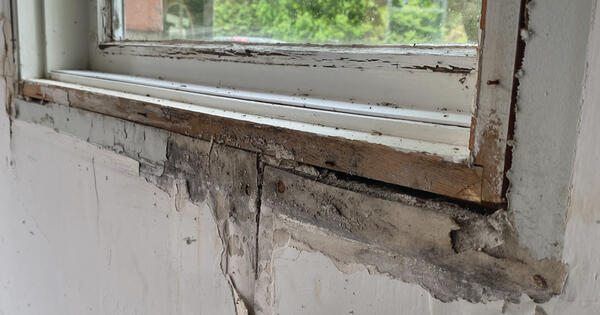
Initial cost matters, but it's not the only cost. Drywall in moisture-prone spaces tends to develop problems over time—soft spots from water infiltration, discoloration, and mold that require patching or panel replacement. Learn more about how to prevent and repair drywall water damage if you're already dealing with these issues.
Ongoing maintenance for a drywalled garage or basement typically includes touch-up painting every three to five years, patching dents and scuffs in high-traffic areas, and replacing panels affected by moisture damage—a job that involves removing and reinstalling multiple sheets, retaping seams, and repainting. That accumulated maintenance cost, plus the disruption of doing the work, is a real factor in total lifetime cost of ownership, and it's worth weighing before choosing a material solely on initial panel price.
When to Use Drywall—and When to Choose Something Better
Drywall is the right choice for a lot of spaces. It's not the right choice for all of them. The key variable is how much the environment will challenge the material. In dry, climate-controlled, low-traffic spaces, drywall holds up well and there's no compelling reason to pay more for something else. In spaces that see regular humidity, moisture, or heavy use, drywall's limitations become real problems.
Here's a practical breakdown by room type:
- Living rooms and bedrooms: Standard drywall is the right call. These spaces are dry, traffic is light, and drywall's cost advantage is real. A good paint job and normal maintenance will keep it looking clean for years.
- Home offices and dens: Same logic applies. Drywall works fine. Upgrade to acoustic drywall if sound isolation matters to you.
- Garages and workshops: Drywall struggles here. Temperature swings, humidity, impact from tools and equipment, and the sheer difficulty of keeping a garage space clean all work against it. This is one of the strongest use cases for a different material.
- Basements: Moisture is the core issue. Even "dry" basements have higher ambient humidity than above-grade living spaces, and most basement finishing projects eventually encounter some degree of water intrusion. Drywall can survive in a well-waterproofed basement, but green board is the minimum—and many homeowners end up replacing it after a wet season.
- Laundry rooms: Steam, humidity, and the occasional hose connection gone wrong make laundry rooms tougher than they look. Moisture-resistant drywall is the minimum here.
- Mudrooms and utility areas: High traffic plus occasional water contact means standard drywall will show wear quickly. Impact resistance and cleanability become priorities.
Moisture-prone and high-traffic spaces are where drywall's weaknesses are most visible—and where the case for exploring purpose-built alternatives is strongest.


The Alternative Worth Knowing: Trusscore Wall&CeilingBoard
Drywall is the default. Trusscore Wall&CeilingBoard is what happens when you design a wall and ceiling panel specifically for the spaces where drywall fails.
Wall&CeilingBoard is a PVC panel system built for the environments that punish traditional gypsum board: garages and workshops, basements, laundry rooms, utility areas, and commercial spaces that need a clean, durable finish. Here's what makes it different:
- Completely water-resistant. Unlike drywall—including green board—Trusscore panels don't absorb moisture. They won't warp, swell, or support mold and mildew growth. Water wipes off.
- Durable and impact-resistant. Garages and workshops are hard on walls. Wall&CeilingBoard handles the bumps, scrapes, and impact that would crack or dent drywall over time.
- Easy to clean. The smooth, bright white surface wipes down with a damp cloth. No repainting, no patching, no need to schedule maintenance cycles.
- Fast to install. Panels click together with a tongue-and-groove system and fasten with screws—no taping, mudding, sanding, or waiting for compound to dry. That translates to faster installs and lower labor costs.
- No paint required. The finished surface is ready to go. For spaces like garages and basements, the bright reflective finish also improves the feel of the space without any extra work.
Check out superior drywall alternatives for garage walls for a deeper comparison if you're planning a garage project.
FAQ
Is Sheetrock the Same as Drywall?
Yes—Sheetrock is a brand of drywall, not a different product. Both are made from a gypsum core between paper facings. USG, the company behind Sheetrock, manufactures various product lines with performance enhancements, but the underlying material is the same. Most people use "Sheetrock" and "drywall" interchangeably, and for most projects, that's fine.
What's the Difference Between Sheetrock and Regular Drywall?
The main difference is the manufacturer and, in some cases, the specific formulation. Generic drywall is made by dozens of manufacturers and meets the same base performance standards. Sheetrock is a USG brand, and some product lines in the Sheetrock lineup—like Mold Tough, Type C fire-rated panels, and SoundBreak XP—include proprietary additives or core modifications. For a standard wall or ceiling in a dry space, generic drywall and Sheetrock perform nearly identically.
How Much Does It Cost to Drywall a Garage or Basement?
For a two-car garage (approximately 500 square foot of wall and ceiling surface), expect to pay $1,500 to $3,500 for professional installation with standard drywall, or $600 to $1,000 in materials if you're doing it yourself. A full basement finishing project at around 800 square foot typically runs $2,500 to $5,500 professionally installed. Moisture-resistant or fire-rated panels push those numbers higher, and finishing costs (paint, trim) are separate.
Is Drywall a Non-Porous Surface?
No—drywall is porous. The gypsum core absorbs moisture readily, and even painted drywall is semi-porous. In high-humidity environments, that absorption leads to softening, discoloration, and mold growth over time. This is why moisture-resistant drywall exists, and why waterproof alternatives like Trusscore Wall&CeilingBoard offer a meaningful advantage in garages, basements, and laundry rooms. For more detail, see the Trusscore resource on moisture and water resistance.
The Sheetrock vs. drywall question has a simple answer: they're the same material, one branded and one generic. Understanding that distinction is useful when you're reading specs or comparing products, but it won't change most renovation decisions.
The bigger question is whether drywall—Sheetrock or otherwise—is the right material for your project in the first place. In dry living spaces, standard drywall is a practical, cost-effective choice. In garages, basements, and laundry rooms, it's worth pausing before defaulting to gypsum board and asking whether a material purpose-built for those conditions makes more sense.
Trusscore Wall&CeilingBoard was designed for exactly those spaces. It installs faster, handles moisture without concern, resists impact, and needs none of the ongoing maintenance that drywall requires. Ready to see if Wall&CeilingBoard is right for your project? Explore the Trusscore Wall&CeilingBoard product page, use the Cost & Materials Estimator to get project-specific numbers, or find a dealer near you to get started.