This post was originally published in March 2023. Last updated: May 2026.
Drywall has been the default ceiling material for decades, but it’s not always the right fit. It’s heavy, prone to cracking, and notoriously difficult to install overhead. More importantly, it doesn’t hold up well in moisture-prone spaces—and for homeowners finishing a basement, upgrading a garage, or renovating a bathroom, that’s a serious problem. If you’re looking for an alternative to a drywall ceiling, you’re in good company.
This guide compares seven of the best DIY ceiling alternatives to drywall—covering cost, installation difficulty, durability, and best use case. Whether your priority is budget, moisture resistance, or a faster install, there’s a material here that fits.
Here’s what we’ll cover for each option:
- Cost per sq. ft.
- Installation difficulty
- Durability
- Best use case
Why Choose a Drywall Alternative for Your Ceiling?
Drywall works fine in ideal conditions, but ceilings are rarely ideal. Installing drywall overhead is physically demanding, usually requiring at least two people and a drywall lift to hold sheets in place while fastening. Even with skilled labor, the finishing process—taping, mudding, sanding, priming, and painting—adds days to a project.
Moisture vulnerability is the biggest concern. In basements, garages, and bathrooms, even minor humidity can cause drywall to absorb moisture, leading to sagging, mold growth, and unsightly staining. Repairs aren’t just cosmetic—they’re structural, and they’re expensive.
Cracking and sagging are common over time, particularly in spaces with fluctuating temperatures or structural movement. And when maintenance is needed—whether you’re patching a crack or addressing water damage—drywall demands multiple steps: cut, patch, tape, mud, sand, and paint.
For DIYers who want a ceiling that installs faster, holds up better in wet environments, and stays low-maintenance for years, there are better options.
Key Considerations When Selecting a Ceiling Material
Not every ceiling alternative works in every space. Before you decide on a material, factor in these five variables:
- Budget: Costs range from under $1 per sq. ft. for plywood to $8 or more for metal tiles or premium PVC panels. Include installation costs if you’re not doing it yourself.
- Moisture exposure: Kitchens, bathrooms, garages, and basements all see elevated humidity. Some materials—like plywood and wood—will warp or rot without proper sealing, while PVC and metal are naturally resistant.
- Ceiling height: Drop ceiling systems require a minimum of about 3-1/2” of clearance below the existing ceiling to accommodate the grid. Low ceilings may rule out that option entirely.
- Access to utilities: If you need to reach wiring, plumbing, or HVAC above the ceiling, choose a material that allows easy panel removal—like a drop ceiling system or Trusscore Wall&CeilingBoard.
- DIY vs. professional install: Most of the materials on this list are DIY-friendly, but some—like metal ceiling tiles—require precise alignment that can be tricky for first-timers. PVC panels and drop ceiling systems are among the most beginner-friendly options available.


7 DIY Ceiling Alternatives to Drywall Compared
Each of the following options brings something different to the table. Here’s a closer look at what makes each one worth considering—and where each one falls short.
1. PVC ceiling panels
PVC ceiling panels are among the most practical alternatives to drywall, particularly in spaces where moisture is a concern. They’re lightweight, 100% waterproof, and resistant to mold and mildew from the start—no sealing required. Most PVC panel systems use a tongue-and-groove or interlocking design that snaps together without joint compound or specialized tools.
- Pros: Waterproof; mold- and mildew-resistant; lightweight; low-maintenance; no painting required; some systems allow panel removal for utility access
- Limitations: Can look utilitarian in decorative living spaces; quality varies significantly between brands
- Best use case: Basements, garages, bathrooms, laundry rooms, and any space where moisture resistance is the priority
- Cost: $2 to $4 per sq. ft. (material only; premium systems at the higher end)
- DIY difficulty: Easy
2. Plywood
Plywood is one of the most accessible ceiling options available, and it’s a staple in garages and workshops for good reason. Large sheets cover a lot of ground quickly, and installation is straightforward with basic tools. It can be painted, stained, or left as-is depending on the look you’re going for.
- Pros: Low cost; fast to install; easy to cut and paint; available at any home improvement store
- Limitations: Will warp in humid environments without proper sealing and priming; visible seams require finishing; not suitable for wet areas
- Best use case: Garages, workshops, utility spaces, and dry interior rooms
- Cost: $0.50 to $1.50 per sq. ft.
- DIY difficulty: Easy
3. Beadboard
Beadboard is a classic paneling option that works particularly well in rooms where aesthetics matter. The narrow vertical grooves give it a cottage-style character that’s hard to replicate with flat drywall. It comes in both solid wood and MDF versions—MDF versions are cheaper but far less moisture-resistant.
- Pros: Adds visual interest; easy to paint; available pre-primed; works well alongside wainscoting
- Limitations: MDF versions swell in humidity; solid wood versions can be expensive; installation requires careful alignment
- Best use case: Kitchens, bathrooms (solid wood only), covered porches, and rooms where style is a priority
- Cost: $1 to $3 per sq. ft.
- DIY difficulty: Moderate
4. Metal ceiling tiles
Metal ceiling tiles—made from tin, aluminum, or steel—bring a distinctive look that’s hard to match with any other material. They’re available in a range of embossed patterns and can be painted or left in a natural metallic finish. They’re also genuinely durable, resistant to moisture, and won’t crack or sag over time.
- Pros: Highly durable; moisture-resistant; fire-resistant; unique aesthetic; long lifespan
- Limitations: Higher cost; precise alignment required during installation; can dent; more involved than other options
- Best use case: Dining rooms, kitchens, bars, and vintage-inspired or decorative living spaces
- Cost: $3 to $8 per sq. ft.
- DIY difficulty: Moderate to difficult
5. Drop ceiling systems
Drop ceiling systems use a suspended grid that holds lightweight tiles in place below the existing ceiling structure. They’ve long been a staple in basements and commercial spaces because they allow easy access to utilities overhead without causing damage to the ceiling itself.
- Pros: Easy utility access; some acoustic dampening; wide variety of tile styles available; no finishing required
- Limitations: Requires minimum 3-1/2” clearance below existing ceiling; grid is visible and can look dated; tiles can sag or stain with moisture
- Best use case: Basements, home offices, and rooms with exposed utilities or ductwork
- Cost: $1 to $3 per sq. ft.
- DIY difficulty: Moderate
6. Wood planks and shiplap
Wood plank and shiplap ceilings have surged in popularity with modern farmhouse and Scandinavian-inspired design. They bring warmth, texture, and a natural aesthetic to any room, and they work on flat ceilings or vaulted designs. Installation is relatively straightforward compared to drywall, though moisture management is critical.
- Pros: Warm, natural aesthetic; works well on vaulted ceilings; can be stained or painted; adds lasting character
- Limitations: Requires sealing in humid spaces; more expensive than plywood; can expand and contract with temperature changes
- Best use case: Living rooms, bedrooms, dining rooms, covered patios, and finished basements with controlled humidity
- Cost: $2 to $5 per sq. ft.
- DIY difficulty: Moderate
7. Fabric and acoustic panels
Fabric and stretched ceiling systems offer a soft, contemporary look unlike any other ceiling material. High-end versions use a PVC-based stretch membrane, while DIY-friendly options use fabric stretched across a frame. Acoustic panels—fabric-wrapped panels with sound-absorbing cores—serve double duty by improving room acoustics.
- Pros: Unique visual impact; hides imperfections and uneven surfaces; can improve acoustics; relatively easy to swap out
- Limitations: Not durable; can collect dust or sag over time; not suitable for kitchens or wet areas
- Best use case: Bedrooms, media rooms, home theaters, and contemporary living spaces
- Cost: $3 to $6 per sq. ft.
- DIY difficulty: Easy to moderate
Cost Comparison at a Glance
Use this table to quickly compare your options side by side. All cost estimates reflect 2026 material pricing for North American markets.
| Material | Cost per sq. ft. | Install difficulty | Moisture resistance | Lifespan |
|---|---|---|---|---|
| PVC panels (Trusscore Wall&CeilingBoard) | $2 to $4 | Easy | Excellent (100% waterproof) | 50+ years |
| Plywood | $0.50 to $1.50 | Easy | Poor (needs sealing) | 20 to 30 years |
| Beadboard | $1 to $3 | Moderate | Fair (needs sealing) | 15 to 25 years |
| Metal ceiling tiles | $3 to $8 | Moderate to difficult | Good | 30 to 50 years |
| Drop ceiling systems | $1 to $3 | Moderate | Fair | 15 to 25 years |
| Wood planks or shiplap | $2 to $5 | Moderate | Poor (needs sealing) | 15 to 25 years |
| Fabric or acoustic panels | $3 to $6 | Easy to moderate | Poor | 5 to 10 years |
Best Ceiling Alternative by Room
The right ceiling material isn’t just about cost and durability in the abstract—it’s about how a space is actually used. Here’s how to narrow down your best option based on where you’re installing it.
Basement
Basements are the most demanding environment for ceiling materials. They tend to have higher humidity, limited natural light, and structural elements that need to be concealed. Moisture resistance here isn’t optional—it’s essential. PVC ceiling panels are the strongest choice for basement ceilings. They won’t absorb moisture, won’t grow mold, and can be removed if you need to access wiring or plumbing above. Drop ceiling systems are the next best option if you have sufficient clearance and anticipate needing regular utility access. Avoid wood-based materials in basements unless the space is fully climate-controlled and you’re committed to ongoing sealing and maintenance.
Garage and workshop
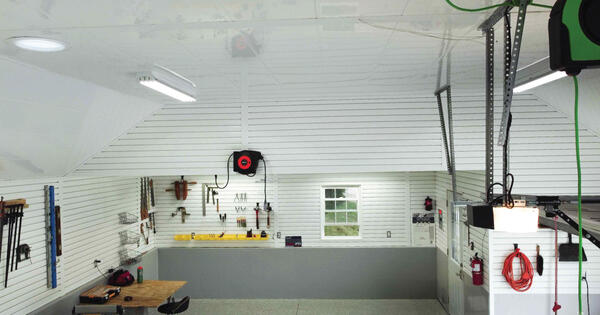
Garages and workshops need a ceiling that handles dust, humidity, cleaning, and the occasional impact. The emphasis here is on durability and easy maintenance—aesthetics are secondary. PVC panels are again the top performer: they wipe clean easily, hold up against moisture and cleaning chemicals, and resist dents and scratches. Plywood is a budget-friendly alternative but needs proper sealing to perform in an unheated or unsealed garage. Metal ceiling tiles work in workshop spaces but can be cost-prohibitive relative to the application.
Bathroom and laundry
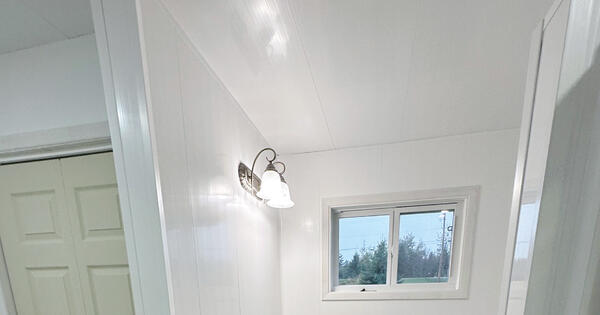
Bathrooms and laundry rooms see the most extreme moisture exposure of any interior space. Standing water, steam, and condensation are constant challenges. Any material used here needs to be genuinely waterproof—not just moisture-resistant. PVC panels are the clear choice. They handle steam and humidity without absorbing moisture or promoting mold growth. Beadboard can work in bathrooms if you use solid wood and apply a quality primer and paint—but it requires periodic maintenance to stay in good condition. Avoid MDF-based options in these spaces entirely, and avoid standard drywall regardless of what type it is.
Kitchen and living spaces
Kitchens benefit from ceiling materials that are easy to clean and hold up to cooking grease, steam, and occasional splatter. Living rooms and dining rooms have more flexibility, with aesthetics playing a larger role in the decision. In kitchens, PVC panels and metal tiles are the most practical choices—both clean up easily and resist moisture. In living rooms and dining rooms, wood planks, shiplap, and beadboard add warmth and character that PVC or metal can’t replicate. Fabric and acoustic panels are best reserved for bedrooms and media rooms where sound quality matters more than durability.
Trusscore Wall&CeilingBoard: A Superior DIY Drywall Ceiling Alternative
Of all the PVC ceiling options on the market, Trusscore Wall&CeilingBoard stands apart in several important ways. It’s not a generic PVC panel—it’s an engineered product designed for demanding environments and long-term performance.
- Faster installation than drywall. Each 8-foot panel weighs less than eight pounds—about 40% lighter than comparable drywall. The tongue-and-groove interlocking system and pre-punched screw flange allow a single person to install panels without specialized equipment. There’s no taping, no mudding, no sanding, and no painting. In most cases, a ceiling can be finished in a single afternoon.
- Waterproof and mold-resistant. Trusscore Wall&CeilingBoard panels are 100% water and moisture resistant. They won’t absorb airborne moisture, won’t degrade in damp environments, and will never grow mold or mildew. In wet spaces like basements, garages, and bathrooms, that’s a meaningful difference from drywall, which can begin absorbing moisture almost immediately after installation.
- Built to last. The internal truss design makes these panels scratch-, dent-, and damage-resistant. They’re engineered to outlast the buildings they’re installed in—which means no recurring maintenance costs, no repainting, and no patching.
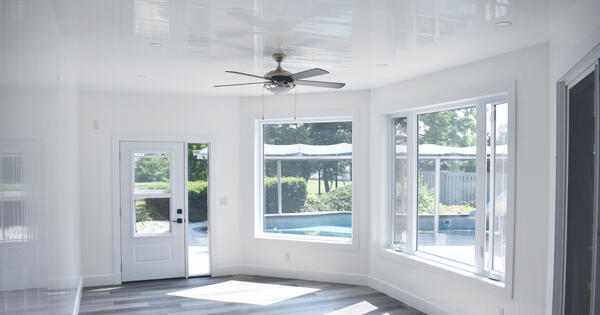
- Bright, reflective finish. Trusscore Wall&CeilingBoard comes in a bright white finish that reflects 90% of the light that hits it. On a ceiling, that means noticeably more light in the room without additional fixtures—particularly valuable in darker spaces like garages and basements.
- Removable for utility access. Unlike drywall, Trusscore Wall&CeilingBoard panels can be removed and reinstalled without damage. If you need to reach wiring or plumbing above the ceiling, it’s as simple as unscrewing and re-securing the panel—no cutting, patching, or repainting required.
- Available in multiple lengths. Trusscore Wall&CeilingBoard comes in 8’, 10’, 12’, 14’, 16’, and 20’ lengths, making it a practical option for large structures like workshops, garages, and agricultural buildings where standard 4’ × 8’ drywall sheets create unnecessary seams.
How does it compare?
- vs. drywall: Installs faster, handles moisture better, requires no finishing, and allows panel removal for utility access
- vs. drop ceilings: More finished appearance, superior moisture performance, and a tighter seal against drafts and pests
- vs. generic PVC panels: Engineered internal truss structure, Class A fire rating, and longer available panel lengths set it apart for demanding applications


Which DIY Ceiling Alternative Is Right for You?
The best ceiling material comes down to a combination of four factors: budget, room type, moisture exposure, and your comfort with installation. Here’s a quick decision framework.
- If moisture is your primary concern (basement, garage, bathroom, laundry room): Go with PVC panels. Trusscore Wall&CeilingBoard is the top performer in this category, but any quality PVC system will outperform drywall in wet environments.
- If budget is the deciding factor: Plywood is the most affordable option and works well in dry spaces. Beadboard is a step up in style at a still-reasonable price point. For moisture-prone spaces, don’t let a lower upfront cost lead you toward a material that’ll need replacing in five years.
- If aesthetics matter most: Wood planks, shiplap, beadboard, and metal tiles each bring a distinctive look. These work best in living rooms, dining rooms, and finished spaces where humidity is controlled.
- If you need utility access: Drop ceiling systems and Trusscore Wall&CeilingBoard are your two best options. Both allow you to access wiring, plumbing, or HVAC without damaging the ceiling.
- If this is your first DIY ceiling project: PVC panels and drop ceiling systems are the most beginner-friendly. Both require minimal finishing work and forgive minor alignment errors better than materials that need seamless joints.
FAQ
Here are answers to the most common questions homeowners ask when comparing ceiling alternatives.
What is the cheapest alternative to a drywall ceiling?
Plywood is typically the most affordable ceiling material, often available for $0.50 to $1.50 per sq. ft. It’s easy to install, accepts paint well, and works reliably in garages and workshops. It’s not moisture-resistant without proper sealing, though, so it’s not a good fit for basements or bathrooms without additional prep work.
Can you install ceiling panels directly over drywall?
In most cases, yes. PVC panels, wood planks, and beadboard can all be installed over existing drywall if the drywall is in good condition and properly fastened. Drop ceiling systems also work over existing drywall. Always check manufacturer guidelines first—some products require direct attachment to studs or joists for proper support.
What is the best moisture-resistant ceiling material?
PVC ceiling panels are the best moisture-resistant ceiling material for most applications. They’re 100% waterproof, mold- and mildew-resistant, and require no sealing or priming to perform. Metal ceiling tiles are also moisture-resistant but cost more and are more difficult to install. Even moisture-resistant drywall doesn’t compare to either when it comes to long-term performance in humid spaces.
Is a drop ceiling cheaper than drywall?
Drop ceiling systems are often comparable in cost to drywall, ranging from $1 to $3 per sq. ft. for materials. When you factor in the labor savings from skipping the tape, mud, and paint process, drop ceilings can be more cost-effective for DIYers. They also allow easy access to utilities overhead, which can reduce the cost of future repairs.
Drywall has been the ceiling default for so long that many homeowners don’t realize how many better options exist. From budget-friendly plywood to the long-term performance of PVC panels, there’s a material for every space, skill level, and price point.
If you’re upgrading a moisture-prone space or simply want a ceiling that installs faster and lasts longer, Trusscore Wall&CeilingBoard is the most versatile and durable option available. It handles everything drywall struggles with—moisture, weight, maintenance—and installs in a fraction of the time, with no finishing required.