This post was originally published in November 2024. Last updated: June 2026.
The ceiling is often called the “fifth wall”—and for good reason. It covers every square foot of a room, yet most homeowners paint it white and forget about it. That’s a missed opportunity. A thoughtful ceiling treatment can make a space feel taller, cozier, more polished, or entirely transformed, and it doesn’t have to cost a fortune.
Whether you’re looking for cheap ceiling ideas that fit a tight budget, easy weekend upgrades, or a full DIY overhaul, this guide covers nine ceiling covering ideas across every skill level and price point. From a simple coat of paint to PVC panels built for moisture-prone rooms, there’s a ceiling treatment that works for your space.
Why Upgrade Your Ceiling
Before you pick up a paintbrush or order materials, it helps to understand what a ceiling upgrade actually does for a room. The impact goes beyond aesthetics.
Benefits of a Ceiling Makeover
An upgraded ceiling can change how a room feels more than almost any other single change. A lighter color adds perceived height. A wood plank treatment adds warmth and character. PVC panels in a basement make the space feel finished and clean. Beyond looks, the right ceiling treatment also adds practical value.
- Cost-effective impact: You get a lot of visual return for a modest investment. A ceiling refresh is often cheaper than new flooring or a kitchen renovation, but the visual payoff is comparable.
- Full creative control: DIY means you choose every detail—color, material, texture, and finish—to suit your space and style.
- Improved function: The right material can add moisture resistance, sound dampening, or easier maintenance, depending on the room.
- Increased home value: A well-finished ceiling, especially in a basement or bathroom, signals quality and care to potential buyers.
How Much a Ceiling Upgrade Costs
Cost varies widely depending on the material you choose and how much of the work you do yourself. Labor is typically the biggest expense in any renovation project, so going the DIY route keeps costs low. As a general benchmark, here’s what to expect for materials alone:
- Paint and stencils: $0.25–$2 per square foot
- Beadboard or wallpaper: $1–$4 per square foot
- PVC panels (such as Trusscore Wall&CeilingBoard): $2–$4 per square foot
- Wood planks: $2–$6 per square foot
- Faux beams or mirrored finishes: $2–$8 per square foot
For a full cost-and-difficulty comparison across all nine options, see the table in the Ceiling Ideas by Budget and Difficulty section below.
How to Prep for a DIY Ceiling Project
Good prep makes the difference between a ceiling that looks professional and one that looks rushed. Before any materials go up, take time to assess your ceiling, gather your tools, and set yourself up to work safely.
Assess Your Ceiling’s Condition
Check for cracks, water stains, sagging, or areas where old texture is peeling. Minor surface imperfections can usually be skim-coated or sanded flat before installation. More significant damage—structural issues, active moisture, or suspected asbestos in older homes—needs professional attention before you proceed. If your home was built before 1980, have a certified inspector evaluate popcorn texture before disturbing it.
Tools and Materials Checklist
The tools you’ll need depend on the project, but most ceiling upgrades share a common starting list. Gather these before you begin:
- Sturdy ladder or scaffolding (appropriate for your ceiling height)
- Measuring tape and chalk line
- Painter’s tape and drop cloths
- Paint rollers, brushes, and primer
- Stud finder (for any installed panels or planks)
- Drill, nail gun, or adhesive (depending on the material)
- Safety goggles, dust mask, and work gloves
Safety Precautions
Working overhead is physically demanding and carries real risk if you rush it. Use a ladder that’s rated for your weight plus tools, and always have someone present when you’re on it. Wear a dust mask when sanding, cutting, or working with any older ceiling material. If you’re installing heavier elements like wood planks or faux beams, confirm the ceiling joists can bear the added load, and fasten into studs whenever possible.
9 Ceiling Ideas for Any Room and Budget
A ceiling makeover can refresh any room, and the range of options has never been better. Whether you want a quick, low-cost fix or a full material installation, one of these nine ceiling design ideas will fit your space, your skill level, and your budget.
1. Paint and Patterns
Paint is the most accessible ceiling covering idea on this list. It’s low cost, low commitment, and surprisingly effective. Light neutrals like white, soft gray, or warm cream make a room feel airy and open. Darker tones—navy, charcoal, forest green—add drama and intimacy. High-gloss finishes reflect light beautifully in smaller rooms; matte finishes work better in spaces where you want a quieter effect.
If you want to go further, textured paint (knockdown, skip-trowel, or sand-finish) hides minor imperfections while adding depth. For a more graphic look, use painter’s tape to create stripes or geometric patterns, or use stencils to replicate intricate designs across the ceiling. Just measure carefully and work methodically—ceiling pattern work rewards patience.
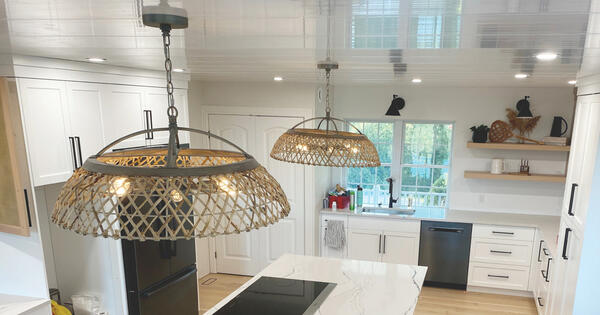
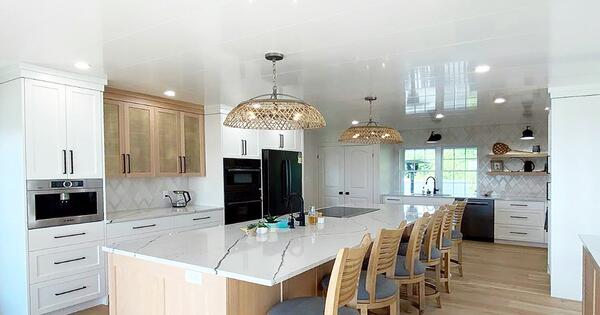
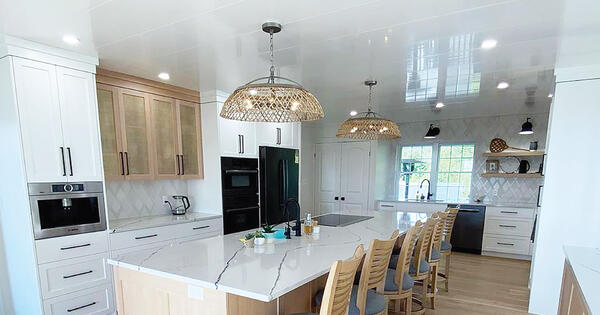
2. PVC Panels (Trusscore Wall&CeilingBoard)
For rooms where moisture is a real concern—basements, bathrooms, garages, mudrooms—Trusscore Wall&CeilingBoard is one of the most practical ceiling covering ideas available. These interlocking PVC panels install quickly, resist moisture, and never need painting. Unlike drywall, they won’t absorb water, grow mold, or deteriorate in high-humidity environments.
Installation is genuinely DIY-friendly. The panels interlock and can be fastened directly to ceiling joists or furring strips with basic tools. The result is a clean, bright, seamless look that holds up over years of heavy use—making it a smart long-term investment, particularly for unfinished basement ceilings and utility spaces that need to look and function well.
If you’re comparing options for your basement, this guide to basement ceiling ideas and this roundup of alternatives to drywall ceilings are worth reading.


3. Wood Plank Ceilings
Wood plank ceilings add texture, warmth, and a natural character that paint can’t replicate. They work in virtually any room—living rooms, bedrooms, dens, covered porches—and adapt easily to different aesthetics, from rustic farmhouse to contemporary coastal.
Pine is the most budget-friendly option and is widely available. Cedar brings natural moisture resistance, making it better suited for humid areas. Reclaimed wood adds instant character but usually requires more prep work. Whichever you choose, treat planks with a water-resistant sealant before installation, especially in kitchens or bathrooms. Installation involves measuring and cutting planks, staggering the joints for a balanced look, and fastening into ceiling joists with a nail gun. It takes patience, but the finished result is hard to match with any other material.
4. Beadboard Ceilings
Beadboard is a classic ceiling covering option that’s stood the test of time—and for good reason. The subtle grooved paneling adds texture and warmth without overwhelming a room. It’s particularly well-suited to kitchens, bathrooms, bedrooms, porches, and entryways, where it complements both traditional and coastal-style interiors.
Beadboard panels are lightweight and can be secured directly to joists or an existing drywall ceiling with nails or construction adhesive. For beginners, this is one of the more manageable ceiling installation projects. In humid areas like bathrooms, seal the beadboard with a water-resistant finish before painting. A semi-gloss paint makes cleanup easier and adds a clean, polished sheen.
5. Stencils and Decals
Stencils and ceiling decals are among the cheapest ceiling ideas on this list—and one of the most underestimated. With a stencil, a small roller, and a steady hand, you can add geometric patterns, botanical motifs, or intricate tile-inspired designs to any ceiling without heavy installation work.
Ceiling decals go even further—they’re fully removable, which makes them a great option for renters or anyone who wants to experiment without a long-term commitment. In children’s rooms, go bold with stars or clouds. In bedrooms or living rooms, geometric or mandala stencils add sophistication. Use metallic or tone-on-tone colors for a subtle effect, or commit to contrast for a statement ceiling.
6. Faux Beams
Exposed structural beams are a sought-after architectural feature, but installing real wood beams is expensive and structurally complex. Faux beams give you the look without the weight or the cost. Made from high-density polyurethane or lightweight composite materials, they’re realistic in appearance, moisture-resistant, and easy to install.
Most faux beams are hollow and mount directly to the ceiling with screws. Measure and mark carefully before committing to placement—proper alignment is what makes them look real. Placed lengthwise, faux beams draw the eye along the room’s longest dimension, which can actually make a space feel larger. In low-ceilinged rooms, avoid running beams crosswise, as this can make the ceiling feel lower than it is.
7. Fabric Draping
Fabric-draped ceilings create a soft, canopy-like effect that works especially well in bedrooms, dining nooks, and event spaces. It’s one of the easiest ceiling ideas to execute—no cutting, no fasteners through drywall, no special tools.
Lightweight fabrics like sheer voile, chiffon, or cotton muslin drape well and are easy to gather at ceiling hooks or clips. For a more polished look, use tension rods or ceiling-mounted curtain tracks to keep the fabric taut and evenly distributed. Choose washable fabrics wherever possible, and vacuum periodically with a soft brush attachment to keep things fresh. Darker or patterned fabrics are more forgiving of dust and minor discoloration over time.
8. Wallpaper
Wallpapering a ceiling is a bolder move than most homeowners consider—and that’s exactly why it makes an impact. Whether you choose a subtle texture, a graphic print, or a metallic finish, a wallpapered ceiling turns the fifth wall into a genuine focal point.
Prep is critical. Start with a clean, smooth surface: sand down rough areas and prime before you begin. Use a wallpaper adhesive formulated for ceilings and work slowly, smoothing the paper as you go with a wallpaper smoother to eliminate air bubbles. For popcorn ceilings, apply a skim coat of joint compound first to create a smooth base. If you’re dealing with a lightly textured surface, peel-and-stick vinyl wallpaper with a thicker backing can sometimes work, though results vary.
If you’re looking to cover a textured ceiling before wallpapering, this guide on how to cover popcorn ceilings covers your options in detail.
9. Mirrored and Reflective Finishes
Reflective ceilings aren’t just for retro decor—they’re a practical design tool for making small or dark rooms feel larger and brighter. By bouncing light around the room, a mirrored or reflective ceiling amplifies whatever natural and artificial light is already there.
For a permanent installation, lightweight acrylic mirror panels are safer and easier to work with than glass. Secure them with specialized mirror adhesive and add mirror clips for extra stability on larger pieces. On a tighter budget, try reflective vinyl film, metallic paint finishes, or adhesive mirror tiles—all of which deliver a similar effect at a fraction of the cost. Reflective ceilings work especially well in powder rooms, home bars, dining rooms, and any space where you want an elevated, upscale feel.
Ceiling Ideas by Budget and Difficulty
One of the most common questions about ceiling upgrades is simple: how much will it actually cost? The table below compares all nine ceiling covering ideas by approximate material cost per square foot, DIY difficulty, and best use case, so you can match the right option to your room and budget.
Cheap Ceiling Covering Ideas Under $2 per Square Foot
If budget is your primary constraint, three options deliver strong results for under $2 per square foot in materials: paint and patterns, stencils and decals, and beadboard (at the low end of its range). Paint is the cheapest of all—a gallon of quality ceiling paint covers roughly 350–400 square feet and costs $30–$50. Stencils are a one-time investment that you can reuse across multiple projects.
| Ceiling idea | Approx. cost/sq. ft. | DIY difficulty | Best for |
|---|---|---|---|
| Paint and patterns | $0.50–$2 | Easy | Any room; budget makeovers |
| PVC panels (Wall&CeilingBoard) | $2–$4 | Easy–Medium | Basements, bathrooms, garages |
| Wood plank ceilings | $2–$6 | Medium | Living rooms, bedrooms, dens |
| Beadboard ceilings | $1–$4 | Easy–Medium | Kitchens, bathrooms, porches |
| Stencils and decals | $0.25–$1 | Easy | Nurseries, bedrooms, accents |
| Faux beams | $3–$8 | Medium | Living rooms, dining rooms |
| Fabric draping | $1–$5 | Easy | Bedrooms, event spaces |
| Wallpaper | $1–$4 | Medium | Dining rooms, accent ceilings |
| Mirrored/reflective finishes | $2–$6 | Medium | Small rooms, powder rooms |
Easy Weekend Upgrades
If you want results in a single weekend without a steep learning curve, focus on paint, stencils, fabric draping, and beadboard. These options require minimal specialized tools and can realistically be completed in one to two days, depending on room size. PVC panels also fall into this category for experienced DIYers—the interlocking system makes installation faster than most people expect.
How to Choose the Right Ceiling Idea for Your Room
Not every ceiling idea works equally well in every room. The right choice depends on the room’s size, its function, the level of moisture it sees, and the overall style you’re working with. Here’s how to think through the decision.
Best Ideas for Small Rooms
In small rooms, the goal is usually to make the space feel larger and more open. Light paint colors—particularly whites and very light neutrals—push the ceiling visually upward. Reflective finishes amplify light and create the illusion of added height. Avoid heavy textures or dark colors in very tight spaces, as they tend to make the room feel more enclosed. Simple stencils and decals can add interest without adding visual weight.
Matching Style to Room Function
Different ceiling treatments pair naturally with different room types. Wood planks and beadboard bring warmth and texture to living rooms, bedrooms, and dining areas where you want a comfortable, inviting feel. Clean, minimalist rooms benefit from a painted ceiling in a complementary or contrasting color. Statement ceilings—wallpaper, faux beams, reflective finishes—work best in rooms where the ceiling is a visible focal point: dining rooms, entryways, and primary bedrooms.
Best Ideas for Basements and Bathrooms
Moisture is the defining challenge in both basements and bathrooms. Many traditional ceiling materials—drywall, standard wood, fabric—degrade over time when exposed to consistent humidity. For these rooms, moisture-resistant materials are non-negotiable. Trusscore Wall&CeilingBoard is purpose-built for exactly these environments: it won’t absorb water, supports mold resistance, wipes clean, and looks sharp doing it.
Cedar planks (properly sealed) and PVC beadboard are good alternatives for bathrooms where you want a more traditional look. For basements, also consider alternatives to drop ceilings—particularly if you need to maintain access to utilities above the ceiling.

Frequently Asked Questions
Here are answers to the most common questions homeowners ask when planning a ceiling upgrade.
What is the cheapest way to cover a ceiling?
Paint is the cheapest ceiling covering option, costing as little as $0.50 per square foot in materials. A fresh coat of ceiling paint—ideally in a flat or matte white—can dramatically brighten a room and hide minor imperfections. For textured ceilings you want to conceal without scraping, a thick roller nap and two coats of paint is often the simplest and most affordable first step before committing to anything more involved.
What is the easiest ceiling to install yourself?
Paint is the easiest, but for panel-based ceiling ideas, PVC interlocking panels (like Trusscore Wall&CeilingBoard) and beadboard are the most beginner-friendly options. Both use straightforward installation systems that don’t require advanced carpentry skills. PVC panels interlock without complex fastening patterns, and beadboard panels are light enough to position and secure without a second person in most cases.
How do you cover a popcorn ceiling?
The most common approaches are painting over it (easiest, least disruptive), applying a skim coat of joint compound to create a smooth surface, or installing panels or planks directly over the texture. PVC panels and wood planks can both go over a popcorn ceiling without requiring scraping, provided the underlying ceiling is structurally sound. Before disturbing popcorn texture in any home built before 1980, test for asbestos—or have a professional do it. For a full walkthrough, see how to cover popcorn ceilings.
What are the best DIY basement ceiling ideas?
For unfinished basement ceilings, the best DIY options balance moisture resistance, ease of installation, and access to utilities. PVC panels are the top choice for most homeowners—they’re durable, moisture-resistant, and install quickly over furring strips. Drop ceilings (suspended tile systems) offer easy utility access but can feel dated. Wood planks are a warmer option but need to be sealed properly against basement humidity. If you’re finishing a basement from scratch, this basement ceiling guide covers the full range of options and considerations.
The right ceiling upgrade is out there for every room, every budget, and every skill level. A fresh coat of paint with a bold color choice can be just as transformative as an elaborate wood plank installation—it just takes a different approach. The key is matching the material to the room’s needs: moisture resistance for basements and bathrooms, warmth and texture for living spaces, lightness and reflection for smaller rooms.
If you’re working on a room that sees regular moisture—a basement, bathroom, laundry room, or garage—Trusscore Wall&CeilingBoard is worth a close look. It’s built specifically for environments where drywall and wood fall short, and it installs faster than most alternatives.
- Order a sample to see Trusscore Wall&CeilingBoard in person before you commit.
- Explore the Trusscore Wall&CeilingBoard product page to see how it performs in real installs.
- Need to estimate materials? Use the Trusscore Cost & Materials Estimator to plan your project.