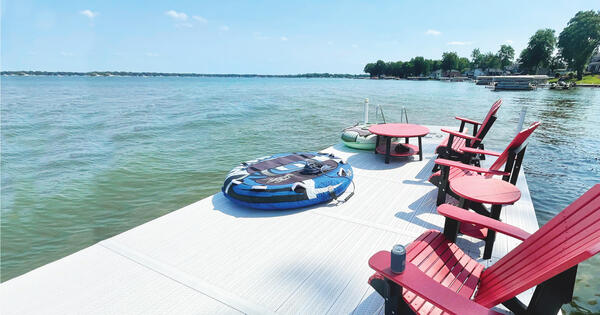
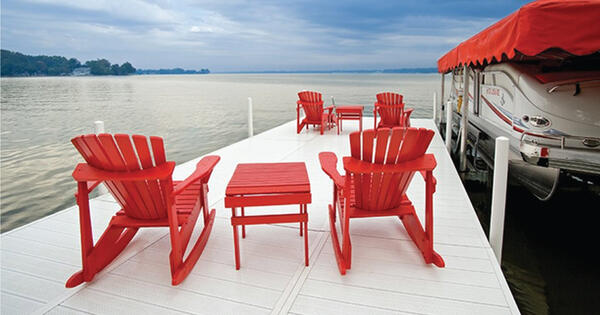
A dock takes more punishment than almost any other outdoor structure you can build. It's constantly exposed to water, UV radiation, temperature swings, boat fuel, and foot traffic — all at once. The dock materials you choose at the outset will determine how much you spend maintaining it, how long it stays structurally sound, and how much you end up spending over the life of the structure.
This matters more than many dock owners initially realize. A material that looks like the affordable option at the time of purchase can become the expensive choice once you factor in annual treatments, board replacements, and the labor that goes with them. Conversely, a higher upfront investment in the right dock materials can mean years of low-effort ownership and a structure that actually holds its value.
This guide walks through the four materials that dominate dock construction today — PVC, wood, composite, and aluminum — and gives you a clear, honest look at how each one performs in real-world conditions. Whether you're building a new boat dock or replacing an aging deck surface, the goal is simple: help you make a decision you won't regret five or ten years from now.


PVC Dock Decking: The Modern Low-Maintenance Solution
PVC has emerged as one of the most practical dock materials available for homeowners and commercial property owners who want durability without the ongoing maintenance burden. Unlike organic materials, PVC doesn't absorb water, which means it won't rot, swell, splinter, or support mold and mildew growth over time.
DockDeck by Trusscore is built specifically for the demands of marine environments. The interlocking panel design eliminates the gaps that allow debris to accumulate, and the surface is designed to resist moisture intrusion at the joint level — not just at the face of the board. For dock owners who've dealt with the slow deterioration that happens when water works its way into seams and around fasteners, this kind of design detail makes a genuine difference.
Several properties make PVC a strong performer as a dock decking material:
- Moisture resistance: PVC is impervious to water absorption, which eliminates the root cause of rot, swelling, and structural degradation in dock boards over time.
- Low maintenance requirements: It doesn't need to be stained, sealed, or pressure-treated. Cleaning is straightforward — typically just a rinse or light scrub.
- Chemical resistance: Exposure to fuel, oil, and cleaning chemicals won't break down the surface the way it can with wood or some composites.
- Consistent appearance: PVC holds its color and surface finish without the graying, cracking, or checking that affects wood after prolonged UV exposure.
- Slip resistance: Quality PVC dock boards are engineered with textured surfaces that provide reliable traction even when wet.


One common question about PVC dock decking is heat retention. PVC can get warm in direct summer sun, though quality formulations and lighter colors mitigate this considerably. It's a factor worth considering for docks in climates with intense summer heat, but it's generally manageable with the right product selection.
PVC dock decking is also worth understanding from a structural standpoint. The material is designed to bear substantial load, and properly installed PVC deck boards perform well under the weight demands typical of residential and light commercial dock use. For anyone evaluating dock boards for a new build or a surface replacement, it's worth reviewing the full range of Trusscore products to understand the broader material capabilities.
Wood Dock Materials: Traditional Choice with High Maintenance
Wood is the traditional choice for dock construction, and for much of dock-building history, it was essentially the only choice. Pressure-treated lumber, cedar, redwood, and tropical hardwoods like ipe and cumaru have all been used extensively in boat dock builds, and each brings a different performance profile to the table.
The appeal of wood is real. It's widely available, easy to cut and fasten, and has a natural appearance that many dock owners prefer. In the right conditions and with proper maintenance, a well-built wood dock can last for years and look good doing it.
The problems with wood as a dock material are equally real, and they compound over time. Here are the core challenges any wood dock owner needs to plan for:
- Rot and decay: Wood absorbs water, and in a marine environment it's exposed to water constantly. Without consistent sealing and treatment, rot sets in — often starting from the underside of boards where it's hardest to spot.
- Splinters: As wood weathers, it dries and checks, creating surface splinters that are a genuine safety concern, especially on a surface where people walk barefoot.
- Warping and swelling: Repeated wet-dry cycles cause wood to expand, contract, and eventually warp, which affects both the appearance and the structural integrity of the dock surface.
- Annual maintenance requirements: A properly maintained wood dock needs regular inspection, and most need treatment every one to three years depending on the species and environment. That cost adds up.
- Fastener corrosion: Even with stainless or galvanized dock hardware, the area around fastener holes is a chronic vulnerability in wood dock boards.
Pressure-treated wood carries its own environmental considerations. The chemical treatments that protect it from rot and insects can leach into the water in marine environments, which is a concern in ecologically sensitive areas. Some jurisdictions have restrictions on certain treatments near water.
The lifespan of a wood dock depends heavily on species, treatment, and maintenance consistency. Untreated pine might fail within 5–7 years in a wet environment. Well-maintained pressure-treated lumber can last 15–20 years. Premium hardwoods like ipe, when properly maintained, can exceed 25 years — but they come with a premium purchase price and still require ongoing care.
Composite Dock Decking: The Middle Ground Option
Composite decking entered the market as a direct response to the maintenance demands of wood, and it occupies a true middle ground between wood’s natural qualities and the full synthetic performance of PVC. Most composite dock boards combine wood fiber and plastic, often incorporating recycled materials into the mix.
The pitch for composite has always been “the look of wood without the maintenance,” and there’s truth to that — but there are also important qualifications that matter when you’re choosing between dock materials.
Composite dock materials offer meaningful improvements over wood:
- No splintering: The surface stays smoother and safer for barefoot use than weathered wood.
- Better resistance to rot: Composites resist decay more effectively than untreated wood.
- Reduced ongoing maintenance: They generally require less frequent upkeep than wood decking.
- Improved day-to-day usability: Many homeowners report a noticeable drop in annual maintenance effort after switching from wood to composite.
However, composite also has performance concerns that emerge in full marine environments:
- Moisture absorption: The wood fiber component can still absorb water, especially at cut ends and fastener penetrations.
- Risk of swelling and mold: Persistent moisture can lead to swelling, surface mold, or, in some cases, structural softening of the board core.
- Weaker performance when submerged: The gap between composite and solid PVC becomes most noticeable when decking is in a perpetually wet or submerged environment.
Heat retention is also a notable issue with composite decking. Dark composite boards in direct summer sunlight can reach surface temperatures that are uncomfortable for bare feet. This is a practical consideration for anyone building a dock in a region with hot summers. Light-colored composites perform better here, though the gap between composite and PVC in this respect can still be significant.
Composite dock decking carries a mid-range price point — generally higher than pressure-treated wood at purchase, but offset somewhat by reduced maintenance requirements. The environmental credential of recycled content is genuine and matters to many buyers, though the wood fiber component limits the extent to which it can truly be considered a low-maintenance solution in high-moisture conditions.
Aluminum Dock Decking: Industrial Strength Solution
Aluminum dock framing and decking is widely used in commercial applications, floating dock systems, and in situations where structural performance is the primary driver of material selection. As dock materials go, aluminum is in a category of its own when it comes to raw structural capability.
The core advantages of aluminum in dock construction are well established. It doesn't rot, it won't be attacked by insects, and it's genuinely impervious to the moisture issues that affect both wood and wood-fiber composites. Aluminum dock systems are common on large lakes, in marinas, and in commercial settings precisely because they can take serious abuse over a long service life.
For residential dock applications, however, aluminum comes with tradeoffs worth examining carefully:
- Heat retention: Aluminum in direct sunlight heats up fast and gets extremely hot. On a dock surface in midsummer, bare aluminum can be painful — or even unsafe — to walk on barefoot. This is one of the most consistent complaints from residential users.
- Slip resistance: Bare aluminum can be slippery when wet, which is a genuine safety concern on a dock. Many aluminum systems address this with textured finishes or rubber coating, but it's an issue that requires design attention.
- Aesthetic limitations: Aluminum has an industrial look that doesn't suit every property or every owner's preference. It's functional, but it's not warm.
- Cost: Aluminum dock systems tend to carry a higher upfront cost than wood or PVC, though the long service life helps justify that investment over time.
- Noise: Aluminum systems can transmit more sound and vibration than wood or PVC, which some owners find noticeable in higher-traffic dock environments.
Aluminum is a legitimate choice in the right application, particularly where structural load requirements are significant or where a floating dock configuration is needed. For a residential waterfront property where aesthetics and comfort matter alongside durability, the heat and slip considerations deserve serious weight.
Head-to-Head Dock Material Comparison
Putting dock materials side by side is the most useful way to cut through the noise and make a clear decision. The categories that matter most to long-term dock ownership are durability, maintenance demands, heat and comfort performance, environmental behavior, and the cost picture across a realistic ownership timeframe.
Durability and Lifespan
Lifespan varies significantly by material and maintenance consistency. Here's a realistic range for each, both with and without proper upkeep:
- PVC: 30 to 50+ years with minimal maintenance. Because there's no organic material to degrade, the lifespan is largely a function of UV resistance and installation quality rather than ongoing care. Neglect has comparatively little impact.
- Wood (pressure-treated): 15 to 20 years with regular treatment and repair. Untreated or neglected wood can fail in 5 to 10 years in a marine environment.
- Composite: 15 to 25 years depending on formulation and moisture exposure. Higher-end composites with capped surfaces outperform entry-level products significantly, and neglected composite may degrade faster in wet conditions.
- Aluminum: 30–50+ years structurally. Surface coatings may require attention sooner, but the underlying material has excellent longevity with or without maintenance.
Maintenance Requirements
PVC requires the least ongoing maintenance of any dock material in common use — cleaning is the primary task, and no sealing, staining, or treatment is needed. Aluminum is similarly low-maintenance from a structural standpoint, though coatings may need attention over time. Composite sits in the middle; surface cleaning is required, and end-grain sealing is important in wet environments. Wood demands the most: regular inspection, periodic treatment, and proactive replacement of damaged dock boards are all part of ownership.
Heat and Comfort
This category matters more than it's often given credit for. On a hot summer day, surface temperature directly affects how the dock gets used. PVC in lighter colors performs well here, staying cooler than dark composites and significantly cooler than bare aluminum. Composite in dark colors can reach temperatures that are uncomfortable underfoot. Aluminum without a protective coating or surface covering is the hottest option in this comparison by a meaningful margin.
Slip Resistance
Textured PVC dock boards offer reliable slip resistance. Composite decking generally performs well too, though some products become slicker over time as the surface weathers. Aluminum is the most variable — some systems have excellent textured finishes, while bare or smooth aluminum is genuinely hazardous when wet. Wood offers decent initial traction but can become slippery when wet, particularly as it ages and smooths out.
Environmental Performance and Recyclability
PVC doesn't leach chemicals into the water and has a long service life that reduces the frequency of replacement. Some PVC products are recyclable at end of life. Composite earns credit for incorporating recycled materials at the front end, though the mixed-material composition can complicate end-of-life recycling. Pressure-treated wood raises legitimate concerns about chemical leaching in sensitive water environments. Aluminum is highly recyclable and carries a strong environmental profile from that standpoint.
10-Year and 20-Year Total Cost of Ownership
The real cost of dock construction isn't what you spend on day one — it's what you spend across the life of the structure. This table offers a relative comparison across materials:
| Material | Upfront Cost | Annual Maintenance | 10-Year Total (Est.) | 20-Year Total (Est.) |
|---|---|---|---|---|
| Wood (PT) | Low | Moderate to High | Moderate | High |
| Composite | Moderate | Low to Moderate | Moderate | Moderate |
| PVC | Moderate | Very Low | Low to Moderate | Low |
| Aluminum | High | Very Low | Moderate | Moderate to Low |
These ranges are relative rather than absolute, since actual costs vary by region, labor rates, and product selection. The key takeaway is that wood's low purchase price gets substantially offset by ongoing maintenance costs, while PVC's moderate upfront investment tends to yield the lowest total cost of ownership over 15 to 20 years due to minimal upkeep requirements.
Scenario-Based Comparison
Different environments and priorities call for different answers. This table identifies which dock material performs best in specific situations:
| Scenario | Best Material |
|---|---|
| Saltwater marine environment | PVC |
| Freshwater lake, recreational use | PVC or Composite |
| Commercial marina or heavy load application | Aluminum |
| Budget-conscious new build | Wood (PT) with realistic maintenance planning |
| Highest long-term value | PVC |
| Best natural appearance | Wood or Composite |
| Lowest lifetime maintenance burden | PVC |
| Maximum structural strength | Aluminum |
Frequently Asked Questions About Dock Materials
Dock owners researching materials tend to come back to the same practical questions. Here are clear answers to the ones that come up most often.
What is the best dock material for saltwater environments?
PVC is the strongest performer in saltwater. Salt accelerates corrosion in metals, breaks down wood treatments faster, and creates ideal conditions for the mold growth that composite is susceptible to. PVC doesn't interact with salt chemically in any way that degrades the material, making it the most durable choice where saltwater exposure is constant. Aluminum with marine-grade anodizing performs reasonably well but at a cost premium and with the heat and slip concerns noted above.
How long do PVC docks last compared to wood?
A PVC dock deck, properly installed, can realistically last 30–50 years with minimal maintenance. Pressure-treated wood, with consistent annual care, typically lasts 15–20 years before boards need significant replacement. In practice, the gap is often larger because wood maintenance is frequently inconsistent — missed treatments accelerate deterioration significantly. The maintenance-free nature of PVC means the performance gap doesn't depend on owner diligence the way wood does.
Do composite docks get too hot in summer?
It depends on color and formulation, but yes — dark composite dock boards in direct sunlight can reach surface temperatures that are genuinely uncomfortable or even painful on bare feet. This is one of the most consistent complaints among composite deck owners in warmer climates. Lighter colors reduce the problem but don't eliminate it. If your dock gets full afternoon sun in a hot climate, composite heat retention is worth taking seriously before making a purchasing decision.
Is aluminum decking slippery when wet?
Smooth or bare aluminum can be quite slippery when wet, which is a real safety issue in a dock environment. Most aluminum dock systems designed for foot traffic address this with textured extrusions, bead-blast finishes, or rubber coating strips. If you're evaluating an aluminum dock system, the slip resistance design of the specific product matters a great deal. It's not safe to assume that any aluminum dock system is adequately slip-resistant without verifying that specification.
What dock material requires the least maintenance?
PVC requires the least maintenance of any dock material in common use. It doesn't need sealing, staining, painting, or chemical treatment. The primary maintenance task is cleaning — rinsing off debris, algae, or surface dirt. Aluminum is similarly low-maintenance structurally, but surface coatings may require attention over time. Composite requires periodic cleaning and some attention to end-grain sealing. Wood requires the most: annual inspection, periodic treatment, and proactive replacement of damaged dock boards.
Can PVC dock decking support heavy loads?
Yes. Quality PVC dock boards are engineered to handle the load demands of residential and light commercial dock use, including boat access, equipment staging, and normal foot traffic. The structural frame beneath the decking carries most of the load — the decking surface's role is to span between frame members without deflecting or failing under point loads. For specific load requirements, reviewing the technical specifications of the product you're considering will give you the clearest answer. DockDeck by Trusscore is built to meet the demands of real dock environments, and the product documentation covers load-bearing performance in detail.
The best dock material is the one that matches your environment, your maintenance tolerance, and your long-term ownership expectations. For most waterfront homeowners building or rebuilding a boat dock in 2026, PVC offers the most compelling case.