This post was originally published in November 2023. Last updated: July 2026.
Mobile home ceilings are built differently than those in site-built houses, which explains a lot about how they age and fail. Most manufactured homes built from the 1960s through the 1990s used one of two ceiling panel types, installed directly onto the roof trusses in long, factory-cut sheets. Knowing which type is in your home makes it easier to plan a repair.
This guide covers both situations, walking through what mobile home ceilings are typically made of, how to size and source replacement panels, when a single-panel repair makes sense versus a full replacement, and how PVC ceiling panels compare to the fiberboard and gypsum that came standard in most manufactured homes.


Understanding Mobile Home Ceiling Panels
Most manufactured homes built from the 1960s through the 1990s used one of two ceiling panel types, installed directly onto the roof trusses in long, factory-cut sheets. Knowing which type is in your home makes it easier to plan a repair or replacement.
The Two Original Types: Fiberboard and Gypsum
Older manufactured homes, especially those built before the early 1980s, typically used textured fiberboard: a compressed wood-fiber product with an embossed pattern baked into the surface, so it never needed paint. It’s lightweight, which made factory installation quick, but also porous, so moisture makes it swell, delaminate, and rarely regain its shape.
As codes tightened, textured gypsum wallboard, sometimes called vinyl-faced gypsum board, became more common, largely because it held up better to heat and offered better fire resistance. Both share the same weakness, though: neither handles sustained moisture well, which is why fiberboard ceiling panels in mobile homes so often show the worst water damage.
Standard Panel Dimensions and Matching Originals
If you’re replacing even one panel, matching the original dimensions matters more than matching the brand. Mobile home ceiling panel sizes are almost universally 48 inches wide and 5/16 inch thick, thinner than standard drywall to keep weight low on truss-style roof framing.
Length varies more. Many homes were built with full-width panels running 12 to 16 feet, spanning wall to wall with no seam, and replacement panels are commonly sold in these same lengths. Measure your existing panel before ordering; cutting to fit vents and edges is usually the biggest part of the job.
Battens and Rosettes
Even with full-width panels, most mobile home ceilings still have visible seams. That’s where battens come in: narrow trim strips, usually wood or vinyl-covered and 1 to 2 inches wide, installed over seams to hide the gap and cover fasteners. Matching your batten style matters if you’re only replacing one section.
Ceiling rosettes are decorative medallions, round or square, installed where battens cross, most often at the ceiling’s center, covering the joint for a finished look instead of an exposed seam. Matching battens and rosettes is what makes a repair blend in rather than stand out.
Should You Replace One Panel or the Whole Ceiling?
Not every ceiling problem calls for a full teardown. Deciding between a single-panel repair and a complete replacement usually comes down to how widespread the damage is and what you want the finished ceiling to look like.
Single Panel Replacement
Replacing a single panel makes sense when damage is contained: one water stain from a since-fixed leak, one cracked panel, or one section sagging because a fastener let go. Address the cause first, then support the new panel by fastening into the joists or furring strips, match the batten strips on either side, and install a rosette at any intersection point. Done carefully, a single-panel replacement can be nearly invisible.
Signs It’s Time for a Full Ceiling Replacement
A full replacement is the better call when damage isn’t limited to one panel: widespread sagging or staining across multiple rooms, visible mold, or an inability to find matching panels, which becomes more common the older the home gets. It’s also worth doing if your real goal is a renovation, since this is often the point where homeowners start looking past fiberboard or gypsum and toward more durable materials.
Common Mobile Home Ceiling Problems
Many mobile home owners run into the same handful of ceiling problems, and most come down to the original materials and conditions unique to manufactured housing:
- Sagging or cracking panels: Thin framing and roof movement cause panels to bow, crack, or pull away from fasteners.
- Water stains and soft spots: A minor roof leak or condensation problem can leave marks or weaken panels.
- Mold and mildew: Moisture paired with limited ventilation creates conditions for mold, a health concern as much as a cosmetic one.
- Movement-related damage: Seasonal expansion and contraction stresses panels and battens, opening seams and loosening trim.
Fiberboard is especially vulnerable, since it’s essentially compressed wood fiber that absorbs moisture readily and rarely returns to shape once saturated, so a single roof leak can mean replacing an entire section rather than touching up a stain. For more, see our guide on identifying, repairing, and avoiding water damage on ceilings.
Ceiling Material Options: Replace Original or Upgrade?
Once you know the scope of your project, the next decision is material: match what’s already there, switch to standard drywall, or upgrade to a PVC panel system built for how mobile homes move and breathe.
Fiberboard and Gypsum Replacement Panels
If your goal is an exact match, sourcing original-style panels is possible, though it takes more legwork than a hardware store trip. Mobile home supply stores and regional manufactured-housing distributors are your best source, since they stock the widths, thicknesses, and textures used across different eras.
Texture matching is often the trickiest part; even panels sold as the same style can have a slightly different pattern or finish, so bring a cut sample when shopping. Even a perfect match doesn’t fix the underlying issue: fiberboard and gypsum share the same moisture limitations as the originals, so a like-for-like replacement is really a like-for-like repair.
Can You Put Drywall on a Mobile Home Ceiling?
Yes, technically, but it comes with trade-offs. Standard 1/2-inch drywall is significantly heavier than the 5/16-inch panels manufactured homes were built with, and that extra weight strains lightweight truss framing, which can accelerate sagging. If you go this route, 1/4-inch drywall is the better choice, closer in weight to the original panels while still giving a paintable surface. Either thickness means a full finishing process—taping, mudding, sanding, priming, and painting—that a panel replacement never needed, which is exactly why PVC panels have become a more practical solution.
PVC Ceiling Panels: The Modern Alternative
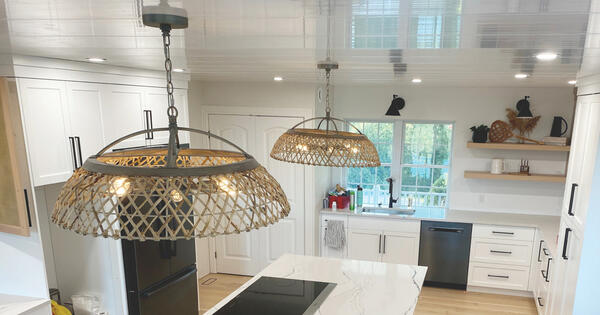
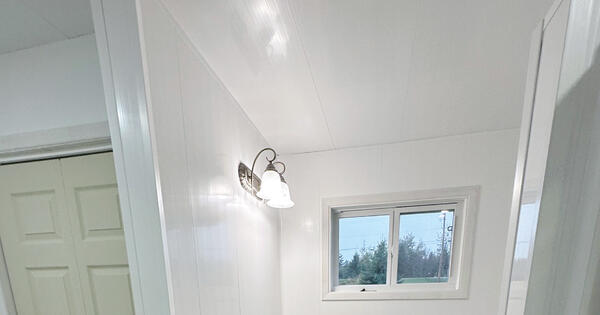
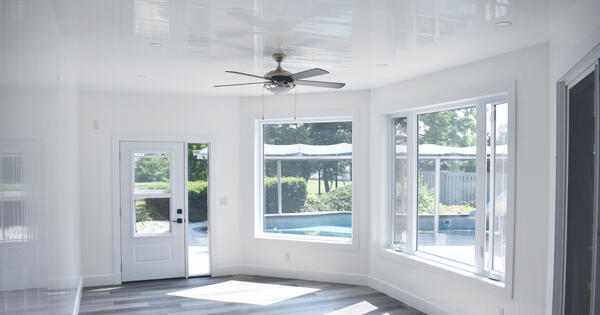
PVC ceiling panels, like Trusscore Wall&CeilingBoard, take a different approach: rather than replicating the factory original, they’re engineered for the conditions that make mobile home ceilings difficult, including thin framing, seasonal movement, and humidity swings. They don’t absorb water the way fiberboard, gypsum, or drywall do, so they resist the warping, staining, and mold growth that cause most ceiling problems, and their tongue-and-groove design locks together with no taping, mudding, or repainting required.
Why Trusscore Wall&CeilingBoard Works in Mobile Homes
Installing a ceiling in a mobile home comes with challenges standard drywall or fiberboard often can’t handle well. Trusscore Wall&CeilingBoard was built with features that address these directly:
- Lightweight construction: Easy to handle without adding excessive weight to thinner roof framing.
- Moisture resistance: Doesn’t absorb water, so it resists warping, swelling, and staining, even with humidity or occasional leaks.
- Impact resistance: Withstands minor bumps and knocks, helping prevent dents common in low mobile home ceilings.
- Tongue-and-groove design: Panels lock together for a seamless finish, reducing gaps as a home settles.
- Easy cleaning and long-term durability: Smooth surfaces wipe clean and never need repainting.
- Better tolerance for movement: Flexible rather than rigid, so it handles seasonal shifts without cracking.
These properties make Trusscore Wall&CeilingBoard a practical, low-maintenance option for mobile home ceilings and walls. For more on how PVC panels compare to traditional drywall, see our guide on alternatives to drywall for ceilings.
Best Rooms in a Mobile Home to Use Trusscore Wall&CeilingBoard
PVC ceiling panels can go throughout an entire mobile home, but some rooms benefit more than others. If you’re phasing the project, prioritize:
- Kitchens: Cooking moisture and spills can damage drywall or fiberboard, but PVC panels resist stains and humidity without extra sealing.
- Bathrooms: The most moisture-prone room in the home, and an ideal candidate for panels that resist mold and mildew.
- Utility and laundry rooms: These spaces deal with humidity and splashes, and PVC panels stay easy to wipe down.
- Living rooms and hallways: High-traffic areas benefit from a clean, uniform ceiling that withstands minor impacts.
Start with moisture-sensitive rooms, then expand into living spaces as budget allows.


Is Trusscore Wall&CeilingBoard Code-Compliant?
Building code compliance, especially around fire safety, is one of the most important considerations when updating a mobile home ceiling. Manufactured homes are subject to local building codes and HUD or manufacturer requirements, but the core principle is the same everywhere: ceiling materials need to contribute to fire safety as part of a compliant assembly.
Trusscore Wall&CeilingBoard carries a Class A fire rating, the highest surface-burning classification for interior finish materials, with a flame spread index of 10 and a smoke developed index of 380, well under the 450 maximum allowed. That rating alone doesn’t make a product fire-resistant, though, since fire resistance is a property of the entire assembly, not just the panel. Where codes require a fire-rated ceiling or separation, such as garage separation assemblies, Trusscore Wall&CeilingBoard must go over an approved fire-rated substrate, like 5/8-inch Type X gypsum board, with joints and penetrations sealed. The same logic applies to foam insulation: codes typically require a thermal barrier installed first, since the panels can’t substitute for it. Requirements vary by jurisdiction, so confirm expectations with local code authorities before starting.
Mobile Home Ceiling Installation: What to Know Before You Start
Planning ahead makes the difference between a smooth installation and a frustrating one. Mobile homes have structural quirks that affect how new panels should go in, so work through these points before cutting anything:
- Inspect the ceiling framing for sagging, water damage, or rotted wood, and reinforce as needed.
- Decide what to do with existing materials: panels can often go over an existing ceiling if it’s secure and mold-free, but removal sometimes gives a cleaner result.
- Plan strapping and furring: 16-inch centers work well for most mobile homes, but check your panel’s specifications.
- Map out lighting, vents, and fans in advance to avoid unnecessary gaps.
How to Install Trusscore Wall&CeilingBoard in a Mobile Home
Installing Trusscore Wall&CeilingBoard in a mobile home ceiling is manageable, but a few manufacturer-specific practices matter in homes that deal with movement, temperature swings, and humidity changes.
Screws and Fastening Guidelines
Use corrosion-resistant #8 or #10 gauge screws with a flat-bottomed, low-profile head (truss head, pancake head, round or washer head, or cabinet screws) and a minimum head diameter of 3/8 inch, fastened at least once every 24 inches without over-tightening, so the material can expand and contract naturally.
Panel Orientation and Expansion Gaps
Install panels perpendicular to ceiling joists or furring strips. Leave a 1/8-inch gap between the tongue side of the panel and the wall, and 1/4 inch of clearance at panel ends, to allow for expansion as temperatures shift.
Cutting Panels Cleanly
Use a saw blade designed for cutting vinyl to reduce cracking or chipping (a standard blade installed in reverse works too, but avoid coarse-toothed blades). In cold conditions, cut slowly with even pressure and do a test cut first. Offcuts are recyclable.
Cutouts for Fixtures and Openings
For electrical boxes, lights, vents, or other penetrations, use a jigsaw, oscillating saw, or hole saw. Mark the opening, drill a 1/2-inch starter hole for square cutouts, and cut along the marked lines after confirming the space behind is clear.
Ceiling Installation Sequence
Start with the first panel row parallel to the longest, straightest wall, screw flange facing away from the wall. If the ceiling is longer than the panel, join panels mid-span with the H Channel Snap-In Kit, and install J Trim along the top of the wall to support the unfixed edge. Insert the tongue of each new panel into the groove of the previous one, press firmly, and check alignment periodically. For a full walkthrough, visit our installation resources.
Cost of Mobile Home Ceiling Panels and Long-Term Value
Budgeting for a ceiling project means weighing upfront costs against long-term maintenance, since the cheapest option isn’t always the best value. Original-style fiberboard or gypsum panels are typically least expensive upfront, and matching drywall costs vary by thickness and finishing labor. PVC panels cost more per square foot, but they’re lighter and easier to handle, which speeds installation, and their tongue-and-groove connections eliminate taping and mudding. They also resist cracking, staining, and moisture damage, meaning fewer repairs and no repainting, often making them the better investment over the life of the home.
Where to Buy Mobile Home Ceiling Panels
Where you shop depends largely on which material you’ve chosen, since original-spec panels and PVC systems are typically sold through different channels.
If you’re sourcing original-spec fiberboard or gypsum panels, mobile home supply stores are usually your best starting point; these retailers specialize in manufactured housing parts and are far more likely to carry matching widths, thicknesses, and textures than a general home improvement store. Regional distributors are another good resource for older or discontinued styles. Bring a sample of your current panel to make matching easier.
If you’ve decided to upgrade to Trusscore Wall&CeilingBoard, panels are available through a network of dealers across North America. Before buying, measure your ceiling area and account for overage and trim pieces; most dealers can help with a rough estimate from your room dimensions. Larger or complex layouts benefit from a contractor, and the dealer network can connect you with installers familiar with mobile home projects. Find a dealer near you for a project-specific quote.


Mobile Home Ceiling Panels FAQs
Here are quick answers to some of the most common questions homeowners ask about mobile home ceiling panels.
What are mobile home ceiling panels made of?
Most factory-installed mobile home ceilings use either textured fiberboard, a compressed wood-fiber panel common in older homes, or textured gypsum wallboard, a thinner vinyl-faced drywall alternative that became standard later. Neither handles sustained moisture well. Modern upgrades like PVC panels offer a more durable, moisture-resistant alternative to either original material.
What size are mobile home ceiling panels?
Mobile home ceiling panels are typically 48 inches wide and 5/16 inch thick, with full-width panels often running 12 to 16 feet to span a room without seams. Replacement panels are commonly sold in these same lengths, though exact sizing can vary by manufacturer and build year.
Can you put drywall on a mobile home ceiling?
Yes, but standard 1/2-inch drywall is heavier than the framing was built for, which can worsen sagging over time. As covered in the drywall comparison above, 1/4-inch drywall is the better-weighted option if you go this route, though it still requires taping, mudding, and painting.
Do ceiling panels make mobile homes look more modern?
Yes. Smooth, consistent panels create a clean, finished ceiling that updates the look of older mobile homes, and tongue-and-groove panels in particular give a polished, contemporary appearance. Replacing sagging or dated original panels is one of the fastest ways to modernize a room.
Are Trusscore Wall&CeilingBoard panels waterproof?
Trusscore Wall&CeilingBoard panels are highly moisture-resistant. Unlike drywall, fiberboard, or gypsum board, they don’t absorb water, which prevents the warping, swelling, and staining that typically show up in humid rooms or after minor leaks.
How long do PVC ceiling panels last?
With proper installation, PVC ceiling panels like Trusscore Wall&CeilingBoard can last decades without needing replacement. They resist the cracking, staining, and general wear that typically shortens the lifespan of fiberboard, gypsum, or drywall ceilings.
Whether you’re patching one damaged panel or planning a full overhaul, the decision comes down to two paths: replace your original materials to match what’s there, or upgrade to something built to hold up better over time. Both are valid, and the right one depends on your budget, timeline, and how many times you’re willing to repeat the same repair.
If you’re leaning toward matching your original ceiling, mobile home supply stores and regional distributors can help you source fiberboard or gypsum panels, battens, and rosettes that fit right in. But if you’re ready to stop the cycle of sagging, staining, and repeat repairs, Trusscore Wall&CeilingBoard offers a lightweight, moisture-resistant ceiling built for the way mobile homes move and breathe. Find a dealer near you to get started.