Most garages don’t have a storage problem—they have a systems problem. Bikes lean against the wall. Tools pile on a workbench. Extension cords tangle on a hook that’s nailed a little too low. Lawn equipment takes up floor space that used to be for a car. The clutter isn’t really the fault of too much stuff. It’s the fault of storage that wasn’t designed to handle it.
A garage slatwall storage system changes that. Instead of stacking, piling, or making do with pegboard that can’t hold much, you turn your walls into high-capacity, fully organized storage space. Everything hangs where you can see it, reach it, and—when your needs change—move it without pulling out a drill.
This guide covers everything you need to know to plan, choose, and install a garage slatwall system that actually works: how the panels work, how to plan your layout, which accessories to start with, and how installation goes.
What Is a Garage SlatWall Storage System?
Before you start planning wall layouts and accessory lists, it helps to understand exactly what a slatwall system is and how it differs from other wall storage options you might have encountered.
How Slatwall Panels Work
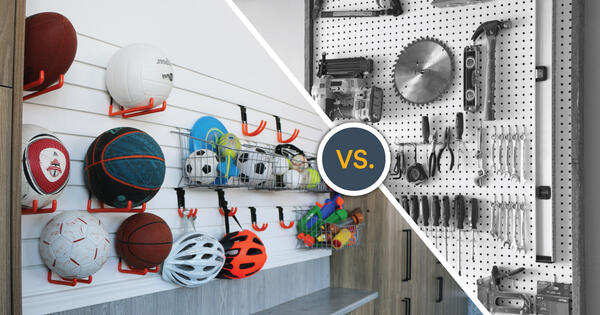
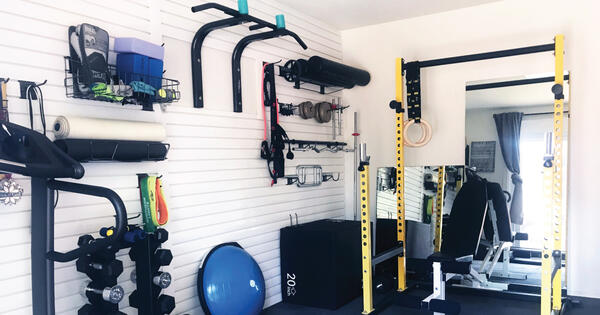
Trusscore SlatWall panels are wall-mounted panels with horizontal grooves running their full length. Those grooves accept a wide range of standard slatwall accessories—hooks, baskets, shelves, bins, and specialized hangers—which slide in, lock in place, and hold firm under load. No drilling required once the panels are up.
Panels are 8 feet long. Each panel has a total height of 7-1/8 inches, with an exposed face of 6 inches after installation—the panels overlap slightly as they interlock, which is what gives the system its structural rigidity. You can install them as a single track, a partial section, a half wall, or floor-to-ceiling—whatever your garage requires.
Slatwall vs. Pegboard vs. Wire Grid
Not all wall storage systems are equal, especially in a garage environment. Here’s how the three most common options compare:
| Feature | Trusscore SlatWall | Pegboard (MDF) | Wire Grid |
|---|---|---|---|
| Weight capacity | 75 lbs/sq ft | Low–moderate | Low–moderate |
| Moisture resistance | Excellent | Poor | Moderate |
| Flexibility | High (slide anywhere) | Limited (fixed holes) | Moderate |
| Durability | High | Low | Moderate |
| Appearance | Clean, finished | Utilitarian | Industrial |
| Installation | Screw to studs | Screw to studs | Varies |
The most important column for a garage is moisture resistance. Garages cycle through humidity, cold, heat, and the occasional splash from washing down the floor. MDF pegboard absorbs moisture, swells, and deteriorates. PVC slatwall doesn’t. It’s impervious to water, won’t warp, and holds its shape regardless of what the weather does outside.


Why Garage SlatWall Makes Sense
Garages are uniquely difficult storage spaces. They’re exposed to temperature extremes, humidity swings, and heavy use—and they typically house a mix of heavy equipment, seasonal gear, and everyday tools that need to be genuinely accessible, not buried behind other things. Wall-mounted storage almost always delivers the biggest improvement because it takes items completely off the floor and puts them at eye level where you can actually find them.
Frees Up Floor Space
A garage with bikes on the floor, a shop vac in the corner, and seasonal equipment stacked against the wall is a garage you can’t fully use. Moving those items to the wall—even just one or two of them—changes the feel of the space immediately.
Trusscore SlatWall lets you hang bikes vertically with a single hook, store ladders horizontally along the wall, and hang lawn equipment so it’s off the ground and out of the way. That reclaimed floor space means you can actually park a car, move around freely, or use the garage as the workshop it’s supposed to be. For more ideas on making the most of a garage or workshop space, see our applications page.
Holds More Than You Think
Wall storage often sounds great until you realize you need to store a bike that weighs 30 pounds, a shop vac, and a set of heavy-duty extension cords on the same panel. Trusscore SlatWall is rated at 75 pounds per square foot—a load capacity that comfortably handles the heaviest items in most residential garages.
That includes:
- Adult bicycles and e-bikes
- Extension ladders
- Shop vacuums
- Power tool cases and bags
- Heavy garden equipment
The key is distributing weight across the panel surface and using the right accessories for each item.
Built for Garage Conditions
Wood-based wall panels absorb moisture. They expand in summer, contract in winter, and eventually warp, swell, or crack. MDF pegboard is particularly vulnerable—it can deteriorate after a single wet season.
Trusscore SlatWall is made from PVC, which means it doesn’t absorb moisture, resists temperature swings, and won’t rot, warp, or crack. It’s also impact-resistant and easy to wipe down. In a garage environment—where walls get dinged, splashed, and exposed to everything from fertilizer dust to motor oil—that durability matters. Your storage system should outlast the gear it’s holding.
Planning Your Garage SlatWall Layout
Good planning is what separates a garage storage system that keeps working for years from one that looks organized on day one and slowly devolves back into chaos. Taking an hour to think through your layout before you buy anything saves you from having to reorganize later. For broader home organization ideas that work alongside a garage system, see our applications page.
Assess What You Need to Store
Start by walking through your garage and grouping your items into categories. This gives you a realistic picture of what the wall has to hold and helps you figure out how much panel coverage you need. Common garage categories include:
- Tools: Hand tools, power tools, toolboxes, and cases
- Sports equipment: Bikes, helmets, balls, rackets, and pads
- Automotive: Fluids, rags, car wash gear, and jumper cables
- Lawn and garden: Rakes, shovels, hoses, and fertilizer
- Seasonal storage: Holiday items, camping gear, and winter sports equipment
Once you know what you’re storing, you can match accessories to categories and start planning where each zone lives on the wall.
Choose Your Configuration
Trusscore SlatWall offers four installation configurations to fit different garage sizes and storage needs:
- Track: A row or two of panels, ideal for light storage or a specific accessory category. Good for smaller walls or supplementing existing storage.
- Section: A defined panel area, typically covering a specific zone like a tool station or bike wall. Works well in garages where you want targeted organization without full-wall coverage.
- Half wall: Panels installed from floor height up to about chest or shoulder level. A practical option if you want to preserve wall space above for shelving or windows.
- Full wall: Floor-to-ceiling panel coverage that maximizes vertical storage. The best option for garages with limited floor space or a high volume of items to store.
At 8 feet long and 6 inches wide per panel, you can calculate how many panels you need for your target wall area. Most homeowners find a half wall or full wall on one or two sides gives them the storage capacity they need.


Create Zones for Different Categories
Once you’ve chosen your configuration, divide your wall into logical zones. This is what makes a slatwall system genuinely easy to use—when everything has a home, you always know where to look. Common garage zones include:
- Workshop zone: Hand tools, power tools, and small parts bins near your workbench
- Sports equipment zone: Bikes, helmets, and gear in an easily accessible section
- Lawn and garden zone: Long-handled tools, hoses, and garden supplies near the door to the yard
- Seasonal storage zone: Rotating gear that’s accessed a few times per year, typically on upper panels or a less-trafficked wall
Keep frequently used items at eye level. Store seasonal gear higher up or in a secondary zone.
Essential SlatWall Accessories for the Garage
What makes a slatwall system so versatile is the accessory ecosystem. The panels themselves are the foundation—the accessories are what give you actual storage capacity. One of the biggest advantages of Trusscore SlatWall is that standard slatwall accessories are widely compatible, and they slide and reposition without tools whenever your needs change.
Hooks and Hangers
Hooks are the workhorses of any garage slatwall system. The right hook for the job depends on what you’re hanging and how much weight it carries.
- Single hooks: Ideal for hand tools, extension cords, and lighter items
- Double hooks: Better stability for medium-weight items that might tip or swing
- Utility hooks: General-purpose hooks for buckets, bags, and odd-shaped gear
- Bike hooks: Designed to cradle a bike frame securely without damaging the finish
- Industrial hooks: Heavy-duty options for ladders, hoses, and heavier equipment
Baskets and Bins
For smaller items that don’t hang well on hooks—gloves, balls, spray bottles, small parts—baskets and bins are the solution. Because they sit in the slatwall groove rather than being screwed to the wall, you can move them along the panel or swap their position any time.
- Mesh baskets: Open-sided for visibility; good for sports gear and garden gloves
- Tilt bins: Clear plastic bins that tilt forward for easy access; great for small parts and hardware
- Deep baskets: More capacity for bulkier items like helmets or rolled-up hoses
Shelves and Brackets
Some items need a flat surface rather than a hook or basket. Trusscore SlatWall supports several shelving options that mount directly into the grooves with no additional hardware.
- Wire shelving: Open surface for general storage, allows airflow around stored items
- Shoe shelves: Clean storage for footwear, or useful for small equipment and product containers
- Storage brackets: Support for lumber, pipe, and other long materials stored horizontally
- Paddle storage: Specialized support for canoe paddles, oars, and similar long, flat equipment
How to Install Garage SlatWall
Installing Trusscore SlatWall is well within reach for most DIYers. The panel system is designed for straightforward installation, and the tongue-and-groove design keeps everything aligned as you work. A typical garage wall section can be completed in an afternoon.
What You Need
Before you start, gather your materials, trims, and tools:
- Trusscore SlatWall panels (calculated for your wall area)
- Snap-In J Trim with Universal Base for the bottom and side edges
- SlatWall Top Cap for the top edge
- Screws appropriate for stud installation
- Level
- Stud finder
- Pencil for marking
Panels can be installed over existing drywall or directly to studs. Studs must be no more than 16 inches on center to support the full 75 lbs per square foot load rating. Every panel run must start and finish fastened to a stud, so stud layout drives your installation plan.
Installation Steps
Here’s a high-level overview of how Trusscore SlatWall installation works:
- Locate and mark all studs. Use a stud finder across the full installation area. Mark each stud from top to bottom of the planned panel height.
- Mark your starting height and create a level line. Measure up from the floor to where you want the bottom of the panels to sit, then use a level to extend that line across the full width of the installation area.
- Install the Snap-In J Trim Universal Bases. Fasten Universal Bases along the bottom and both sides of the installation area. These two-piece trim bases are fastened first; the trim face snaps on after the panels are in place. Do not overtighten—overtightening can interfere with panel installation.
- Install the first panel. Position it flush against the bottom Universal Base, 1/4 inch from the side Universal Bases, and check for level before fastening. Fasten through the slotted screw flange into each stud, including at both ends of the panel.
- Interlock remaining panels. Place each subsequent panel on top of the previous one and apply gentle downward pressure—you’ll feel and hear a snap when the panels interlock. Fasten through the slotted screw flange at each stud location.
- Install the Top Cap and complete the trim. Snap the Top Cap into the groove at the top of the uppermost panel, then press the J Trim faces onto the Universal Bases along the sides.
- Add accessories. Slide hooks, baskets, and shelves into the grooves and start organizing.
For complete step-by-step installation guidance on how to install Trusscore SlatWall by itself or alongside Trusscore Wall&CeilingBoard, download the Trusscore SlatWall installation guide.
Frequently Asked Questions
Here are answers to the most common questions homeowners have before investing in a garage slatwall system.
What is the best slatwall material for a garage?
PVC slatwall is the best choice for garage environments. It resists moisture, temperature swings, and impact in a way that MDF or wood-based panels cannot. Garages expose wall materials to humidity, cold, heat, and physical abuse—PVC holds up under all of those conditions. Trusscore SlatWall is a PVC slatwall panel specifically engineered for performance in residential and commercial garage applications.
How much weight can garage slatwall hold?
Trusscore SlatWall is rated at 75 pounds per square foot. That’s enough capacity to hold bikes, ladders, shop vacuums, power tools, and heavy garden equipment on the same wall. Load capacity depends on proper installation—panels must be fastened to studs no more than 16 inches on center—and using accessories that are designed for the weight you’re hanging.
Can I install slatwall over drywall?
Yes. Trusscore SlatWall can be installed directly over existing drywall. You’ll screw through the drywall into the wall studs behind it—locating those studs accurately is the most important step. Every panel run must start and finish fastened to a stud to maintain structural integrity and support the full load rating.
What accessories do I need to get started?
The right starting accessories depend on what you’re storing, but a good base kit includes a mix of hooks (single and double), at least one or two baskets or tilt bins for smaller items, and a shelf or bracket if you have gear that needs a flat surface. Most homeowners find that hooks cover the majority of their storage needs, with baskets and shelves filling in the rest.
How much does a garage slatwall system cost?
A professionally installed Trusscore SlatWall system costs approximately $6 to $7 per square foot installed. The exact cost depends on wall coverage, the number of accessories, and whether you’re doing the installation yourself or hiring it out. DIY installation brings the cost down significantly. Use the Trusscore Cost & Materials Estimator to get a more precise figure for your specific project.
Can slatwall handle humidity and temperature changes?
Trusscore SlatWall handles garage conditions better than any wood-based alternative. The PVC construction is impervious to moisture—it won’t absorb water, swell, warp, or rot. Temperature swings from cold winters to hot summers won’t affect performance. Splashes, dust, and the general abuse of a working garage environment won’t damage the panels. It cleans easily with a damp cloth.
An organized garage doesn’t start with buying more shelving—it starts with using your wall space intentionally. Trusscore SlatWall turns bare walls into high-capacity, customizable storage that handles the real demands of a working garage: heavy loads, changing needs, and a tough environment. And when paired with Trusscore Wall&CeilingBoard on the walls and ceiling, you get a complete garage wall system that’s durable, low-maintenance, and easy to keep clean.
The result isn’t just a tidier garage. It’s more usable floor space, gear you can actually find, and a system that adapts as your storage needs evolve. Whether you’re outfitting one wall or going floor-to-ceiling on three sides, a slatwall system is the foundation a well-organized garage is built on.
Ready to get started?
- Explore the Trusscore SlatWall product page to see panel specs, configurations, and accessories.
- Find a dealer near you to get panels and accessories locally.
- Use the Trusscore Cost & Materials Estimator to see what a garage wall system would cost for your space.