If your home sits in Florida, along the Gulf Coast, or anywhere in a low-lying floodplain, you already know the drill. Water comes in. Walls get soaked. The clock starts ticking on mold. Then comes the gut-wrenching task of tearing out waterlogged drywall before the remediation crew shows up.
Millions of homes across the South and Southeast don't have basements. That means when a storm surge pushes water through the front door, or a heavy rain overwhelms the drainage system, the first floor—your living room, kitchen, hallway—takes the full impact. And the walls that separate you from the studs? They're almost certainly drywall. Drywall is the wrong material for this job.
Waterproof PVC wall panels are a better choice. They don't absorb water, they don't grow mold, and after a flood, cleanup is a fraction of the effort. Here's what you need to know.
Why First-Floor Flooding Is Different
Not all flooding is created equal. Where your home sits—and what floor takes the hit—determines how fast damage escalates and how much it costs to repair. For millions of homeowners in coastal and low-lying regions, the first floor is the only floor at risk, and it has no protection between it and the water coming in.
No Basement Means No Buffer
In northern states, the basement absorbs the first wave of flood damage. The living space is protected one full floor up. That buffer doesn't exist in Florida, the Gulf Coast, much of Texas, the Carolinas, and river floodplains across the country. When water enters, it enters the rooms you live in—and the walls that line them are ground zero.
The stakes are also higher. Water-damaged drywall in a finished living space means disrupted daily life, temporary relocation, and repair costs that stack fast. For homeowners who've been through it once, the idea of going through it again with the same materials is genuinely exhausting.
The Regions Most at Risk
First-floor flooding affects homeowners across a wide band of the country. These regions see the highest frequency of flood-related interior wall damage:
- Florida — storm surge, hurricane flooding, and seasonal heavy rainfall
- Gulf Coast states (Louisiana, Mississippi, Alabama) — hurricane surge and tidal flooding
- Texas — flash floods, hurricane landfalls, and coastal surge events
- The Carolinas — inland flooding from hurricane rainfall, riverine flooding
- River floodplains across the Midwest and Southeast — seasonal and storm-driven inundation
If your home sits in a FEMA-designated flood zone—or if you've simply watched neighboring streets flood during past storms—your first-floor walls are a vulnerability. Knowing how to approach hurricane preparedness before the season starts gives you a meaningful head start on protecting your home.

What Happens to Drywall When the First Floor Floods
Drywall behaves predictably when water gets in—it fails. The sequence plays out the same way every time: absorption, swelling, mold, and removal. Understanding that sequence helps explain why homeowners in flood-prone regions end up in the same expensive repair cycle over and over.
Absorption, Swelling, and Structural Breakdown
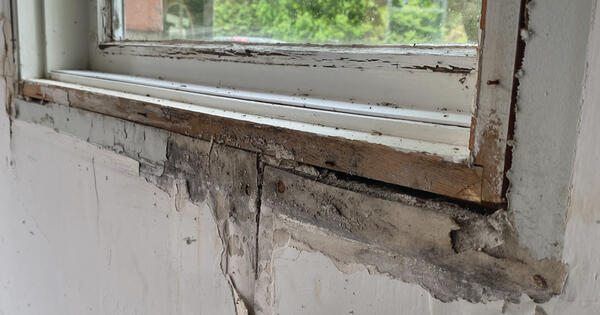
Drywall is made from gypsum wrapped in paper facing. Both materials are highly porous, and both begin absorbing water the moment they're exposed. Within hours, panels swell, sag, and lose structural integrity. The paper facing delaminates. The gypsum core softens and crumbles. What was a finished wall becomes a saturated mass that can't be saved.
Even if the flooding is relatively shallow—a few inches of water in the entryway or kitchen—capillary action pulls moisture up through the drywall well above the waterline. The visible damage rarely tells the full story. Waterproofing drywall doesn't work as a long-term strategy, and paint or sealant products can actually trap moisture inside the wall cavity, accelerating hidden damage.
Mold Growth Timeline and Hidden Wall Damage
Mold is the real urgency after a flood. In warm, humid conditions—exactly the conditions you find in Florida or along the Gulf Coast after a storm—mold can begin colonizing wet drywall within 24 to 48 hours. By the time a remediation crew arrives, mold may already be established inside wall cavities, on insulation, and on framing behind surfaces that look fine from the outside.
That hidden mold is why post-flood drywall repairs almost always require full removal rather than simple drying. You can't patch your way around it.
The Hidden Cost: Demo, Disposal, Repair, Repeat
The financial toll of repeated drywall replacement adds up fast. A single flood event involving first-floor drywall can cost thousands in labor alone—not counting disposal fees, material costs, the time spent out of your home, and the disruption to daily life. For homeowners in high-risk areas who've been through two or three cycles of this, the math becomes impossible to ignore.
Understanding how to prevent and repair drywall water damage is useful knowledge. But the more valuable question is whether it's worth repairing the same material over and over—or replacing it with something that holds up when water comes in.
What to Use Instead—Waterproof Wall Panels for First-Floor Living
Choosing the right wall material for a flood-prone first floor comes down to one question: will this hold up when water gets in? For most standard wall finishes, the answer is no. Waterproof PVC panels are built around a different set of material properties—ones that actually matter when flooding happens.
What Makes a Wall Panel Flood Resistant
Not all wall panels marketed as water-resistant perform equally. Flood resistance comes from a specific combination of material properties. The panels you want have these characteristics:
- Non-porous surface — water cannot be absorbed; it rolls off
- No paper facing — no substrate to wick moisture into the wall cavity
- Antimicrobial properties — certified protection against bacteria, fungi, and viruses (ISO 846:2019)
- Full-depth waterproofing — the material is waterproof through its entire thickness, not just at the surface
- Easy sanitizing — can be cleaned with soap and water, chemical cleaners, or even pressure washing
Trusscore Wall&CeilingBoard checks every one of those boxes. It's a rigid PVC panel system with a non-porous surface that sheds water completely. It will never grow mold or mildew, and it's rated 100% moisture and water resistant throughout its entire service life—not just when new, but decade after decade.
Full-Height vs. Half-Wall Installation
How you install waterproof panels depends on your flood risk and your budget. Two approaches make sense for flood-prone first floors:
- Full-height installation — panels from floor to ceiling on all first-floor walls. This provides complete protection in areas with higher flood risk or where water regularly rises above knee level.
- Half-wall (wainscoting-height) installation — panels installed from the floor to roughly four feet up the wall. This protects the zone most vulnerable to flood water while reducing material cost. Above the panel line, standard finishes can be used.
For many homeowners, a half-wall installation on high-risk walls—exterior walls, walls adjacent to entry points, walls near plumbing—is a practical middle ground. It targets the areas most likely to be affected while keeping the project manageable.
Trusscore Wall&CeilingBoard installs directly to bare studs or over existing drywall—an important detail for homeowners who want to upgrade without a full demo. The tongue-and-groove interlocking system hides fasteners, and installation is up to four times faster than drywall with no taping, mudding, or painting required.


Cleaning Panels after Flooding vs. Replacing Drywall
Here's the practical difference between the two materials when a flood happens:
- With drywall: You call a remediation crew. They remove baseboards, cut out wet drywall, bag and dispose of it, treat framing and insulation for mold, bring in drying equipment, wait. Then you schedule repairs, hang new drywall, tape, mud, sand, prime, and paint. Weeks pass.
- With Trusscore Wall&CeilingBoard: You remove standing water. You wipe down the panels with soap and water or a disinfectant. The panels are clean. There is no mold. The wall is intact. You move on.
The difference isn't minor. It's the difference between weeks of disruption and a few hours of cleanup.
Drywall vs. Trusscore Wall&CeilingBoard in a Flood-Prone Home
| Category | Drywall | Trusscore Wall&CeilingBoard |
|---|---|---|
| Water exposure | Absorbs water immediately; swells, sags, crumbles | 100% waterproof—water rolls off the non-porous surface |
| Mold risk | Mold growth within 24 to 48 hours of water contact | Will never grow mold or mildew |
| Post-flood cleanup | Tear out, dispose, rebuild—weeks of work | Wipe down with soap and water; no removal required |
| Installation | Requires mudding, taping, priming, and painting | Tongue-and-groove; no finishing required; installs 4× faster |
| Lifespan in flood-prone areas | Degrades with each flood event; replacement cycle repeats | Maintains performance for decades with minimal maintenance |
Installing Before the Next Storm vs. Replacing After
There are two moments when it makes sense to switch your first-floor walls to waterproof panels: before the next storm, or during the rebuild after one already hit. Both are valid entry points. The decision usually comes down to where you are in the repair cycle and how much disruption you're willing to absorb.
The Proactive Case
The best time to upgrade first-floor walls to waterproof panels is before the next flood—not after. Installing before a storm means you're choosing the timing, managing the project on your schedule, and not making decisions under the pressure of a cleanup deadline. It also means the next time water comes in, you're not starting the damage clock.
Homeowners who have been through one flood cycle often describe a similar realization: they spent thousands on drywall repairs, lived with the smell of remediation chemicals, and then looked at the rebuilt walls knowing they'd face the same thing again. That recognition—that the material itself is the problem—is what drives the decision to switch.
Post-Flood Rebuild Decisions
If you're already in the middle of a flood repair, you're in the best possible position to make the switch. The drywall is already coming out. The studs are already exposed. Installing waterproof panels at this stage adds minimal cost and labor compared to rebuilding with the same material.
It's worth comparing your options while the walls are open. The case for drywall alternatives in interior spaces is strong—and on first floors in flood-prone regions, it's especially clear. You don't have to rebuild with a material you already know will fail the next time water gets in.
For homeowners rebuilding on a first floor with a below-grade element—a crawl space, a slab, or a finished lower level—it's also worth reviewing waterproof wall options for basement-adjacent spaces. The same principles apply wherever moisture exposure is ongoing.
First-floor flooding is a recurring reality for millions of homeowners across the South, Southeast, and Gulf Coast. Every time it happens with drywall walls, the result is the same—absorption, mold risk, demolition, weeks of repair, and the knowledge that it will happen again.
Waterproof PVC wall panels break that cycle. They hold up when water gets in. They clean up fast. They don't grow mold. And unlike drywall, they don't need to be replaced every time your first floor floods. That's not a minor upgrade—it's a fundamental change in how your home handles water.
FAQ
Why Does Drywall Fail So Quickly after Flooding?
Drywall is made from gypsum and paper—both highly porous materials that absorb water immediately on contact. Once wet, the panel swells, loses structural integrity, and the paper facing delaminates. More critically, mold can begin growing inside wet drywall within 24 to 48 hours, especially in warm and humid climates. Even partial drying rarely prevents mold from establishing, which is why flood-damaged drywall almost always requires full removal.
What Are the Best Wall Materials for Flood-Prone Areas?
The best wall materials for flood-prone areas are non-porous, waterproof panels—specifically rigid PVC panels like Trusscore Wall&CeilingBoard. They absorb no water, support no mold growth, and clean up easily after flooding without requiring removal or replacement. Unlike drywall, they hold up through repeated flood events and maintain their structural integrity over decades.
Can I Install Waterproof Panels on Top of Existing Walls?
Yes. Trusscore Wall&CeilingBoard can be installed directly over existing drywall, which means you don't need to tear out your current walls first. This makes proactive upgrades significantly more manageable and cost-effective. If existing drywall is already water-damaged or moldy, remove it before installing over bare studs.
How Do Waterproof Wall Panels Hold Up to Storm Surge and Standing Water?
Rigid PVC panels are fully waterproof—they don't absorb standing water, and prolonged exposure won't cause swelling, warping, or delamination. After water recedes, the panels can be cleaned with soap and water or disinfectant and are ready for continued use. Note that panels are an interior cladding system and should be installed over wall assemblies that meet local building code requirements. They are not designed to function as a structural flood barrier.
Do I Need Permits to Replace Flooded Drywall with PVC Panels?
Permit requirements vary by municipality and by the scope of work. In many cases, replacing interior wall cladding is a straightforward repair that doesn't require a permit. However, if you're doing electrical work, altering wall structure, or working under a homeowner's insurance claim, permit requirements may apply. Check with your local building department for guidance specific to your jurisdiction before starting any repair project.